Best Integrated Amplifiers for Vinyl and Digital
The best integrated amplifiers combine preamplification and power amplification in a single box, simplifying your hi-fi system while delivering enough power for most bookshelf and floor-standing speakers. Models under $500 now include features like built-in DACs, Bluetooth, and phono inputs that previously required separate components. Whether you are connecting a turntable, streaming from a phone, or running a CD player, a quality integrated amplifier serves as the central hub of any hi-fi system.
What Is an Integrated Amplifier
An integrated amplifier merges three functions into one chassis: source selection (choosing which input to play), volume control (adjusting output level), and power amplification (driving speakers). This consolidation reduces cable clutter, saves shelf space, and typically costs less than equivalent separates. Modern integrated amplifiers add digital inputs, wireless connectivity, and sometimes built-in DACs that expand their versatility beyond traditional analog-only designs.
The key specifications to evaluate are power output (watts per channel), input variety (analog, digital, phono), and build quality. Power ratings matter less than you might think — 30-50 watts handles most speakers in small to medium rooms. Input variety determines what sources you can connect without additional adapters. Build quality affects longevity and sound character.
Top Integrated Amplifiers by Category
SMSL A300 — Best Budget ($160)
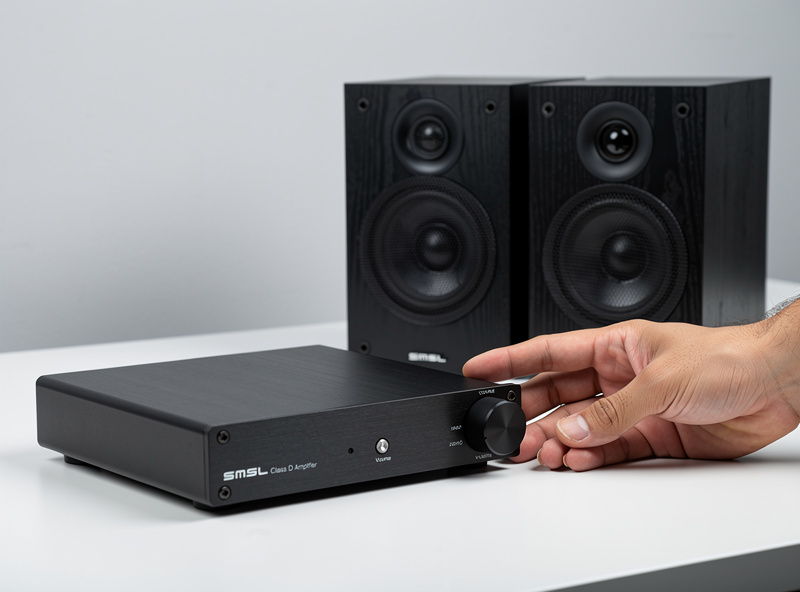
The SMSL A300 delivers 165 watts per channel into 4 ohms from a compact Class D design. Despite the low price, it includes Bluetooth 5.0, USB input, optical and coaxial digital inputs, and a subwoofer output. The A300 drives most bookshelf speakers to satisfying levels with clean, neutral sound. The compact size fits desktop setups or tight shelves. The only limitation is build quality — the lightweight chassis and plastic volume knob remind you of the price point.
Cambridge Audio CXA61 — Best Mid-Range ($600)
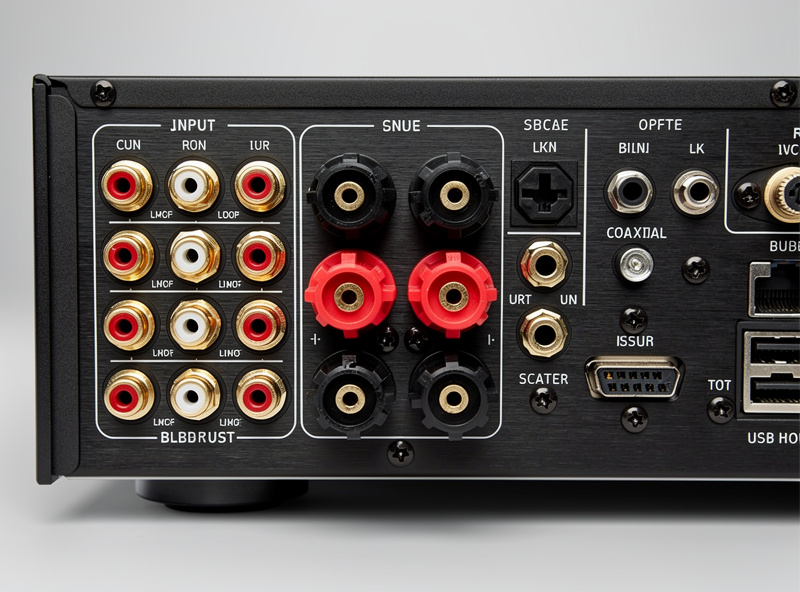
Cambridge Audio’s CXA61 delivers 60 watts per channel of Class AB amplification with exceptional clarity and dynamic range. It includes USB, optical, coaxial, and Bluetooth aptX HD inputs alongside four analog RCA inputs. The toroidal transformer provides stable power delivery during demanding musical passages. The CXA61 sounds significantly more refined than budget options, revealing details in recordings that cheaper amplifiers smear.
Marantz PM6007 — Best for Vinyl ($500)
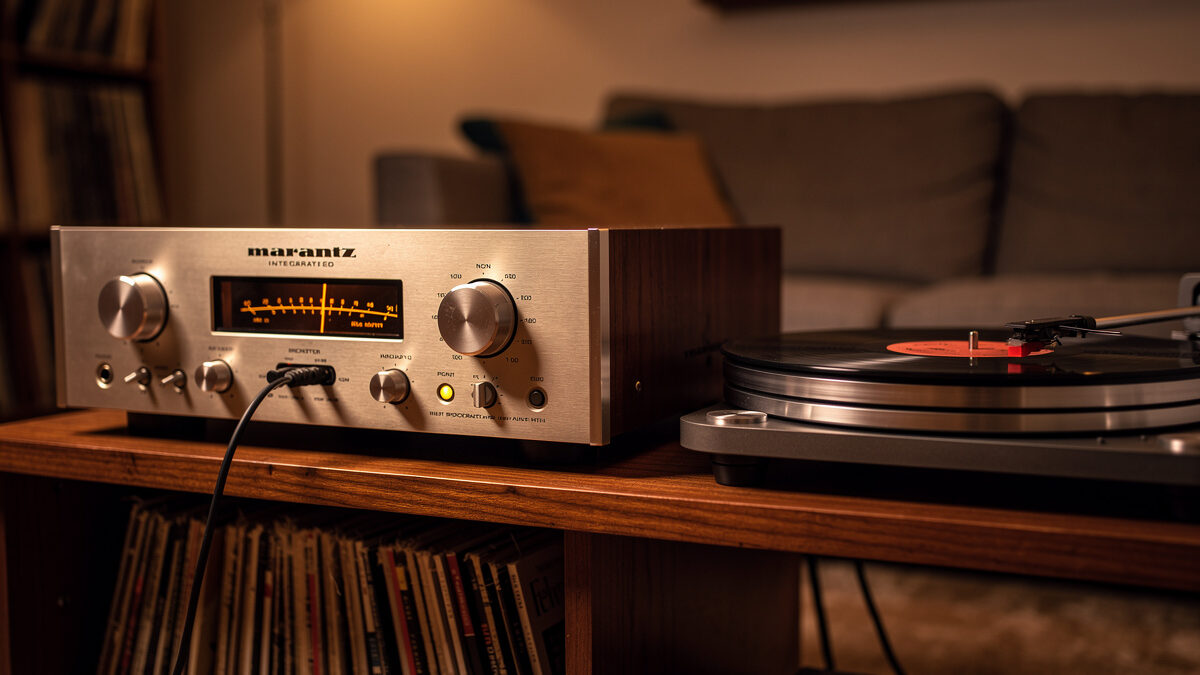
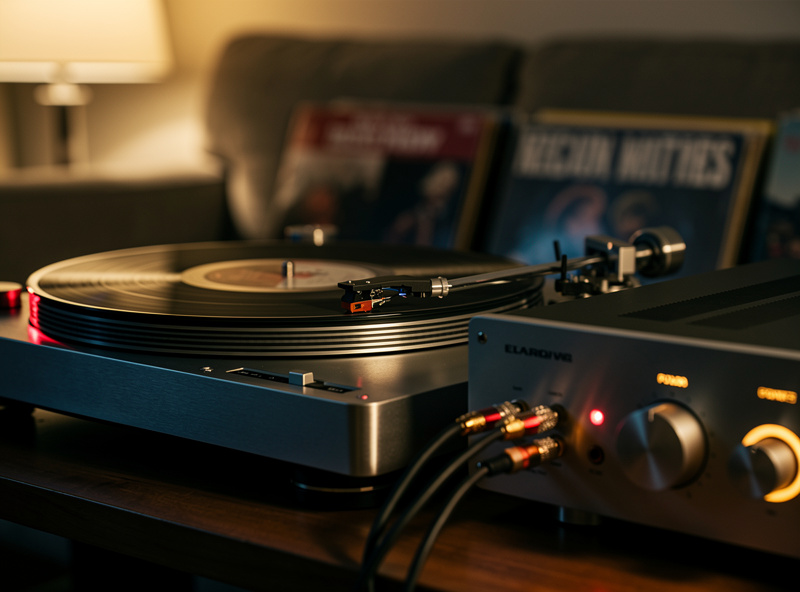
Marantz designed the PM6007 with a built-in phono preamplifier optimized for moving magnet cartridges, making it ideal for turntable owners who want a single-box solution. The 45 watts per channel of Class AB power drives efficient bookshelf speakers beautifully. Marantz’s signature warm, musical character pairs exceptionally well with the slightly analytical nature of digital sources and the natural warmth of vinyl.
Yamaha A-S301 — Most Reliable ($350)
Yamaha’s A-S301 has earned a reputation for bulletproof reliability over decades of production. The 60 watts per channel of clean, neutral amplification works with any speaker type. Built-in optical and coaxial digital inputs add streaming capability. Pure Direct mode bypasses tone controls for maximum signal purity. The A-S301 represents the no-drama choice — it simply works, year after year, without maintenance or fuss.
Comparison Table
| Amplifier | Price | Power | Digital Inputs | Phono Input | Bluetooth | Best For |
|---|---|---|---|---|---|---|
| SMSL A300 | $160 | 165W (4 ohm) | USB, optical, coaxial | No | Yes (5.0) | Budget desktop systems |
| Yamaha A-S301 | $350 | 60W (8 ohm) | Optical, coaxial | Yes (MM) | No | Reliability, neutral sound |
| Marantz PM6007 | $500 | 45W (8 ohm) | Optical, coaxial | Yes (MM) | No | Turntable owners |
| Cambridge CXA61 | $600 | 60W (8 ohm) | USB, optical, coaxial | No | Yes (aptX HD) | Detail and dynamics |
Matching an Integrated Amplifier to Your Sources
Your source equipment determines which inputs your integrated amplifier needs. Turntable owners require a phono input with appropriate preamplification — either built into the amplifier or as a separate phono preamp. Streaming from phones or computers needs Bluetooth or USB input. CD players connect via analog RCA or digital coaxial/optical.
If you primarily stream music, prioritize amplifiers with quality built-in DACs and USB or Bluetooth inputs. If you primarily play vinyl, prioritize phono input quality and analog signal path purity. If you use multiple sources, ensure the amplifier has enough inputs for everything simultaneously connected. Our guide to the best USB DACs under $200 covers adding high-quality digital conversion to amplifiers lacking built-in DACs.
Power Requirements for Different Speakers
Amplifier wattage must match your speakers’ sensitivity and impedance. High-sensitivity speakers (90+ dB) play loudly with just 20-30 watts. Lower-sensitivity speakers (85-87 dB) benefit from 50-100 watts for satisfying dynamics in medium rooms. Our guide to tube vs solid state amplifiers covers how different amplifier technologies deliver power differently.
More important than peak wattage is current delivery — the ability to maintain stable voltage into difficult speaker loads during complex musical passages. A 50-watt amplifier with strong current delivery sounds more powerful than a 100-watt amplifier that struggles into 4-ohm loads. Check reviews that test amplifiers with real speakers rather than relying solely on manufacturer specifications.
Frequently Asked Questions
What is the best integrated amplifier under $500?
The Yamaha A-S301 ($350) offers the best combination of reliability, sound quality, and features. The Marantz PM6007 ($500) is the best choice for turntable owners with its built-in phono stage. The SMSL A300 ($160) delivers surprising power and features at the lowest price point.
How much power do I need from an integrated amplifier?
30-60 watts per channel drives most bookshelf speakers to satisfying levels in small to medium rooms. Larger rooms or less efficient speakers may need 80-100 watts. Speaker sensitivity matters more than room size — 90+ dB speakers need far less power than 85 dB speakers.
Do integrated amplifiers have Bluetooth?
Many modern integrated amplifiers include Bluetooth, though not all. Budget models from SMSL and Fosi typically include Bluetooth 5.0. Mid-range options like Cambridge Audio include aptX HD for higher quality. Traditional designs from Marantz and Yamaha at $350+ often omit Bluetooth, requiring a separate adapter.
Can I connect a turntable to any integrated amplifier?
Only amplifiers with a dedicated phono input can connect turntables directly. Turntable cartridges output very low voltage signals requiring phono preamplification. If your amplifier lacks a phono input, add a standalone phono preamp ($30-$200) between the turntable and any line-level input.
What is the difference between Class AB and Class D amplifiers?
Class AB amplifiers use linear output stages that waste energy as heat, producing warm, traditional sound with moderate efficiency. Class D amplifiers use switching output stages that achieve 90%+ efficiency, generating less heat in smaller packages. Modern Class D rivals Class AB in sound quality at significantly lower cost and size.
Do I need a separate DAC with an integrated amplifier?
If your integrated amplifier has digital inputs (USB, optical, coaxial), its built-in DAC may be sufficient. However, standalone DACs under $200 often outperform built-in DACs in integrated amplifiers. Add a separate DAC if you notice digital sources sounding less refined than analog sources through your system.
How long do integrated amplifiers last?
Quality integrated amplifiers from reputable brands last 15-30 years with no maintenance. Yamaha amplifiers from the 1970s still function perfectly. Class D amplifiers may have shorter lifespans due to switching component aging, but modern designs are rated for 10+ years of continuous operation.
Related Articles
Related articles will be added as hub and sibling spokes are published.