Tube vs Solid State Amplifiers
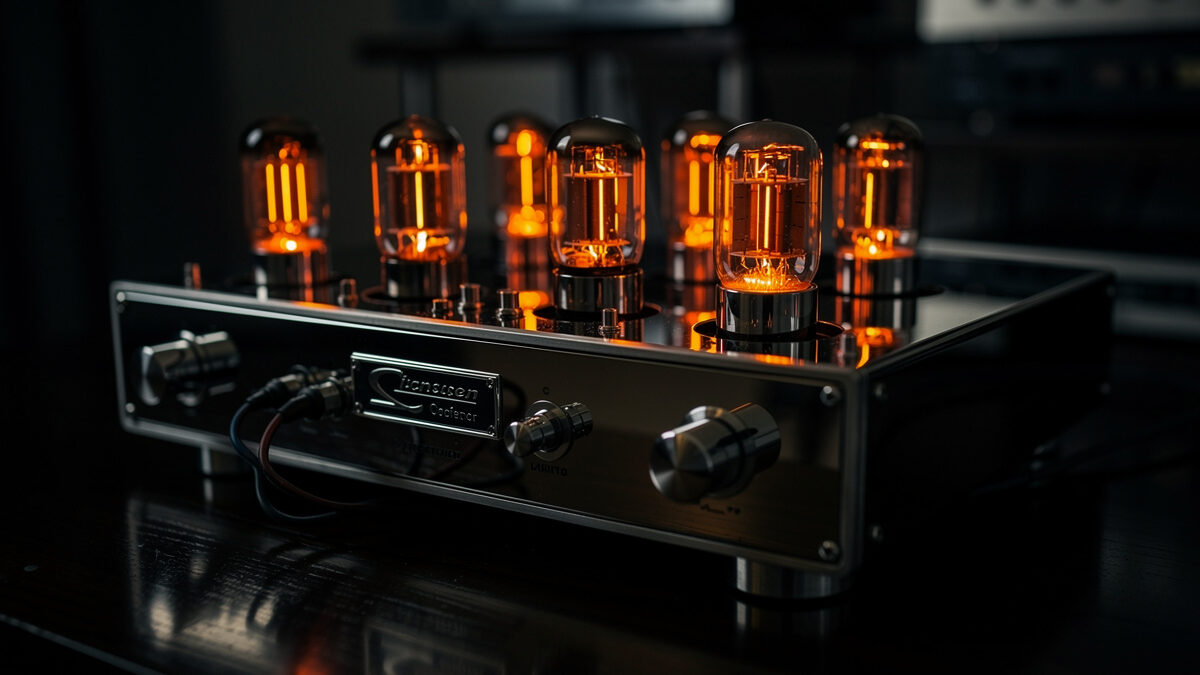
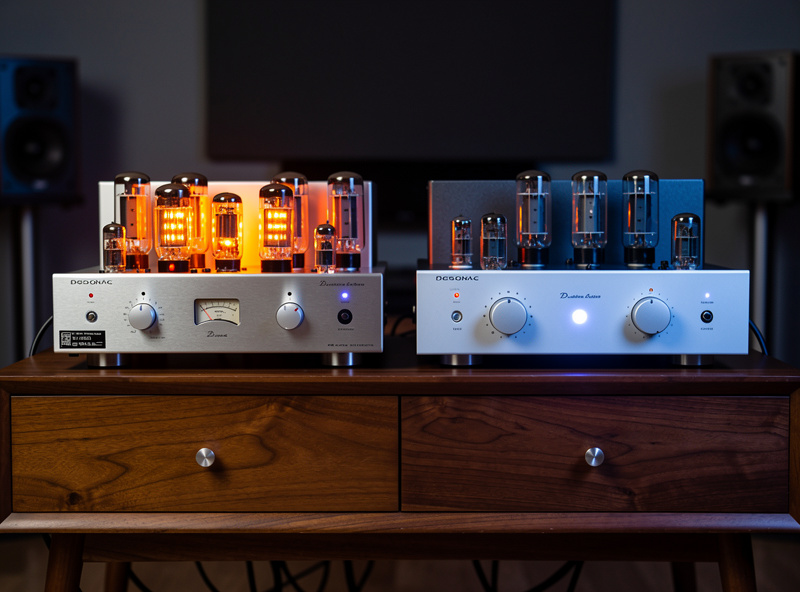
Tube amplifiers use vacuum tubes to amplify audio signals, producing warm, harmonically rich sound that many listeners prefer for jazz, vocals, and acoustic music. Solid state amplifiers use transistors, delivering cleaner, more powerful, and more reliable performance at lower cost. The choice between tube and solid state comes down to sound preference, budget, and willingness to maintain tube replacement schedules. Neither technology is objectively superior — each excels in different listening scenarios and speaker pairings.
How Tube Amplifiers Work
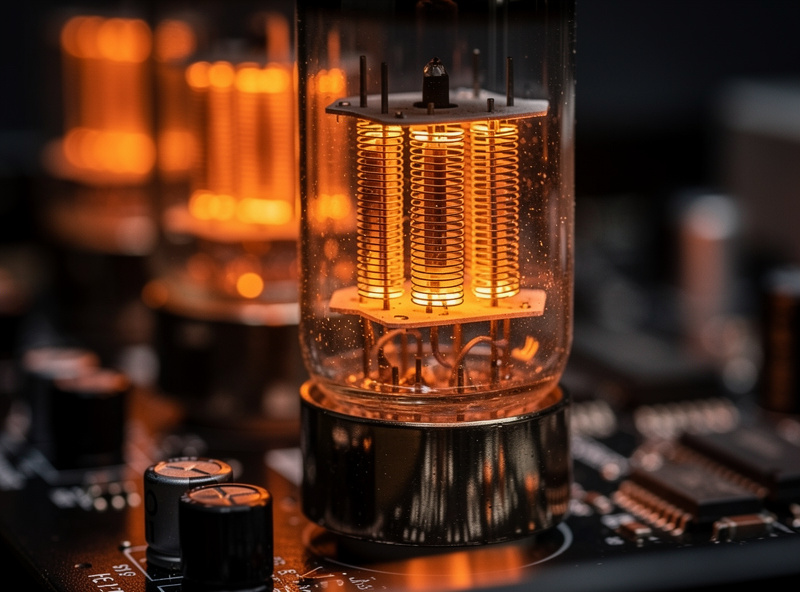
Vacuum tubes — also called valves — were the original amplification technology before transistors emerged in the 1960s. Tubes amplify audio signals by controlling electron flow between heated cathodes and plates within a vacuum-sealed glass envelope. This analog amplification process introduces even-order harmonic distortion that listeners perceive as warmth, fullness, and musical richness.
Tube amplifiers come in two circuit topologies. Single-ended designs use one tube per channel, producing modest power (typically 3-15 watts) with a simple, transparent signal path. Push-pull designs use paired tubes working in complementary phases, delivering more power (20-100+ watts) with lower distortion. Single-ended tube amps suit high-efficiency speakers in small rooms. Push-pull designs handle a wider range of speakers and room sizes.
The tube sound characteristics include a soft clipping behavior — when pushed near their power limits, tubes compress dynamics gradually rather than abruptly. This creates a pleasing saturation effect during loud passages that many listeners find more natural and less fatiguing than the hard clipping of solid state amplifiers. Tube amps also tend to produce a wider, more three-dimensional soundstage with better separation between instruments.
How Solid State Amplifiers Work
Solid state amplifiers use transistors — typically MOSFETs or bipolar junction transistors — to amplify audio signals. Transistors switch faster and more efficiently than tubes, enabling higher power output, lower heat generation, and greater reliability. Modern solid state designs achieve extremely low distortion measurements that quantify their accuracy to the input signal.
Solid state amplifiers dominate the modern market because they cost less to manufacture, require no tube replacement, and deliver consistent performance across temperature and age variations. Class AB designs balance efficiency with sound quality and represent the most common topology. Class D designs use pulse-width modulation for extremely high efficiency in compact packages, making them popular for budget and space-constrained systems.
The solid state sound signature emphasizes accuracy and control. Bass reproduction tends tighter and more defined than tubes because transistor output impedance remains consistently low across frequencies. Transient response — the ability to reproduce sudden dynamic changes — generally exceeds tube designs. This makes solid state amplifiers particularly suited for rock, electronic, and orchestral music where dynamic impact matters.
Head-to-Head Comparison
| Attribute | Tube Amplifier | Solid State Amplifier |
|---|---|---|
| Sound Character | Warm, rich harmonics, spacious soundstage | Clean, accurate, controlled bass |
| Power Output | 3-100W typical (most under 50W) | 20-500W typical |
| Distortion Profile | Even-order harmonics (pleasing) | Very low THD (transparent) |
| Price Range | $200-$10,000+ | $100-$5,000+ |
| Maintenance | Tube replacement every 1-3 years ($20-$200) | Virtually maintenance-free |
| Heat Output | High — tubes run hot | Low to moderate |
| Lifespan | Tubes degrade; circuit lasts decades | 20+ years with no degradation |
| Best For | Jazz, vocals, acoustic, intimate listening | Rock, electronic, large rooms, critical listening |
| Speaker Matching | Needs high-sensitivity speakers (89+ dB) | Works with most speakers |
| Clipping Behavior | Soft, gradual saturation | Hard, abrupt clipping |
Cost Considerations
The price comparison between tube and solid state amplifiers extends beyond initial purchase cost. Tube amplifiers require periodic tube replacement — power tubes every 1-2 years with heavy use, preamp tubes every 3-5 years. A set of EL34 power tubes costs $40-$80. KT88 or 300B tubes cost $100-$400 per matched pair. Over five years, tube maintenance adds $100-$500 to the total cost of ownership depending on tube type and listening hours.
Solid state amplifiers require no consumables. Quality units last 20+ years without component replacement. The only maintenance involves occasional cleaning of input connections. Total cost of ownership favors solid state for budget-conscious listeners, though tube enthusiasts consider tube replacement part of the experience — swapping tube brands changes the sound character, allowing customization impossible with solid state.
Entry-level tube amplifiers start around $200-$300 from brands like Monoprice, Reisong, and Fosi Audio. These Chinese-manufactured units deliver genuine tube sound at accessible prices but may use lower-quality components that affect longevity. Mid-range tube amps from brands like PrimaLuna, Cayin, and Woo Audio range from $500-$2,000 with superior build quality and sound. Audiophile tube amplifiers from McIntosh, Audio Research, and VAC exceed $5,000.
Solid state entry points start lower — $100-$200 buys capable integrated amplifiers from SMSL, Topping, and Fosi Audio. Mid-range options from Cambridge Audio, Marantz, and Yamaha range from $300-$1,000. Our guide to the best budget amplifiers under $500 covers top solid state performers. Premium solid state from Parasound, Hegel, and NAD ranges from $1,000-$3,000.
Speaker Matching
Tube and solid state amplifiers interact differently with speaker loads due to output impedance differences. Understanding these interactions prevents disappointing pairings.
Tube amplifiers typically have higher output impedance than solid state, creating frequency response variations with different speaker loads. This interaction actually contributes to the tube sound — the amplifier and speaker influence each other in ways that create the characteristic warmth. However, high output impedance means tube amps deliver less power into low-impedance speakers. Most tube amplifiers perform best with speakers rated 6-8 ohms and sensitivity above 89dB.
Solid state amplifiers maintain low output impedance across frequencies, delivering consistent power regardless of speaker impedance. This control produces tighter bass and more predictable frequency response. Solid state amplifiers work well with virtually any speaker, including challenging 4-ohm loads that may trouble tube designs.
If you already own speakers, check their sensitivity and impedance ratings before choosing an amplifier type. Low-sensitivity speakers (below 87dB) demand solid state power. High-sensitivity speakers (90+ dB) reveal the tube advantage — the speakers need less power, allowing modest tube amplifiers to drive them beautifully. Our guide to integrated amplifiers for vinyl and digital covers both tube and solid state options across price ranges.
Hybrid Amplifiers
Hybrid amplifiers combine a tube preamp stage with a solid state power stage, attempting to capture tube warmth in the signal coloring while delivering solid state power and reliability. The tube preamp adds harmonic richness to the signal before the solid state power section amplifies it to speaker-driving levels.
Hybrids appeal to listeners who want tube character without tube power limitations or maintenance costs. They typically cost between pure tube and pure solid state options at equivalent power levels. However, purists argue that hybrids compromise both technologies — the tube stage operates at low levels where tube character is least pronounced, while the solid state power stage still clips hard during overloads.
Popular hybrid options include the Vincent SV-237 ($1,200) and several Chinese-manufactured units from brands like Xiangsheng and Boyuurange ($200-$500). These provide a taste of tube sound at prices below dedicated tube amplifiers with equivalent power.
Making Your Decision
Choose tube amplification if you primarily listen to jazz, vocals, classical, or acoustic music at moderate volumes in small to medium rooms. Tubes excel at creating intimate, enveloping sound that makes solo performers and small ensembles feel present in your room. You should also enjoy the ritual aspect — warming up tubes, selecting tube brands, and accepting maintenance as part of the hobby.
Choose solid state if you listen across genres including rock, electronic, and orchestral music, need high power for large rooms, prefer maintenance-free operation, or prioritize measured accuracy over harmonic coloration. Solid state also makes sense for listeners who want one amplifier that works with any speaker they might purchase in the future.
Whatever you choose, listen before buying whenever possible. Audio preferences are deeply personal, and measurements alone cannot predict which technology you will prefer. Many audio dealers offer audition periods or in-home trials that let you evaluate amplifiers in your actual room with your specific speakers.
Frequently Asked Questions
Do tube amplifiers sound better than solid state?
Neither sounds objectively better. Tube amplifiers produce warmer, harmonically richer sound that many prefer for jazz, vocals, and acoustic music. Solid state amplifiers deliver cleaner, more powerful, and more accurate reproduction that suits rock, electronic, and large-room listening. Preference depends entirely on your musical taste and priorities.
How long do tubes last in an amplifier?
Power tubes last 1,000-3,000 hours of use, typically 1-2 years for regular listeners. Preamp tubes last 5,000-10,000 hours or 3-5 years. Quality tubes from JJ Electronics, Electro-Harmonix, or Mullard reissues maintain performance throughout their rated lifespan. Cheap tubes may degrade faster.
Are tube amplifiers worth the maintenance?
Tube maintenance costs $40-$200 per year depending on tube type. Many enthusiasts consider tube rolling — swapping different tube brands to adjust sound character — part of the enjoyment. If maintenance concerns you, solid state eliminates this entirely, or consider a hybrid amplifier for partial tube character without tube power section maintenance.
Can I use tube amplifiers with any speakers?
Tube amplifiers perform best with high-sensitivity speakers rated 89dB or higher and 6-8 ohm impedance. Low-sensitivity speakers below 87dB require more power than most tube amplifiers deliver, making solid state a better match. Always verify your speaker specifications before purchasing a tube amplifier.
What is the best budget tube amplifier?
The Reisong A10 ($250) and Monoprice Pure Tube ($200) offer genuine single-ended tube sound at entry-level prices. For more power, the Fosi Audio T20 ($150) provides hybrid tube-solid state at the lowest price. Mid-range options from Cayin ($500-$800) deliver significantly better build quality and sound.
Do solid state amplifiers need to warm up?
Solid state amplifiers reach full performance within seconds of powering on. Some audiophile solid state designs benefit from 15-30 minutes of warm-up as internal components reach thermal equilibrium, but the difference is subtle. Tube amplifiers require 5-15 minutes of warm-up before reaching optimal operating temperature.
What is Class D amplification?
Class D amplifiers use pulse-width modulation to achieve 90%+ efficiency compared to 30-50% for Class AB designs. Modern Class D from Hypex, Purifi, and ICEpower rivals traditional Class AB in sound quality while generating less heat in smaller enclosures. Budget Class D from SMSL and Topping offers excellent value under $200.
Related Articles
Related articles will be added as hub and sibling spokes are published.