Best Bookshelf Speakers Under $300
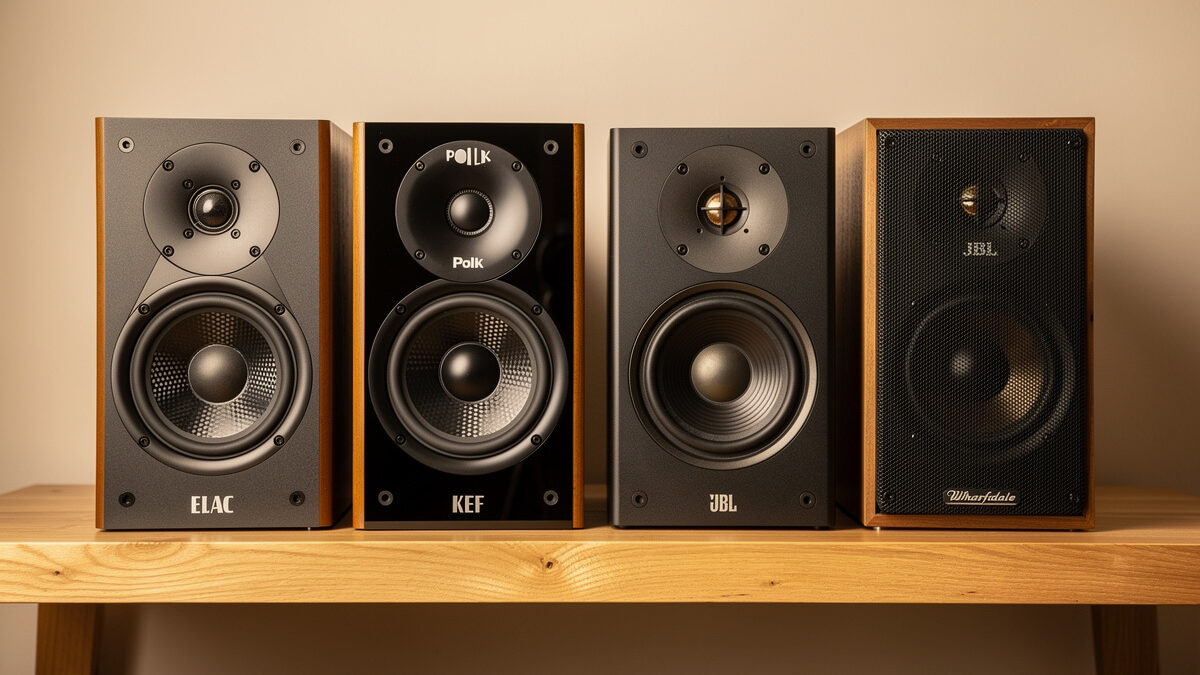
The best bookshelf speakers under $300 deliver sound quality that approaches or matches speakers costing twice as much, making them the sweet spot for hi-fi beginners and budget-conscious listeners. Models like the ELAC Debut B6.2, KEF Q150, and Polk R200 offer genuine hi-fi performance — clear midrange, controlled bass, and detailed treble — without crossing into audiophile pricing. This guide reviews the top performers, explains what specifications matter, and helps you match speakers to your amplifier and room.
What to Look for in Bookshelf Speakers
Not all bookshelf speakers perform equally, even within the same price range. Understanding key specifications and design choices helps you identify speakers that match your listening preferences, room size, and existing equipment.
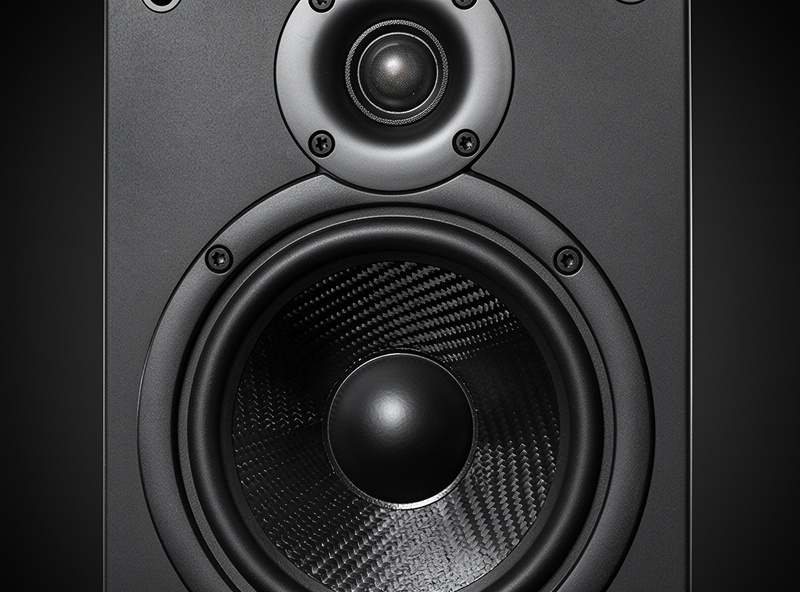
Driver Configuration: Most bookshelf speakers use a two-way design with a tweeter handling high frequencies and a woofer handling midrange and bass. Woofer size typically ranges from 4 inches to 6.5 inches. Larger woofers move more air, producing deeper bass and greater dynamic range. However, larger drivers require bigger cabinets that may not fit your intended placement. A 5.25-inch woofer represents the most versatile size for bookshelf speakers.
Sensitivity Rating: Sensitivity measures how loud a speaker plays with one watt of power, measured at one meter distance. Higher sensitivity (89+ dB) means your speakers play louder with less amplifier power. Lower sensitivity (85-87 dB) requires more powerful amplification but often correlates with more refined, controlled sound. Match speaker sensitivity to your amplifier’s capability.
Impedance: Most bookshelf speakers are rated at 4, 6, or 8 ohms impedance. Lower impedance draws more current from amplifiers, potentially causing overheating with underpowered units. Most modern amplifiers handle 4-ohm loads without issue, but verify your amplifier’s specifications before pairing low-impedance speakers with budget amplifiers.
Cabinet Construction: Rigid, well-braced cabinets prevent resonances that color the sound. Look for MDF construction at minimum, with internal bracing that reduces panel vibration. Ported designs (rear or front-firing ports) extend bass response but may boom near walls. Sealed cabinets produce tighter bass with less room interaction.
Top Bookshelf Speakers Under $300
ELAC Debut B6.2 — Best Overall
Andrew Jones designed the ELAC Debut B6.2 to deliver performance well above its $280/pair price. The 6.5-inch aramid fiber woofer produces bass extension down to 44Hz — remarkable for a bookshelf speaker at this price. The soft dome tweeter provides smooth, non-fatiguing treble that works well with various recording qualities.
These speakers work best with 40-120 watt amplifiers. Sensitivity of 87dB requires moderate power for satisfying volume levels. The neutral, forgiving character makes them excellent for long listening sessions and diverse music genres.
KEF Q150 — Best for Detail
KEF’s Q150 uses the company’s signature Uni-Q driver array, placing the tweeter concentrically within the woofer. This design creates a wider, more uniform soundstage than conventional separate-driver speakers. The Q150 delivers exceptional imaging — instruments occupy distinct positions in the soundstage rather than smearing across the front of the room. Bass extends to 51Hz, shallower than the ELAC but tighter and more defined.
The Q150 regularly drops to $300/pair during sales (original MSRP $550), making it arguably the best value in this category. Sensitivity of 86dB needs moderate amplification. The Uni-Q design also creates a wider sweet spot, benefiting listeners who move around the room rather than sitting in a fixed position.
Polk Audio Reserve R200 — Best Bass
Polk’s Reserve R200 features a 6.5-inch turbine cone woofer and a 1-inch ring radiator tweeter, delivering bass response down to 39Hz — the deepest in this price range. The R200 produces authoritative bass that satisfies without a subwoofer in small to medium rooms. Polk’s patented Power Port technology reduces port noise and turbulence, enabling clean bass output at higher volumes.
Build quality exceeds expectations at the $300/pair price point, with reinforced cabinets and quality crossover components. Sensitivity of 86dB matches the KEF, requiring similar amplification. The R200 suits listeners who prioritize bass impact and dynamic range over ultimate refinement.
JBL Stage A130 — Best Value
At approximately $200/pair, the JBL Stage A130 delivers performance that embarrasses many $300+ competitors. JBL’s compression driver tweeter provides extended, detailed treble with excellent dispersion. The 5.25-inch woofer handles midrange with clarity that makes vocals sound immediate and present. Bass extends to 55Hz — limited but tight and musical.
The A130’s party trick is dynamic range. These speakers play loudly without compression or distortion, making them ideal for larger rooms or parties. Sensitivity of 89dB means even modest amplifiers drive them to satisfying levels. The trade-off is a slightly forward treble that some listeners find aggressive with bright recordings.
Wharfedale Diamond 12.1 — Best for Warmth
Wharfedale’s Diamond 12.1 uses a 5-inch woven Kevlar woofer and soft dome tweeter in a cabinet that prioritizes musical warmth over analytical detail. These speakers produce a rich, engaging sound that makes listening enjoyable rather than clinical. Bass reaches 55Hz with fullness that belies the compact cabinet.
The Diamond 12.1 suits listeners who prefer smooth, fatigue-free listening over hyper-detailed reproduction. Priced around $250/pair, they pair exceptionally well with slightly bright amplifiers that benefit from the Wharfedale’s warmer character.
Comparison Table
| Speaker | Price (pair) | Woofer | Bass Extension | Sensitivity | Best For |
|---|---|---|---|---|---|
| ELAC Debut B6.2 | $280 | 6.5″ aramid | 44Hz | 87dB | Overall balanced sound |
| KEF Q150 | $300 (sale) | 5.25″ Uni-Q | 51Hz | 86dB | Detail and imaging |
| Polk R200 | $300 | 6.5″ turbine | 39Hz | 86dB | Bass depth and dynamics |
| JBL Stage A130 | $200 | 5.25″ poly | 55Hz | 89dB | Value and loudness |
| Wharfedale 12.1 | $250 | 5″ Kevlar | 55Hz | 87dB | Warm, musical tone |
Matching Speakers to Your Amplifier
Bookshelf speakers need amplification to function, making amplifier matching essential. Understanding the relationship between speaker impedance, sensitivity, and amplifier power prevents disappointing pairings.
Speakers rated at 6-8 ohms impedance work with virtually any amplifier. Speakers rated at 4 ohms demand more current and may overheat budget amplifiers during loud passages. Check your amplifier’s specifications for minimum impedance ratings before purchasing.
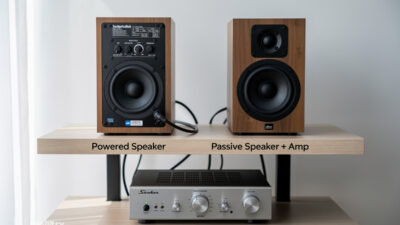
Sensitivity determines how much power you need. Speakers rated 89dB+ play loudly with 20-30 watt amplifiers. Speakers rated 85-87dB benefit from 50-100 watts for satisfying dynamic range in medium rooms. Underpowered speakers sound compressed and lifeless during musical peaks. Our guide to powered vs passive speakers covers the powered alternative that eliminates amplifier matching entirely.
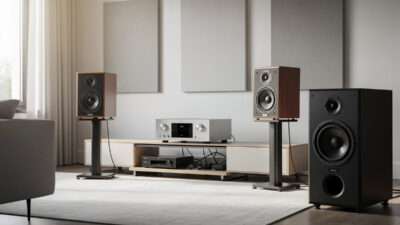
If you plan to add a subwoofer, ensure your amplifier has a subwoofer output or pre-out connection. Most integrated amplifiers and AV receivers include this. Set the subwoofer crossover at 80Hz to relieve your bookshelf speakers from reproducing deep bass they handle poorly, improving overall clarity and dynamic range.
Speaker Placement for Bookshelf Models
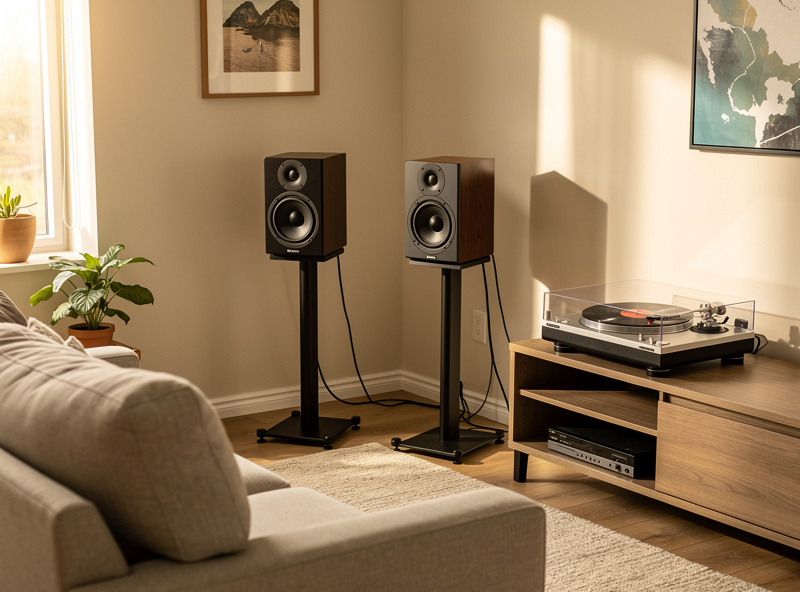
Even excellent speakers sound mediocre with poor placement. Bookshelf speakers require stands or shelves positioned at ear level when seated. Placing speakers directly on the same surface as a turntable transmits vibrations that cause feedback and muddy bass.
Position speakers forming an equilateral triangle with your listening position. Angle them slightly inward toward your ears. Keep them at least 6 inches from rear walls if rear-ported, or experiment with distance to balance bass response. Side wall distance affects stereo imaging — too close collapses the soundstage, too far wastes it. Our detailed speaker placement guide covers specific measurements for optimal positioning.
Isolation pads or foam wedges under speakers decouple them from stands or shelves, reducing surface vibrations and tightening bass response. These cost $10-$20 and provide noticeable improvement on hard surfaces like glass or metal shelves.
When to Add a Subwoofer
Bookshelf speakers typically roll off below 50-60Hz, missing the deepest bass notes in music and movie soundtracks. A subwoofer fills this gap, adding the physical weight and impact that makes bass guitar, kick drums, and electronic bass feel present rather than implied.
Add a subwoofer if you listen to bass-heavy genres (hip-hop, electronic, orchestral), watch movies through your system, or feel your speakers lack low-end weight. A 10-inch sealed subwoofer like the RSL Speedwoofer 10S ($400) or SVS SB-1000 ($500) integrates well with all speakers in this guide. Set the crossover at 80Hz, adjust phase until bass sounds cohesive, and position the subwoofer using the crawl test — place it at your listening position, crawl around the room perimeter, and position it where bass sounds best.
Frequently Asked Questions
What are the best bookshelf speakers under $300?
The ELAC Debut B6.2 offers the best overall balance at $280/pair with deep 44Hz bass. The KEF Q150 provides the best imaging at $300 on sale. The JBL Stage A130 delivers exceptional value at $200/pair. All three deliver genuine hi-fi performance.
Do bookshelf speakers need an amplifier?
Passive bookshelf speakers like the ELAC B6.2 and KEF Q150 require an external amplifier. Powered bookshelf speakers with built-in amplifiers connect directly to a source. Passive speakers offer more upgrade flexibility; powered speakers simplify setup.
How big should bookshelf speakers be for a small room?
For rooms under 150 square feet, 5.25-inch woofer speakers like the JBL A130 or KEF Q150 work best without overwhelming the space. Rooms 150-300 square feet benefit from 6.5-inch models like the ELAC B6.2 or Polk R200 for fuller bass and dynamic range.
Can bookshelf speakers replace a subwoofer?
Bookshelf speakers with 6.5-inch woofers like the ELAC B6.2 and Polk R200 produce satisfying bass for most music without a subwoofer. However, they cannot reproduce the deepest frequencies below 40Hz that add physical impact to bass-heavy music and movie soundtracks.
What amplifier power do bookshelf speakers need?
Most bookshelf speakers perform well with 30-100 watts per channel. Higher sensitivity speakers (89+ dB) work with as little as 15-20 watts. Lower sensitivity models (85-87 dB) benefit from 50-100 watts for full dynamic range in medium rooms.
Should I put bookshelf speakers on stands?
Yes, speaker stands position bookshelf speakers at ear level and decouple them from surfaces that cause vibrations. Stands also allow proper spacing from walls and optimal toe-in angle. Budget stands cost $30-$80 per pair and improve sound noticeably over shelf placement.
Are bookshelf speakers better than tower speakers?
Bookshelf speakers offer better value per dollar because smaller cabinets cost less to manufacture. They work better in small rooms where tower speakers overwhelm the space. Tower speakers deliver deeper bass and higher output without a subwoofer but cost more for equivalent quality.
Related Articles
Related articles will be added as hub and sibling spokes are published.