Powered vs Passive Speakers
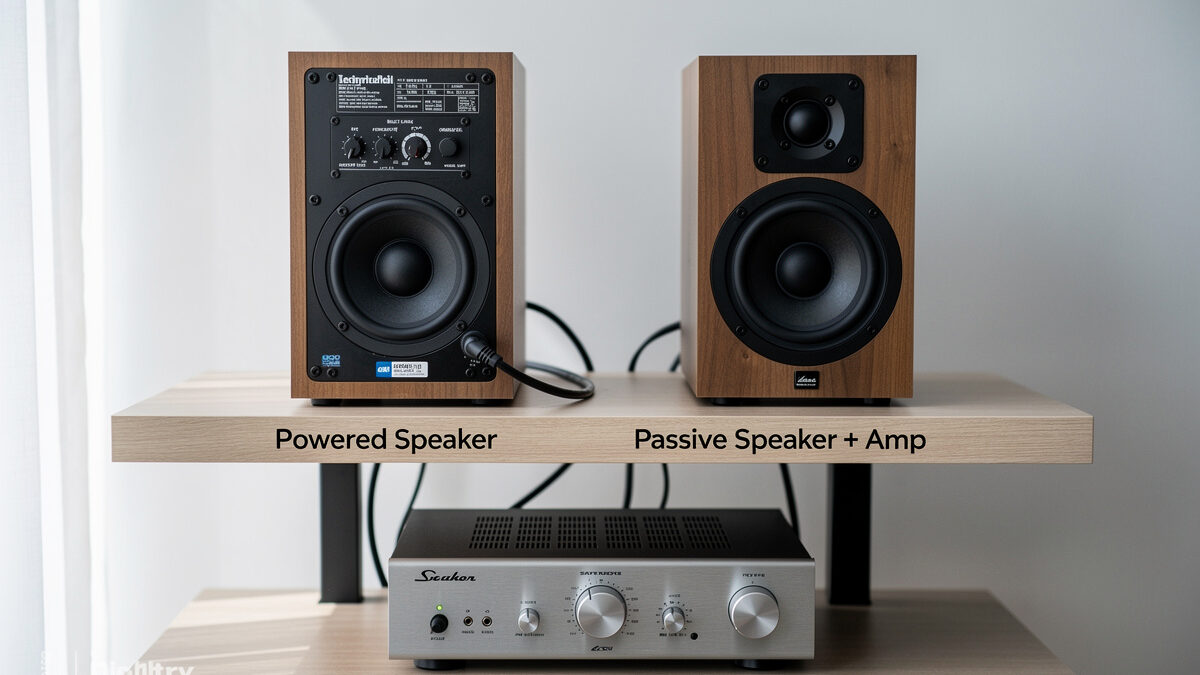
Powered speakers have built-in amplifiers and connect directly to your source, while passive speakers require a separate amplifier to function. Powered speakers simplify setup and reduce total system cost. Passive speakers offer more flexibility for upgrades and component matching. The right choice depends on your budget, space constraints, and whether you prefer simplicity or expandability in your hi-fi system.
How Powered Speakers Work
Powered speakers integrate amplification directly into one or both speaker cabinets. The amplifier connects to the speaker drivers through short internal wiring, eliminating external speaker cables. Most powered speakers accept analog RCA, 3.5mm aux, Bluetooth, and sometimes optical digital inputs. Some include USB DACs for direct computer connection. Volume control happens on the speaker, via remote, or through the source device.
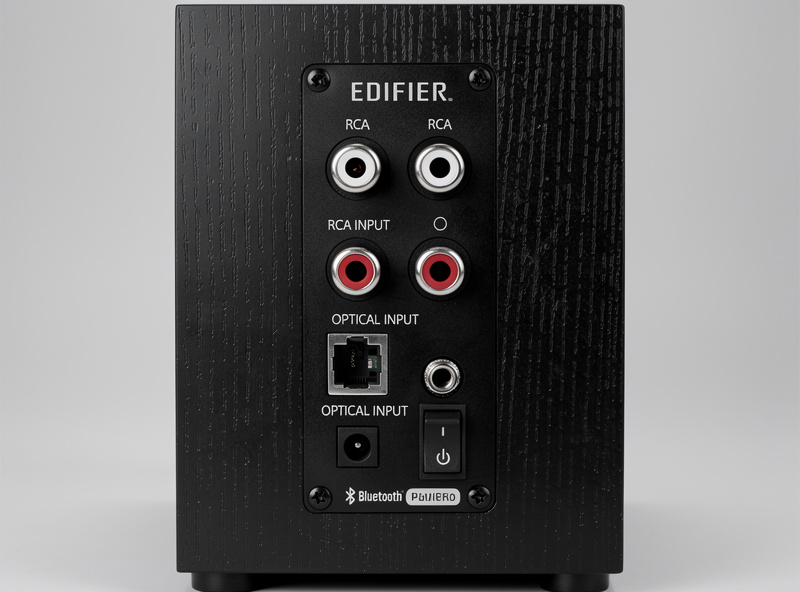
Active speakers take powered design further by including dedicated amplifiers for each driver — separate amplifiers for the woofer and tweeter with an electronic crossover managing the frequency split. This bi-amplification provides better control than passive crossovers, reducing intermodulation distortion and improving dynamic range. True active speakers like the KEF LS series and Genelec monitors represent the most technically advanced speaker designs.
Powered speakers suit minimalist setups, desktop systems, and listeners who want quality sound without component complexity. They eliminate amplifier matching decisions and reduce cable clutter. However, if the internal amplifier fails, the entire speaker requires service. You cannot upgrade amplification independently.
How Passive Speakers Work
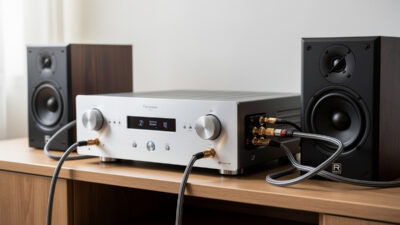
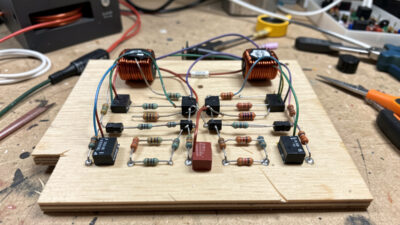
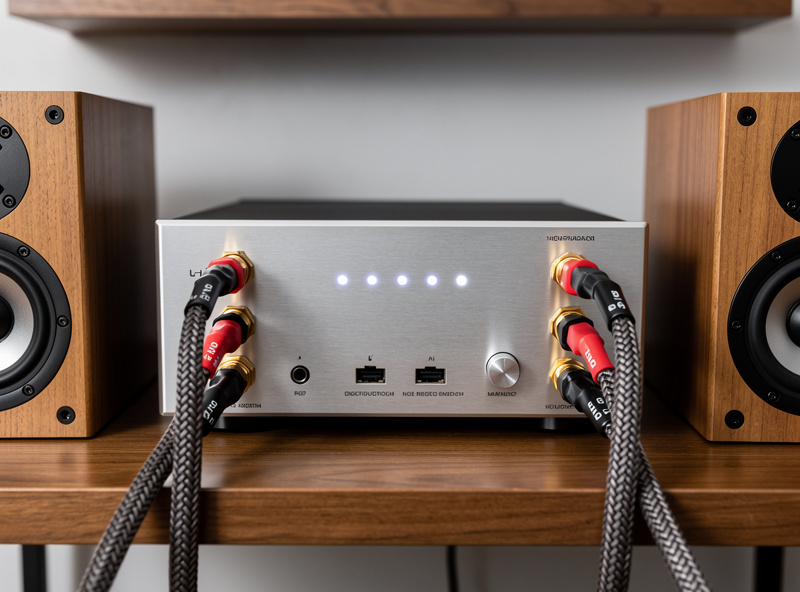
Passive speakers contain no amplification — only drivers and a passive crossover network that divides frequencies between the woofer and tweeter. They receive amplified signals through speaker cables from an external amplifier or AV receiver. The passive crossover uses capacitors, inductors, and resistors to route appropriate frequencies to each driver.
The passive approach separates concerns: the amplifier handles power delivery, the speakers handle sound reproduction. This separation allows independent upgrading — you can improve your amplifier without replacing speakers, or vice versa. External amplifiers also tend to offer more power, better build quality, and more features than built-in amplifiers in powered speakers at equivalent price points.
Passive speakers suit listeners building multi-component systems, those who want upgrade flexibility, and situations requiring more power than most powered speakers deliver. They also integrate naturally with AV receivers for home theater systems that combine stereo music listening with surround sound movie watching.
Head-to-Head Comparison
| Feature | Powered Speakers | Passive Speakers |
|---|---|---|
| Amplification | Built-in (cannot change) | External (choose and upgrade freely) |
| Setup Complexity | Plug and play — source to speakers | Requires amplifier, speaker cables, more connections |
| Total System Cost | Lower ($200-$800 for complete system) | Higher ($300-$1,500+ including amplifier) |
| Upgrade Flexibility | Limited — replace entire speakers | High — upgrade speakers, amplifier, or cables independently |
| Cable Clutter | Minimal — power cable + source cable | More — power + interconnect + speaker cables |
| Power Output | Typically 20-80W per speaker | Depends on external amplifier (up to 500W+) |
| Sound Quality per Dollar | Excellent at budget prices | Better at mid-range ($500+) with matching components |
| Best Use Case | Desktop, bedroom, minimalist setup | Dedicated listening room, multi-source, home theater |
| Failure Mode | Internal amp failure = replace speaker | Amp or speaker can be replaced independently |
| Bluetooth/WiFi | Usually built-in | Requires separate streamer or receiver |
Best Powered Speakers Under $500
The powered speaker market has matured significantly, offering genuine hi-fi sound from compact packages.
Edifier S2000MKIII ($400): The flagship Edifier delivers 130W total power with planar diaphragm tweeters and 5.5-inch aluminum woofers. Bluetooth 5.0 aptX HD, optical, coaxial, and dual RCA inputs provide connectivity for every source. The S2000MKIII produces dynamic, detailed sound that rivals passive speakers costing twice as much when you include amplifier costs.
Kanto YU6 ($330): Kanto’s YU6 combines 200W total power with phono input, Bluetooth 4.2, and optical input. The built-in phono preamp connects turntables directly — unique among powered speakers at this price. The YU6 produces warm, engaging sound that makes long listening sessions enjoyable rather than fatiguing.
Audioengine A5+ ($400): The Audioengine A5+ has earned a decade-long reputation for balanced, natural sound from a simple powered design. 150W total power drives the 5-inch woofers to satisfying levels. The A5+ prioritizes tonal accuracy over bass impact, making it ideal for acoustic, jazz, and vocal music.
Best Passive Speakers Under $500
Pairing budget passive speakers with a modest amplifier often outperforms powered speakers at equivalent total cost.
ELAC Debut B6.2 ($280) + SMSL A300 ($160): This $440 combination delivers more power, better bass extension, and more upgrade flexibility than any powered speaker under $500. The ELAC’s 6.5-inch woofer produces deeper bass than most powered designs. The SMSL provides 165W and Bluetooth. Total system equals or exceeds the Edifier S2000MKIII at similar cost.
KEF Q150 ($300 on sale) + Yamaha A-S301 ($350): At $650 total, this combination exceeds typical powered speaker budgets but delivers genuinely audiophile-grade sound. The KEF’s Uni-Q driver provides imaging that powered speakers at any price struggle to match. The Yamaha amplifier’s reliability ensures decades of service.
Choosing Based on Your Situation
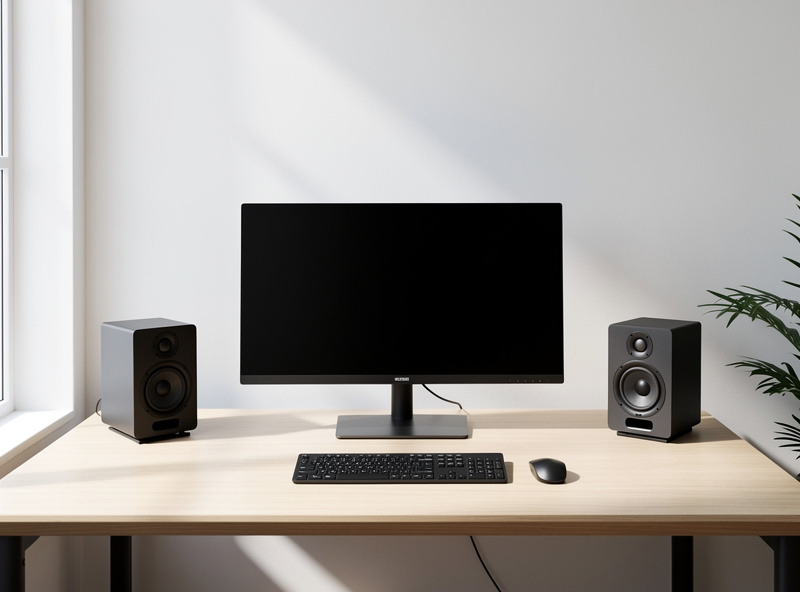
Choose powered speakers if you want a simple, complete system under $500, listen at a desk or in a small room, value minimal cable clutter, and prefer not to research amplifier options. Powered speakers make excellent first hi-fi systems that can later serve as secondary systems if you upgrade to passive.
Choose passive speakers if you want long-term upgrade flexibility, plan to use multiple sources requiring different inputs, need more power than powered speakers deliver, or want to integrate with a home theater receiver. Passive speakers cost more upfront but offer better value over time as you upgrade individual components. Our guide to the best bookshelf speakers under $300 covers top passive options.
Our guide to speaker placement for best sound applies to both powered and passive designs — proper positioning improves any speaker’s performance regardless of amplification method.
Frequently Asked Questions
Are powered speakers better than passive speakers?
Neither is objectively better. Powered speakers simplify setup and reduce total system cost by including amplification. Passive speakers offer more upgrade flexibility and typically deliver more power from external amplifiers. Choose powered for simplicity under $500; choose passive for long-term flexibility and higher performance ceilings.
Can I connect a turntable to powered speakers?
Only if the powered speakers include a phono input with built-in phono preamp. The Kanto YU6 includes this feature. For other powered speakers, add a standalone phono preamp ($30-$100) between the turntable and the speaker line input.
Do powered speakers sound as good as passive?
At budget prices ($200-$400), powered speakers often outperform passive + amplifier combinations because their internal amplification is optimized for the specific drivers. Above $500 total system cost, passive speakers with quality external amplification typically outperform equivalently priced powered designs.
How long do powered speakers last?
Quality powered speakers last 10-15 years with no maintenance. The internal amplifier is the component most likely to fail, typically after 8-12 years of daily use. Passive speakers with external amplification last 20+ years because the amplifier can be replaced independently.
Can I add a subwoofer to powered speakers?
Most powered speakers include a subwoofer output for connecting an external subwoofer. Set the subwoofer crossover at 80Hz to relieve the powered speakers from deep bass reproduction. Check your specific model for subwoofer output availability.
What is the best powered speaker for a desk?
For desktop use, compact models like the Kanto YU4 ($230) or Audioengine A2+ ($270) fit better than full-size designs. The Edifier R1280T ($100) offers the best budget option. Ensure the speakers sit on isolation pads to prevent desk vibration from affecting sound quality.
Do I need a DAC with powered speakers?
If your powered speakers have digital inputs (optical, USB), their built-in DAC may be sufficient. Analog-only powered speakers benefit from an external DAC ($30-$100) connected between your computer and the speakers for improved digital audio quality.
Related Articles
Related articles will be added as hub and sibling spokes are published.