Hi-Fi Audio Systems: Complete Beginner Guide
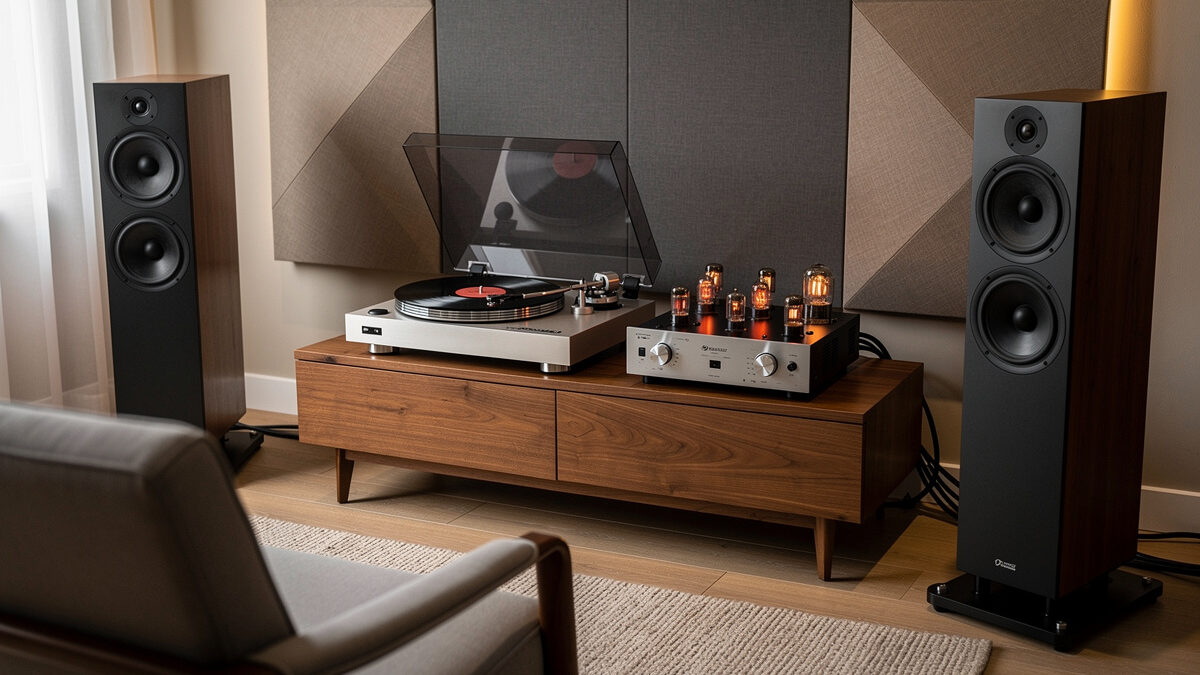
A hi-fi audio system reproduces recorded music with high fidelity to the original performance, using separate components — source, amplifier, and speakers — chosen for sound quality rather than convenience. Unlike Bluetooth speakers or soundbars that compress audio for portability, hi-fi systems prioritize clarity, detail, and soundstage that reveals instruments and vocals as the recording engineer intended. Entry-level hi-fi setups start around $300 and scale to $10,000+ for audiophile-grade systems. Whether you are upgrading from a portable speaker or building your first dedicated listening setup, this guide covers every component, connection type, and budget tier that defines high-fidelity audio.
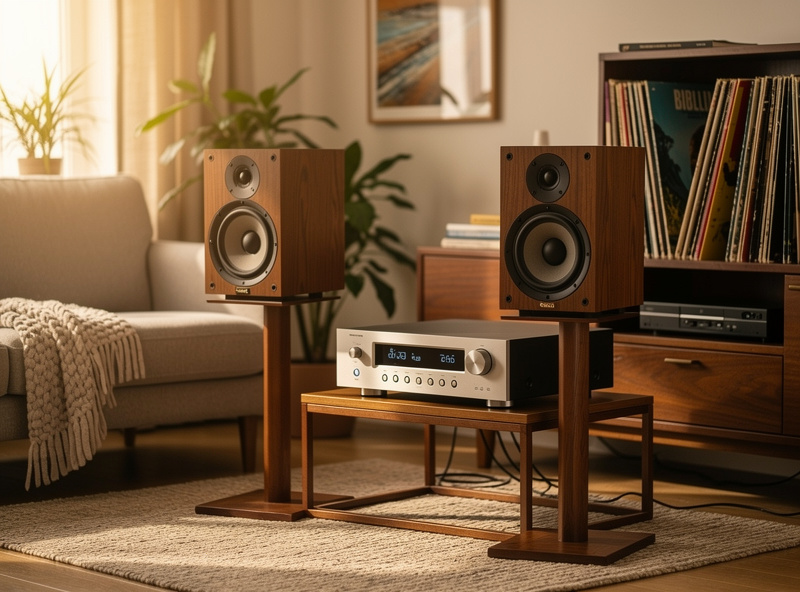
What Makes Audio “Hi-Fi”
The term hi-fi — short for high fidelity — describes audio equipment designed to reproduce sound as accurately as possible. A hi-fi system aims to minimize distortion, noise, and coloration so you hear the recording rather than the equipment playing it. This philosophy contrasts with consumer audio products that emphasize bass boost, loudness enhancement, or spatial effects that alter the original sound.
Hi-fi systems achieve accuracy through several design principles. Low total harmonic distortion ensures clean signal reproduction. Wide frequency response captures the full audible spectrum from deep bass to extended highs. High signal-to-noise ratios eliminate background hiss. Quality components — from DAC chips to speaker drivers — contribute to these measurements. The result is sound that reveals details compressed systems simply cannot reproduce: the breath before a vocal phrase, room ambience around a piano, or the individual pluck of guitar strings within a dense mix.
However, hi-fi does not mean expensive by definition. A $300 system with well-matched components can outperform a $1,000 system with poor pairing. Understanding how each component contributes to the signal chain helps you allocate budget where it matters most for your listening preferences and room acoustics.
The Signal Chain: Source to Speaker
Every hi-fi system follows the same fundamental signal path: a source device generates or reads audio, an amplifier boosts the signal to speaker-driving levels, and speakers convert electrical signals into sound waves. Understanding this chain helps you identify which components to prioritize and where upgrades yield the most improvement.
Source: The source provides your audio signal. This could be a turntable reading vinyl grooves, a digital streamer decoding files from Tidal or Spotify, a CD player, or a computer running a USB DAC. Source quality determines the ceiling of your system — no downstream component can recover information the source fails to capture. A compressed Bluetooth stream limits your system regardless of how good your speakers are.
Amplifier: The amplifier takes the low-level signal from your source and boosts it to levels powerful enough to drive speakers. Amplifiers come in integrated form (combining preamp and power amp in one box) or separates (individual preamp and power amp units). The amplifier also handles source selection, volume control, and sometimes tone adjustments. Matching amplifier power to speaker sensitivity and your room size prevents both underpowered clipping and wasted headroom.
Speakers: Speakers convert electrical energy into mechanical movement that creates sound waves. They represent the component with the greatest impact on how your system sounds because they interact with your room acoustics. Two identical systems sound different in different rooms because speaker placement, room dimensions, and surface materials affect sound reflection and absorption. Speaker selection should account for your room size and acoustic properties.
Source Components Explained
Your source determines what audio information reaches your amplifier. Different source types offer different trade-offs between convenience, quality, and cost.
Turntables: Vinyl records offer an analog signal path from groove to speaker with no digital conversion. Turntables require phono preamplification to boost the tiny cartridge signal to line level. Quality turntables start around $200 and range to several thousand for audiophile models. Vinyl appeals to collectors, listeners who prefer album-oriented listening, and those who enjoy the tactile ritual of playing records. However, vinyl requires maintenance, has limited dynamic range compared to digital, and costs per album.
Streaming and Network Players: Streaming services like Tidal, Qobuz, Apple Music, and Spotify provide instant access to millions of tracks. Dedicated network streamers connect to your home network and output audio to your amplifier via digital or analog connections. High-resolution streaming from Tidal (MQA/Master) or Qobuz (24-bit FLAC) approaches CD quality or exceeds it. Streaming offers the best convenience-to-quality ratio for most listeners.
CD Players: Compact discs remain a valid source offering 16-bit/44.1kHz audio — the standard that defined digital music for decades. CD players provide consistent quality without internet dependency or subscription costs. Used CD collections offer excellent value, and standalone CD transports paired with external DACs can extract maximum quality from the format.
USB DACs: A digital-to-analog converter transforms digital audio from computers or phones into analog signals your amplifier can process. USB DACs connect directly to computers and range from $30 dongles to $3,000+ desktop units. They bypass the low-quality built-in audio chips in laptops and phones, providing cleaner, more detailed sound. Our guide to the best USB DACs under $200 covers excellent options for computer-based listening.
Amplifier Types and How to Choose
Amplifiers come in several configurations, each suiting different system complexities and budgets. Understanding the differences prevents overspending on features you do not need or underspending on power your speakers require.
Integrated Amplifiers: An integrated amplifier combines preamplification and power amplification in a single chassis. This simplifies your system by reducing component count and cable connections. Modern integrated amps include digital inputs (USB, optical, coaxial), phono inputs for turntables, and sometimes built-in DACs and Bluetooth receivers. Integrated amplifiers suit most listeners and represent the best value for single-source to moderate multi-source systems. Our guide to the best integrated amplifiers covers options across price ranges.
Separates (Preamp + Power Amp): Separating preamplification from power amplification allows each unit to optimize its specific function without compromise. Preamps handle source selection, volume control, and signal conditioning. Power amps focus solely on delivering clean, powerful amplification. Separates cost more and require additional cabling but offer upgrade flexibility — you can improve the power amp without replacing the preamp, or vice versa. Serious listeners building $2,000+ systems often prefer separates.
Power Requirements: Amplifier wattage must match your speaker sensitivity and room size. Efficient speakers (90+ dB sensitivity) fill medium rooms with 20-50 watts. Less efficient speakers or large rooms may require 100-200 watts. More important than raw wattage is current delivery — amplifiers that maintain stable power into difficult speaker loads sound better than high-wattage designs that strain under complex musical passages. Our guide to budget amplifiers under $500 covers units with excellent current delivery.
Understanding Speakers
Speakers determine your system’s character more than any other component. They interact with room acoustics, have the widest frequency response variations, and represent the most subjective element in system matching.
Bookshelf Speakers: Compact speakers designed for stands or shelves near the listener. Bookshelf speakers work well in small to medium rooms and offer excellent value because their smaller cabinets cost less to manufacture. They typically extend to 50-60Hz bass response, missing the deepest frequencies that floor-standing speakers reproduce. A subwoofer can supplement bookshelf speakers for full-range sound. Our guide to bookshelf speakers under $300 covers top performers in this category.
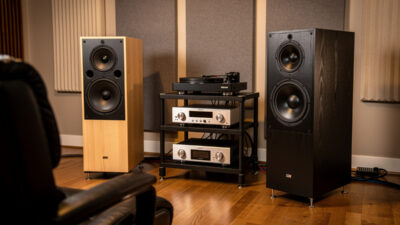
Floor-Standing Speakers: Larger speakers with multiple drivers that stand directly on the floor. Floor-standers typically extend deeper into bass frequencies without requiring a subwoofer. They fill larger rooms more easily but cost more and require more amplifier power. Floor-standing speakers suit dedicated listening rooms where their size is not problematic.
Powered vs Passive: Passive speakers require an external amplifier, giving you flexibility to choose and upgrade amplification separately. Powered speakers include built-in amplifiers, simplifying setup and reducing component count. Powered speakers suit minimalist setups and desktop systems, while passive speakers offer more upgrade paths. Our guide to powered vs passive speakers covers the trade-offs in detail.
Speaker Comparison by Budget Tier
| Component | Entry ($300-$600) | Mid-Range ($600-$1,500) | Audiophile ($1,500-$5,000+) |
|---|---|---|---|
| Speakers | Powered bookshelf (Edifier S2000MKIII or Kanto YU6) | Passive bookshelf + amp (ELAC Debut B6.2 + SMSL A300) | KEF LS50 Meta or ELAC Uni-Fi with quality integrated amp |
| Source | Bluetooth or phone with USB DAC ($30-$80) | Network streamer (WiiM Pro, Bluesound Node) | Dedicated streamer + external DAC (Topping, Denafrips) |
| Amplification | Built into powered speakers | Integrated amplifier ($200-$500) | Integrated or separates ($500-$2,000) |
| Cabling | Basic 16-gauge speaker wire | 14-gauge OFC wire + quality interconnects | Custom length cables + balanced XLR where applicable |
| Subwoofer | Optional for small rooms | Recommended (RSL Speedwoofer 10S or SVS SB-1000) | Room-corrected subwoofer with DSP integration |
| Best For | Desktop, bedroom, casual listening | Dedicated listening room, serious enjoyment | Audiophile listening, critical evaluation, large rooms |
Room Acoustics and Placement
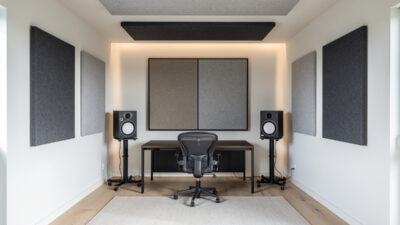
Even the best speakers sound poor in untreated rooms. Hard surfaces create reflections that smear timing cues and color tonal balance. Understanding basic room treatment and placement transforms any system’s performance.
First Reflection Points: The surfaces nearest your speakers — side walls, ceiling, and floor between speakers and listener — create the most problematic reflections. Placing absorptive panels or bookshelves at these first reflection points dramatically improves clarity. Even thick curtains over nearby windows help.
Speaker Positioning: Speakers should form an equilateral triangle with the listening position, angled slightly inward toward the listener. Distance from rear and side walls affects bass response — closer to walls increases bass, further away tightens it. Experiment with placement before purchasing acoustic treatment. Our guide to speaker placement for best sound covers specific measurements and techniques.
Subwoofer Integration: If your system includes a subwoofer, proper crossover settings and phase alignment prevent the subwoofer from conflicting with your main speakers. Set the crossover frequency where your speakers naturally roll off — typically 80Hz for bookshelf speakers. Adjust phase until bass sounds cohesive rather than localized to the subwoofer.
Connections and Cabling
How components connect affects both convenience and signal integrity. Understanding connection types helps you match equipment and avoid compatibility issues.
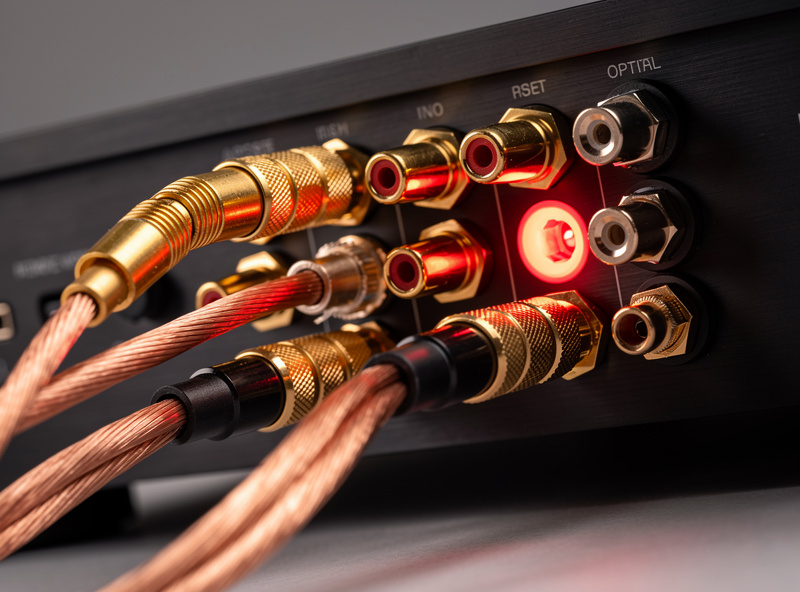
Analog Connections: RCA (unbalanced) connections carry line-level signals between most hi-fi components. XLR (balanced) connections reject noise better over long cable runs and connect professional or high-end equipment. Phono connections carry the low-level turntable signal requiring specific preamplification.
Digital Connections: Optical (Toslink) and coaxial S/PDIF carry digital audio between sources and DACs. USB connects computers directly to DACs. HDMI ARC/eARC connects TVs to audio systems. Each digital connection handles specific sample rates and bit depths — verify your equipment matches.
Cable Quality: The debate over cable quality divides the audio community. Basic oxygen-free copper cables in appropriate gauge (14-16 AWG for most runs) carry signals without audible degradation. Premium cables may offer better connectors and build quality but provide minimal sonic improvement at typical cable lengths under 15 feet. Our guide to whether expensive audio cables make a difference examines the evidence.
Headphone-Based Hi-Fi
Not every hi-fi listener uses speakers. Headphone systems offer immersive listening without room acoustics concerns or disturbing others. A dedicated headphone system follows the same signal chain but replaces speakers with headphones and a headphone amplifier.
Open vs Closed Back: Open-back headphones leak sound outward, creating a spacious, natural soundstage but offering no isolation. Closed-back headphones block external noise and contain sound leakage, suiting shared spaces. Open-back designs generally sound more natural for home listening where isolation is not required.
Headphone Amplification: Many headphones benefit from dedicated amplification beyond what phones and laptops provide. Planar magnetic and high-impedance dynamic headphones specifically require more power than portable devices deliver. Headphone amp/DAC combos simplify the chain by combining both functions in one unit. Our guide to the best headphone amp and DAC combos covers options at every price point.
In-Ear Monitors: IEMs provide isolation and portability that full-size headphones cannot. Modern IEMs from manufacturers like Moondrop, ThieAudio, and Simgot deliver remarkable detail retrieval at prices far below equivalent full-size headphones. IEMs pair well with portable DAC/amp dongles for on-the-go hi-fi listening.
Getting Started: Your First Hi-Fi System
Building your first hi-fi system should excite rather than intimidate. Start simple, learn what you prefer, and upgrade based on experience rather than specifications.
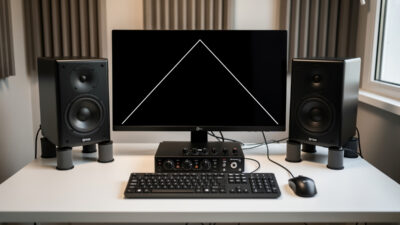
The simplest starting point consists of powered bookshelf speakers connected to a streaming source via Bluetooth or a basic DAC. This sub-$500 system reveals what hi-fi offers compared to portable speakers and helps you identify what matters most — more bass, wider soundstage, greater detail, or louder output.
From this baseline, the first upgrade usually targets the source — replacing Bluetooth with a wired USB DAC or network streamer eliminates the most significant quality bottleneck. Next, consider a subwoofer if your speakers lack bass extension. Finally, if using powered speakers, transitioning to passive speakers with a dedicated integrated amplifier opens a wider upgrade path.
Our guide to the best open back headphones for home listening provides an alternative path for personal listening. Whether you choose speakers or headphones, the goal remains the same: experiencing music with clarity and emotional connection that compressed, convenience-oriented audio cannot deliver.

Subwoofers and Bass Management
Most bookshelf speakers and many floor-standing models cannot reproduce the deepest bass frequencies below 40-50Hz. A subwoofer extends your system’s low-frequency response, adding the physical impact and weight that makes drums, bass guitars, and electronic music feel complete rather than thin. Subwoofers also relieve your main speakers from reproducing demanding bass, allowing them to focus on midrange and treble where they perform best.
Choosing a Subwoofer: Room size determines subwoofer requirements. Small rooms under 150 square feet need an 8-inch or 10-inch driver. Medium rooms benefit from 10-inch to 12-inch drivers. Large rooms or open floor plans may require 12-inch or 15-inch models or dual subwoofers for even bass distribution. Sealed subwoofers produce tighter, more musical bass. Ported designs extend lower but may sound less controlled at the deepest frequencies.
Crossover Settings: Set your amplifier or receiver crossover frequency where your main speakers naturally roll off. Most bookshelf speakers cross well at 80Hz. Floor-standing speakers with decent bass extension cross at 60Hz or 50Hz. The crossover prevents your main speakers and subwoofer from reproducing the same frequencies, which causes phase cancellation and boomy, uneven bass.
Room Correction: Modern receivers and some integrated amplifiers include room correction software that measures your room acoustics via a microphone and applies equalization to compensate for peaks and dips caused by room modes. Dirac Live, Audyssey, and REW (free) are popular room correction solutions. Room correction transforms bass quality more dramatically than any subwoofer upgrade, making it the highest-value improvement for systems with subwoofers.
Frequently Asked Questions
What is a hi-fi audio system?
A hi-fi system uses separate source, amplifier, and speaker components chosen for accurate sound reproduction. It prioritizes clarity, detail, and faithful reproduction of the original recording over convenience features like portability or bass boost. Entry-level systems start around $300.
How much does a good hi-fi system cost?
A capable entry-level hi-fi system costs $300-$600 using powered bookshelf speakers and a basic source. Mid-range systems with passive speakers, integrated amplifier, and network streamer run $600-$1,500. Audiophile systems with high-end components exceed $1,500 and can reach $5,000 or more.
Do I need an amplifier for hi-fi speakers?
Passive speakers require an external amplifier. Powered speakers have built-in amplifiers and connect directly to a source. Powered speakers simplify setup and reduce cost, while passive speakers offer more flexibility for future upgrades and component matching.
What is the difference between hi-fi and regular speakers?
Hi-fi speakers prioritize accurate frequency response, low distortion, and controlled dispersion over enhanced bass or loudness. They reveal recording details that consumer speakers compress or mask. Hi-fi speakers also typically use higher-quality drivers, crossover components, and cabinet construction.
Can I stream hi-fi audio from my phone?
Yes, using a USB DAC connected to your phone, you can stream lossless audio from Tidal, Apple Music, or Qobuz directly to your hi-fi system. Bluetooth codecs like aptX HD and LDAC also transmit higher quality than standard SBC, though wired connections always sound better.
Do expensive audio cables improve sound quality?
For typical cable lengths under 15 feet, properly gauged copper cables transmit signals without audible difference compared to expensive alternatives. Invest in quality connectors for reliability, but allocate budget to speakers, source, and room treatment instead of premium cables.
What hi-fi system should I buy for a small room?
For small rooms, powered bookshelf speakers paired with a USB DAC or network streamer provide excellent sound without overwhelming the space. A small subwoofer extends bass if needed. Total budget around $400-$700 delivers satisfying hi-fi in rooms under 200 square feet.
Related Articles
- Best Bookshelf Speakers Under $300 — Top 5 models reviewed and compared
- Tube vs Solid State Amplifiers — Sound differences, cost, and maintenance
- Best Integrated Amplifiers — Top picks for turntables and streaming
- Best USB DACs Under $200 — Bypass your computer audio for cleaner sound
- Powered vs Passive Speakers — Which type suits your setup
- Speaker Placement Guide — Position speakers for optimal sound
- Best Headphone Amp and DAC Combos — Drive demanding headphones properly
- Do Expensive Audio Cables Matter? — The science behind cable claims
- Best Budget Amplifiers Under $500 — SMSL, Yamaha, Marantz compared
- Best Open Back Headphones — Spacious sound for home listening