Building a Hi-Fi System for Vinyl: Complete Signal Chain Guide
Complete vinyl hi-fi signal chain: cartridge, phono preamp, integrated amp, speakers. Budget builds at 500, 1200, 2500, and 5000 with cable and grounding tips.
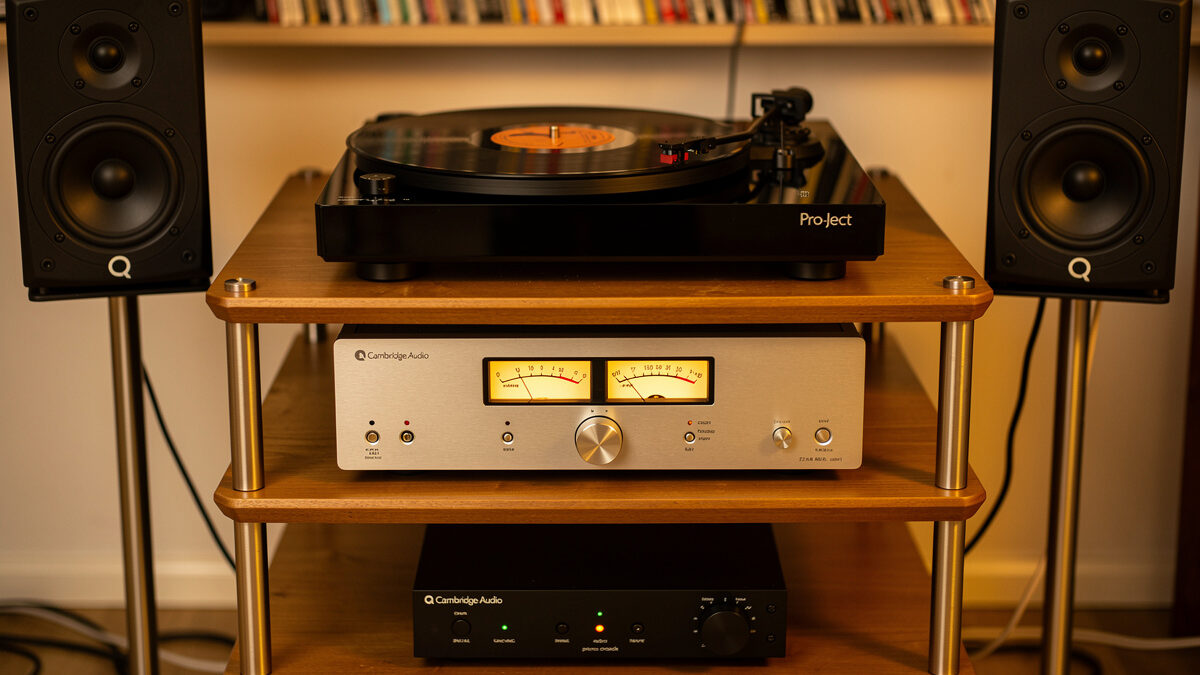
A vinyl-first hi-fi system has a different signal chain than a digital-first system. Where streaming sends a clean digital signal directly to the DAC and amplifier, vinyl produces a tiny moving-coil voltage that needs an amplification chain custom-tuned to records. Skip a stage or pick the wrong component and the system either hums, distorts, or just sounds quiet. Get it right and a $1,200 vinyl system delivers what a $2,500 streaming system cannot — the specific tonal character vinyl listeners actually want.
This guide walks the complete signal chain from cartridge to speakers, with budgets at $500, $1,000, $2,000, and $5,000 for a first vinyl-focused hi-fi system. The turntable selection step itself is covered in detail in the turntable buying guide; this article focuses on what comes after the turntable in the chain.
The Vinyl Signal Chain (and Why Each Stage Matters)
The vinyl signal travels through five stages: cartridge → tonearm → phono preamp → integrated amp/preamp → speakers. Each stage either amplifies, equalizes, or transduces the signal. Understanding what each stage does is the difference between “a system that plays records” and “a system that reveals what records contain.”
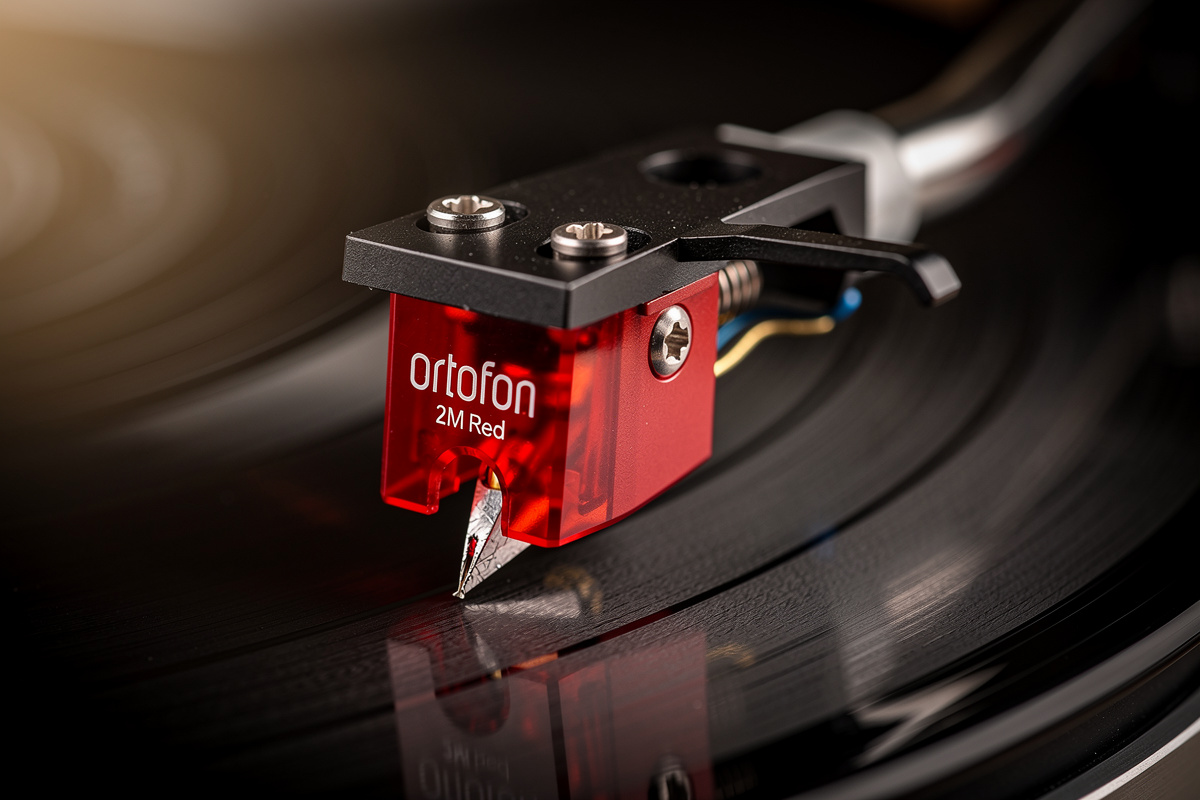
Stage 1: Cartridge. Converts groove modulation to electrical signal. Output is tiny — 2–5 mV for moving magnet (MM), 0.2–0.5 mV for moving coil (MC). The cartridge is the most consequential single component in vinyl playback because it is the transducer.
Stage 2: Tonearm. Holds the cartridge at the correct geometry over the groove. Most consequential parameter: effective mass matched to cartridge compliance.
Stage 3: Phono preamp. Two jobs: amplify the tiny cartridge signal up to “line level” (about 1V), and apply RIAA equalization (an inverse curve to undo the bass-cut/treble-boost that records are mastered with). Without RIAA correction, records sound thin and shrill.
Stage 4: Integrated amp / preamp + power amp. Drives the speakers. Selects between sources (vinyl, streaming, CD).
Stage 5: Speakers. Reproduce the signal as sound pressure. Largest single budget driver in most systems; often determines what other components can rationally pair.
For vinyl-first systems, the question is rarely “which speakers?” — it is “how do I budget across the chain so each stage matches the others?” A $2,000 speaker fed by a $50 cartridge sounds worse than a $500 speaker fed by a $300 cartridge. Match the chain.
Matching Cartridge to Phono Stage
The single most important compatibility decision is whether your phono preamp matches your cartridge type (MM vs MC). A wrong match produces 20dB too little gain or 20dB too much — both unusable.
The cartridge-to-preamp matrix:
| Cartridge type | Output voltage | Gain needed | Loading |
|---|---|---|---|
| Moving Magnet (MM) | 2–5 mV | 40 dB | 47 kΩ |
| High-output Moving Coil (HOMC) | 1–3 mV | 40–50 dB | 47 kΩ |
| Moving Coil (MC) | 0.2–0.5 mV | 60–66 dB | 100–470 Ω |
| Moving Iron (MI) | 2–4 mV | 40 dB | 47 kΩ |
Most beginner phono preamps support only MM (40dB gain, 47kΩ loading). MC requires a phono stage with switchable gain or a step-up transformer ahead of the MM stage. For new vinyl systems, start with an MM cartridge and a basic MM phono preamp; upgrade to MC after you have lived with the system for a year. The turntable buying guide covers cartridge selection in depth — for the audiophile-on-a-budget, the Audio-Technica AT-VM95E ($60) and Ortofon 2M Red ($120) are the standard starting points.
Internal vs External Phono Stages
Three patterns for the phono stage:
1. Built into the integrated amplifier. Many vintage and some new integrated amps include a phono input. Convenience win; quality varies dramatically. Modern budget integrated amps with phono ($500–800) often have surprisingly competent phono stages because they’re targeted at vinyl revival buyers. The integrated amplifier guide covers the brands that get this right (Marantz, Yamaha, Cambridge Audio).
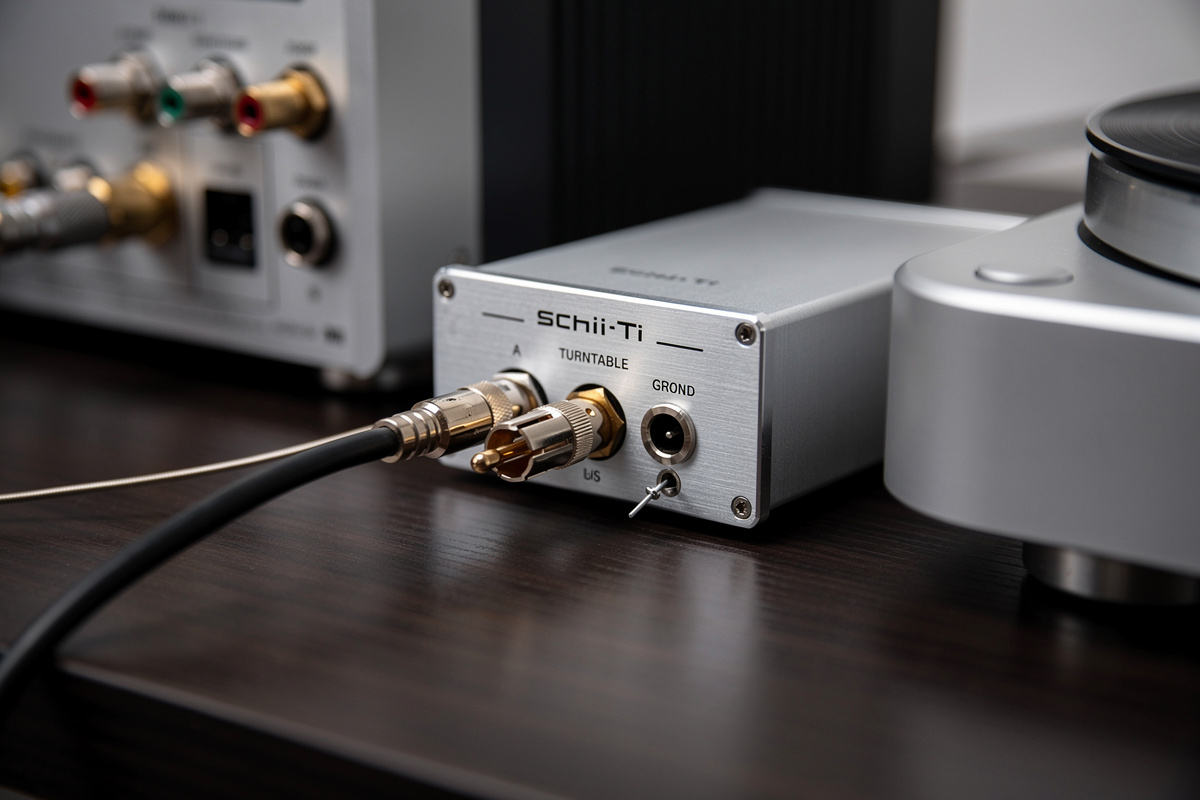
2. External standalone phono preamp. A dedicated box between turntable and integrated amp. Pricing $80 (Pro-Ject Phono Box, Schiit Mani) to $2,000+ (Sutherland, Manley). Often outperforms built-in phono stages at equivalent price. Recommended for any system above $1,500 total.
3. Built into the turntable. Some entry-level turntables (Audio-Technica LP120X, Pro-Ject E1) include a phono preamp with a switchable line/phono output. Convenient for plug-and-play setups; bypassable for upgrade paths. Acceptable for first systems; outgrown quickly.
For most starter vinyl systems, option 1 (integrated amp with phono) wins on simplicity. Mid-range systems benefit from option 2 (external phono stage that can be upgraded independently). Audiophile systems run external phono stages, full stop.
Speaker Selection for Vinyl Listening
Vinyl-listener speaker preferences differ from typical hi-fi consensus. Three observations from real-world rooms:
Sensitive speakers pair better with vinyl than with streaming. Most cartridges + moderate-power amps run out of headroom on dynamic peaks. Speakers rated 88dB+ sensitivity sound more dynamic on vinyl than less-sensitive monitors. The bookshelf speakers guide covers sensitivity specs across budget options.
Bookshelf + sub often outperforms full-range floorstanders for vinyl. Most vinyl-listening rooms are smaller than the floorstander designs anticipate. A pair of $400 bookshelves + $300 sub frequently outperforms a $1,200 floorstander in real rooms. The powered vs passive speakers comparison covers when active monitors with built-in amplification become a better choice.
Crossover quality matters more than driver brand. Vinyl’s softer high-frequency response can mask cheap tweeters; the crossover that smoothly hands off between woofer and tweeter is what separates “fatigue-free” from “clinical.” Brands known for crossover work: Spendor, Harbeth, Wharfedale (Linton, Diamond series), KEF.
Budget-Tier Build Examples
$500 starter system. Audio-Technica AT-LP60X ($150) or AT-LP120XUSB ($300, with built-in phono). Yamaha A-S301 integrated amp with phono ($400). Used Pioneer SP-BS22-LR or Wharfedale Diamond 12 bookshelves ($150–250). Speaker wire and RCA cables: $30. Total: $730–880.
$1,200 first serious system. Pro-Ject Debut Carbon EVO ($600) with Ortofon 2M Red. Schiit Mani phono preamp ($150). Yamaha A-S301 integrated ($400). Q Acoustics 3010i bookshelves ($350). Total: $1,500. Step up from starter with audibly cleaner imaging, better bass extension, and less surface noise.
$2,500 mid-range system. Rega Planar 3 ($1,100) with Rega Carbon. Pro-Ject Phono Box DS+ ($350). Cambridge Audio CXA61 integrated ($1,000). Q Acoustics 3030i floorstanders ($800) or KEF LS50 Meta bookshelves ($1,500). Speaker wire: Bi-wire setup with 14 AWG, $80.
$5,000 audiophile system. Pro-Ject Classic EVO ($2,000) with Ortofon Quintet Black MC. Manley Chinook MC phono ($2,500) or Schiit Skoll ($800). Cambridge Audio Edge A or McIntosh MA252 integrated ($2,500–3,500). Spendor A1 or Harbeth P3ESR XD bookshelves ($2,500–3,500). At this tier, room treatment and turntable isolation matter as much as components.
The turntable buying guide walks the specific turntable selection logic; the rest of the chain in this article scales with the turntable choice. Roughly, budget the turntable + cartridge at 30–40% of total system spend for vinyl-focused systems.
Cables, Grounding, and Hum Suppression
Vinyl systems hum more often than digital systems because the cartridge signal is so small (2–5mV for MM) that any AC interference becomes audible.
The hum-prevention checklist:
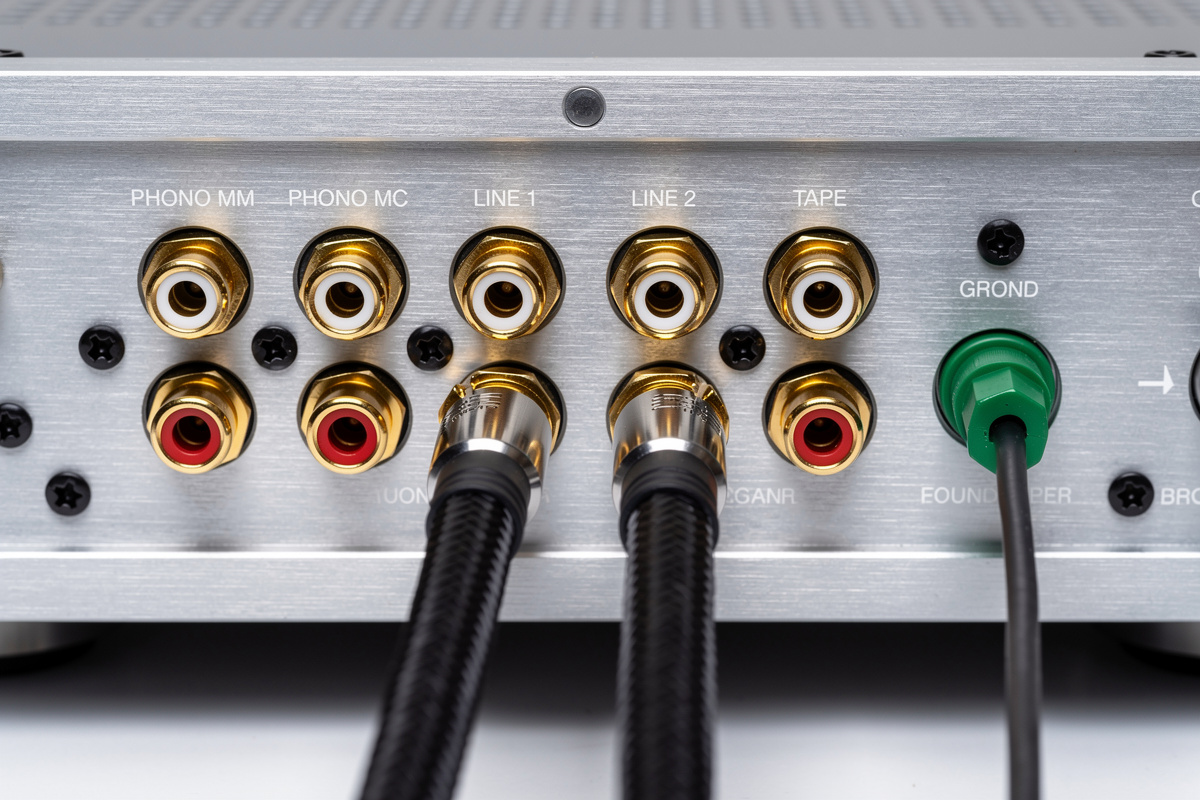
- Connect the turntable’s ground wire to the phono preamp’s ground terminal (not the amp’s chassis ground)
- Keep cartridge cables short (3 feet maximum from turntable to phono stage)
- Route cartridge cables away from power cables (cross at 90 degrees, never run parallel)
- Use shielded interconnect cables for the line-level signal between phono preamp and integrated amp
- If hum persists after grounding, isolate the turntable on a separate ground (a power conditioner with isolated outlets)
The cable quality article covers when audio cables matter — for vinyl-stage cables specifically, shielded matters more than expensive. A $20 properly-shielded RCA cable beats a $200 unshielded boutique cable for the cartridge-to-phono link.
Headphone Amp for Vinyl Listening
Late-night vinyl listening through headphones is a fully valid hi-fi experience and arguably the cleanest way to hear what’s actually on a record (no room reflections, no neighbor compromises).
The vinyl-headphone chain:
- Turntable + cartridge → phono preamp → integrated amp’s tape-out (or pre-out)
- Tape-out → dedicated headphone amplifier
- Headphone amp → open-back planar magnetic or dynamic headphones
Most integrated amplifiers with phono have a built-in headphone jack; for serious headphone listening, route through a dedicated headphone amp instead. The headphone amp + DAC combos guide covers the dedicated headphone amplification options. For vinyl-specific headphone listening, skip the DAC half (vinyl is analog all the way) and pick a quality analog headphone amp.
Common Beginner Mistakes
Three mistakes account for most “I bought a vinyl system and it sounds bad” complaints.
Mismatched cartridge and phono stage gain. An MC cartridge (0.3mV output) plugged into an MM phono preamp (40dB gain) produces a signal too quiet to use. An MM cartridge (3mV output) plugged into an MC phono preamp (60dB gain) produces distortion. Always verify your phono preamp matches your cartridge type.
Skipping speaker placement. Vinyl reveals speaker placement issues more than digital because dynamic range and imaging are tighter. Pull speakers 18–24 inches from the back wall, toe in slightly toward the listening position, and verify with the speaker placement guide. The speaker placement guide covers the geometry that matters.
Buying expensive cables before fixing hum. Hum from grounding issues, ground loops, or interference is a system-architecture problem, not a cable problem. Fix grounding first; consider cable upgrades only after the system is quiet.
Do I need a phono preamp for vinyl?
Yes, every vinyl system needs a phono preamp somewhere in the chain. It can be built into the integrated amplifier, built into the turntable, or a standalone external box. The phono preamp does two essential jobs: amplifying the tiny cartridge signal and applying RIAA equalization. Without it, records sound thin and quiet.
Can I plug a turntable directly into powered speakers?
Only if the turntable has a built-in phono preamp (some Audio-Technica and Pro-Ject models do) or the powered speakers have a phono input (rare). Otherwise you need a phono preamp between them. Most plug-and-play vinyl setups include the phono stage somewhere; check the spec sheet.
What is the cheapest first vinyl hi-fi system?
About $730-880 total: Audio-Technica AT-LP60X turntable ($150), Yamaha A-S301 integrated amp with phono ($400), used Pioneer or Wharfedale bookshelves ($150-250), cables ($30). Sounds dramatically better than wireless turntables and provides an upgrade path that lets you keep the integrated amp and speakers as you upgrade the turntable.
What percentage of my budget should the turntable be?
Roughly 30-40% of total system spend for vinyl-focused systems. The cartridge alone often deserves 10-15% of total budget — it is the transducer that determines how much information enters the system. Speakers should be 30-40%; amplifier 15-25%; cables and accessories 5-10%.
Should I get bookshelf speakers or floorstanders for vinyl?
Bookshelves plus a subwoofer outperform floorstanders for most vinyl-listening rooms under 300 square feet. Bookshelves image more precisely, integrate with subwoofers cleanly, and don’t overload smaller rooms with bass nodes. Floorstanders win in larger rooms (400+ square feet) where the extra cabinet volume actually helps.
How do I get rid of hum on my vinyl setup?
Connect the turntable’s ground wire to the phono preamp’s ground terminal. Keep cartridge cables short and away from power cables. Use shielded interconnects between phono stage and amp. If hum persists after grounding, isolate the turntable on its own AC outlet via a power conditioner with isolation transformers.
Related Articles
- Best Bookshelf Speakers Under $300 — speaker selection at the budget tier
- Best Integrated Amplifiers for Vinyl and Digital — amp selection with phono
- Tube vs Solid State Amplifiers — amp topology choice
- Speaker Placement Guide — geometry that matters for vinyl
- Best Headphone Amp and DAC Combos — late-night vinyl listening chain