AV Receiver vs Stereo Amplifier: Which Should You Buy?
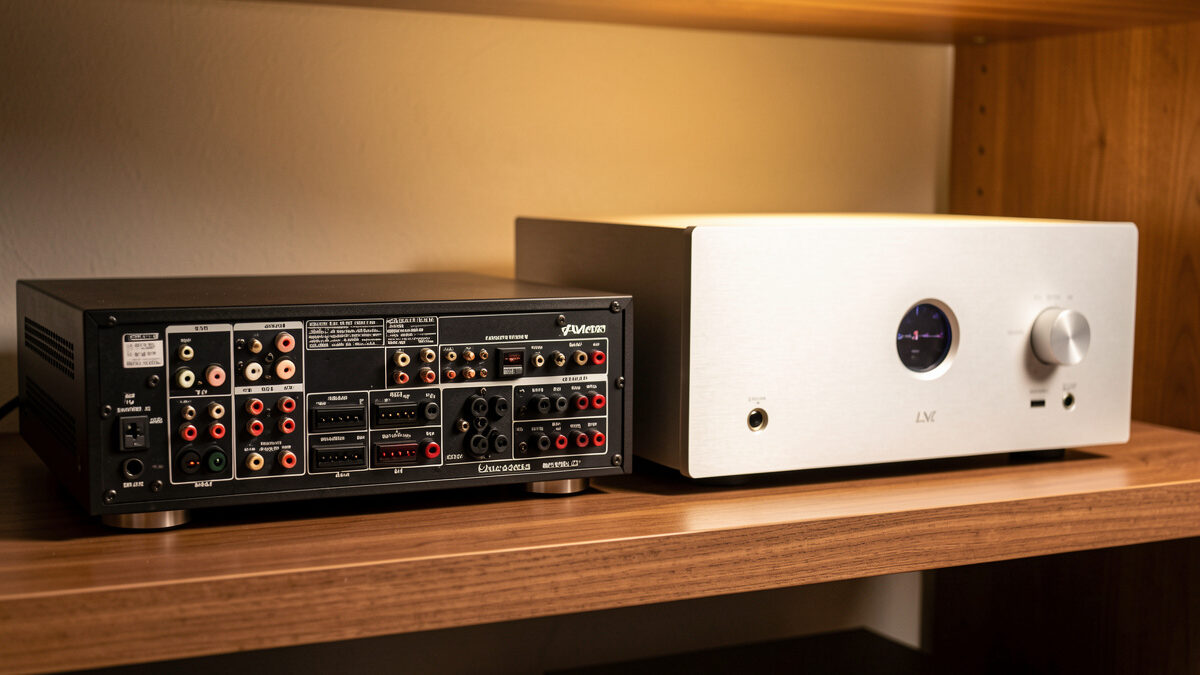
An AV receiver and a stereo amplifier are built for opposite jobs: a receiver decodes surround formats, switches HDMI, runs room calibration, and powers five or more channels, while a stereo amplifier powers exactly two channels with no decoding and no video switching. For home theater you need a receiver; for pure two-channel music a stereo integrated amplifier usually sounds better at the same price because every krona goes into two channels instead of seven. The honest middle path, if you want both, is a receiver with pre-outs feeding a stereo amp for the front pair.
I run a stereo integrated as my reference for critical listening and an AV receiver for the part-time theater in the same room, so I have lived with both feeding the same speakers. That side-by-side is the only way to actually hear the trade: the receiver does ten things competently, the integrated does one thing — drive two speakers cleanly — with its whole power supply. This guide is which to buy for which use, where the spec sheets mislead, and how to combine them without wasting money.
As an Amazon Associate I earn from qualifying purchases.
What Does an AV Receiver Do That a Stereo Amp Cannot?
An AV receiver decodes Dolby and DTS surround formats, switches multiple HDMI sources, runs automatic room calibration, manages bass to a subwoofer, and amplifies five to eleven channels — all in one chassis. A stereo amplifier does none of that; it takes two channels of line-level input and amplifies them, full stop. The receiver is a switching-and-processing hub that happens to include amplification.
That processing is exactly why a receiver is mandatory for home theater. A 5.1 movie soundtrack arrives as discrete channels that something has to decode and route — dialogue to the center, effects to the surrounds, low frequencies to the sub. Only the receiver does that. A stereo amp would play a two-channel downmix at best and could not address a center or surround speaker at all. The full multichannel picture is in my home theater audio system guide.
Why Does a Stereo Amp Often Sound Better for Music?
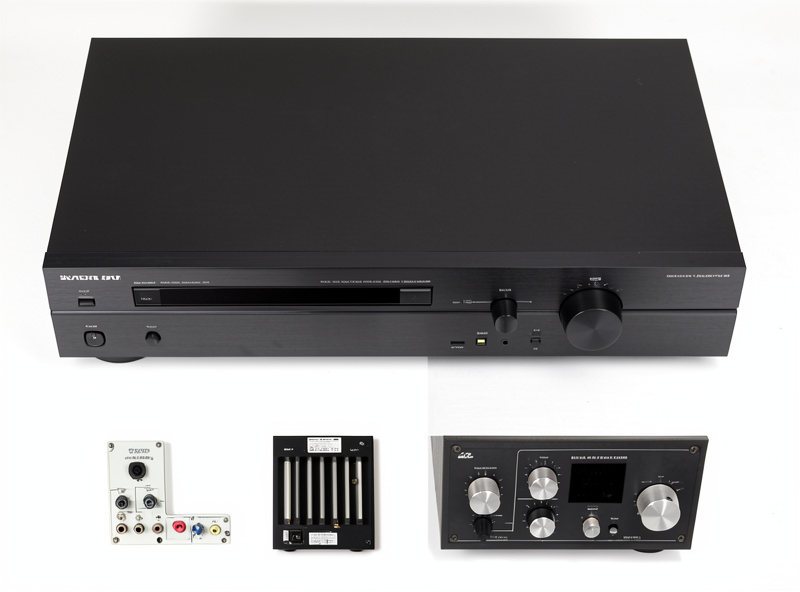
A stereo integrated amplifier concentrates its entire power supply and budget into two channels, so at a given price it delivers more clean watts, a beefier transformer, and simpler signal path than a receiver splitting the same cost across seven channels plus video and processing boards. For two-channel music, that focus is audible as better dynamics and a lower noise floor.
The difference is real but easy to overstate. A good modern receiver in pure-direct mode — processing bypassed, only the front two channels active — sounds genuinely close to a similarly-priced integrated for most listening. Where the integrated pulls ahead is at high volume with demanding speakers, when the receiver’s shared power supply runs out of headroom while the integrated still has reserves. If music is your priority, a quality integrated like the ones in my integrated amplifier roundup is the better buy, and the budget tier is covered in best budget amplifiers under $500. Shoppers comparing models can browse current stereo integrated amplifiers to see the field.
The Power Rating Trap on Receiver Spec Sheets
Receiver power ratings are measured generously: a “100 watts x 7” figure is almost always tested with two channels driven, often at a single frequency (1kHz) rather than the full 20Hz–20kHz band, and at higher distortion than a stereo amp’s spec. Drive all seven channels hard in a loud scene and real per-channel output drops well below the headline number because the shared power supply cannot deliver full power to every channel at once.
This is the single most misunderstood spec in home theater. A stereo integrated rated 60 watts per channel, both channels driven, full bandwidth, at low distortion, can out-muscle a receiver rated 100 watts per channel that was measured two-channels-driven at 1kHz. When you compare, look for “all channels driven” and “20Hz–20kHz” in the fine print. Then match the amp to the speaker: a sensitive 90dB speaker needs a fraction of the power a 84dB speaker demands, the math I work through in my speaker sensitivity and amplifier matching guide.
Can You Use Both a Receiver and a Stereo Amp Together?
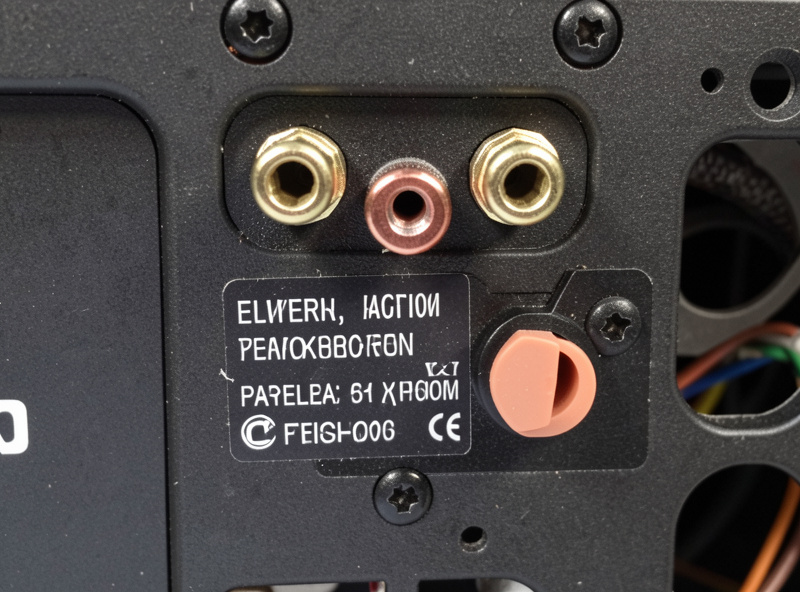
Yes, and it is the best of both worlds: buy an AV receiver with front pre-outs, run those pre-outs into a dedicated stereo amplifier that powers the front left/right speakers, and let the receiver power the center and surrounds. Movies use the full surround field; music routes through the superior stereo amp.
This is how I would build a serious do-both system. The receiver handles decoding, switching, and the surround channels; the stereo amp gives the front pair — the speakers that matter most for both music and the bulk of a film’s sound — a clean, powerful, dedicated supply. Set the receiver’s front channels to use the pre-outs, level-match the stereo amp during calibration, and you have a theater that does not compromise the music. A capable two-channel power amplifier fed from the pre-outs is the upgrade that makes a receiver-based system sing on music.
AV Receiver vs Stereo Amplifier: Comparison
This is the decision table I use with anyone choosing between the two, or weighing whether to combine them.
| Feature | AV Receiver | Stereo Amplifier |
|---|---|---|
| Channels | 5 to 11 | 2 |
| Surround decoding | Yes (Dolby/DTS) | No |
| HDMI/video switching | Yes | No |
| Room calibration | Built in (Audyssey/YPAO) | None (manual) |
| Music quality per dollar | Good in pure-direct | Better (focused supply) |
| Best use | Home theater, multi-source | Two-channel music |
| Combine? | Pre-outs feed a stereo amp | Powers fronts from pre-outs |
Which Should You Buy?
Buy an AV receiver if movies, gaming, or multiple HDMI sources are a real part of your use — the decoding and switching are not optional for that, and a modern receiver does music well enough in pure-direct mode. Buy a stereo integrated if 70% or more of your time is two-channel music and you sit in a single seat; the focused power and simpler path reward critical listening — and if you are still deciding how many channels you even want, my stereo vs surround sound breakdown settles that first.
If you genuinely want both at a high level, start with the receiver and add a stereo amp on the front pre-outs later — it is a clean upgrade path that does not strand any gear. What I would not do is buy a flagship 11-channel receiver expecting it to match a dedicated integrated on pure music; that is paying for channels and processing you are not using during a listening session. Decide by your real use ratio, not by the spec sheet with the biggest number, and the rest of the home theater build follows from there.
Frequently Asked Questions
Can a stereo amplifier power a home theater?
No. A stereo amplifier handles only two channels and cannot decode Dolby or DTS or address a center and surround speakers. Home theater needs an AV receiver to decode surround formats and route them to five or more channels. A stereo amp can power the front pair of a receiver-based system.
Is an AV receiver good enough for serious music listening?
A good modern AV receiver in pure-direct mode, with processing bypassed and only the front two channels active, sounds close to a similarly priced stereo integrated. A dedicated integrated still pulls ahead at high volume with demanding speakers thanks to its focused power supply.
Why is a 60-watt stereo amp louder than a 100-watt receiver?
Receiver power is often rated with two channels driven at one frequency, so real output drops when all channels work. A stereo amp rated 60 watts both channels driven across the full band, at low distortion, can deliver more usable power than an optimistically rated receiver.
How do I connect a stereo amp to an AV receiver?
Use an AV receiver with front pre-outs. Run the front left and right pre-outs into the stereo amplifier inputs, set the receiver fronts to use the pre-outs, and level-match the amp during calibration. The receiver powers center and surrounds; the stereo amp powers the fronts.
Do I lose sound quality using a receiver for music?
Not dramatically. In pure-direct mode a receiver bypasses tone controls and surround processing and plays a clean two-channel signal. The gap to a dedicated integrated shows mainly at high volume or with hard-to-drive speakers, where the integrated has more headroom.