Stereo vs Surround Sound Home Theater: Which Do You Need?
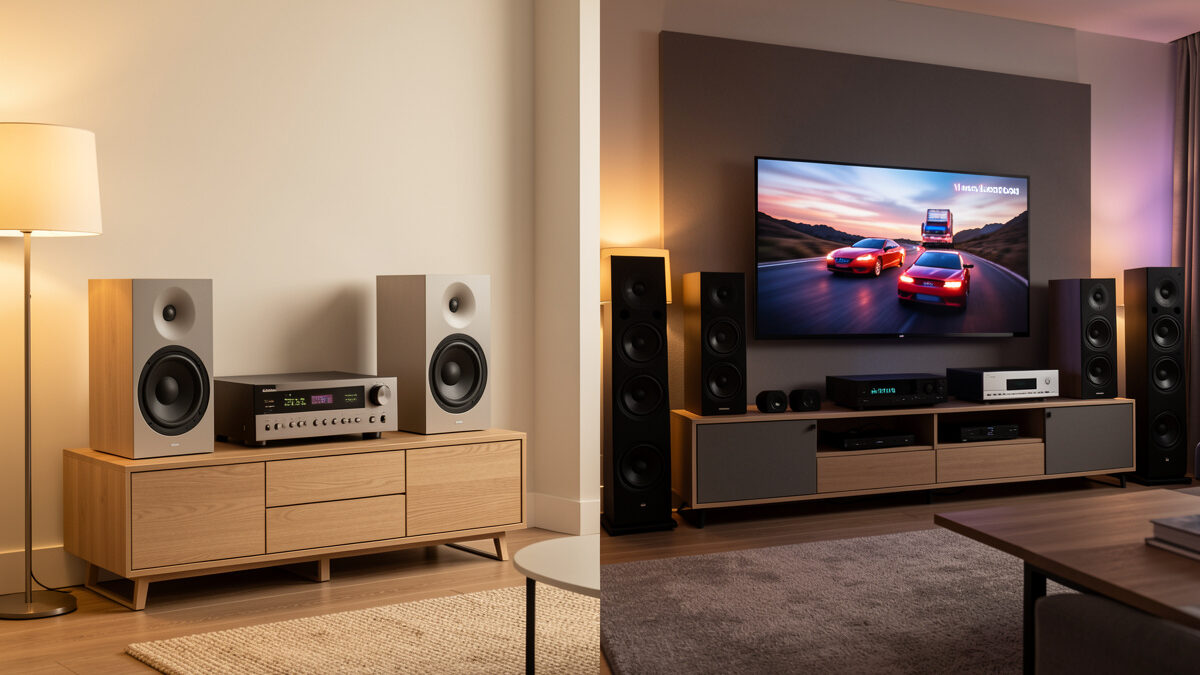
Stereo and surround sound solve different problems: a stereo pair (2.0 or 2.1) images music accurately in front of one listening seat, while surround sound (5.1 and up) wraps film effects around a couch full of people. For a dedicated home theater, surround wins because movie soundtracks are mixed in discrete channels; for a music-first room, a good stereo pair beats a budget 5.1 set every time. The deciding factor is what you watch and listen to, in what ratio, with how many seats.
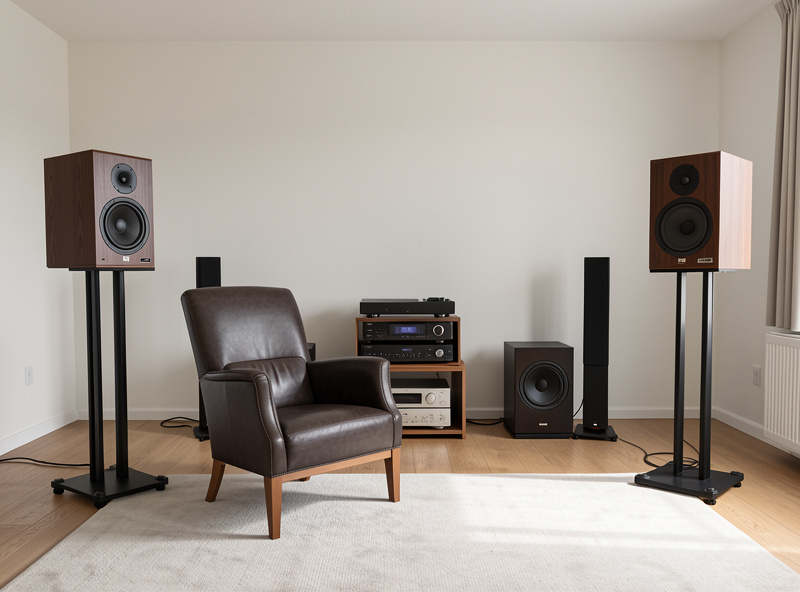
I run both in the same Sweden room. The two-channel rig was there first — a measured triangle, treated first reflections, the setup I trust for critical listening. Adding a center and surrounds turned it into a part-time theater, and living with the hybrid taught me the honest trade-offs nobody puts on a spec sheet: where surround genuinely transforms a film, where it adds clutter for no gain, and why the music side almost always sounds better in pure stereo. This is the comparison I give anyone deciding which way to build, framed around the question that actually settles it.
What Is the Real Difference Between Stereo and Surround?
Stereo uses two channels to create a phantom soundstage in front of you, where instruments appear to occupy positions between and around the speakers. Surround sound uses five or more discrete channels — front left/right, center, and surrounds — plus a subwoofer, to place sound on all sides. Stereo is about a precise image; surround is about envelopment.
The technical heart of the difference is the center channel. In stereo, dialogue sits in a phantom center created by both speakers playing the same signal — it holds perfectly only in the single seat exactly between them. In surround, a real center speaker anchors dialogue to the screen for every seat in the room. That is why a film’s voices sound locked and intelligible on a 5.1 system but drift and soften on stereo the moment you sit off to one side. The underlying stereo geometry is in my speaker placement guide, and the full multichannel picture is in the home theater audio system guide.
Is Surround Sound Better Than Stereo for Movies?
Yes, surround is clearly better for movies because films are mixed in discrete multichannel formats — Dolby and DTS — that place effects, ambience, and dialogue in specific channels a stereo pair physically cannot reproduce. A 5.1 system reproduces a plane flying overhead from behind, a door slamming to your left, and dialogue locked center, all at once.
Stereo can fake some of this with the receiver’s upmixer (Dolby Surround or DTS Neural:X), which synthesizes surround information from a two-channel source. It is genuinely useful and far better than it used to be, but it is a guess, not the real discrete mix. For a film-first room the discrete surround field is worth the extra speakers, especially the center channel for dialogue. The decision of how many channels — 5.1, 7.1, or Atmos — comes down to room size and seating, which the hub guide breaks down in detail.
When Is Stereo the Better Choice?
Stereo is the better choice when 60% or more of your listening is music, when you sit alone in a single sweet spot, or when the room cannot physically accommodate surround speakers. A quality stereo pair concentrates your entire budget into two excellent speakers instead of spreading it across five mediocre ones, and music imaging is what stereo does best.
This is the trade most home-theater buyers underestimate. A $600 budget split into a 5.1 package buys five small, compromised speakers; the same $600 in a stereo pair buys speakers that genuinely image and have real bass weight. For music, the second option wins decisively. I keep my critical-listening sessions in pure stereo even though the surround gear is right there, because the phantom center and the precise imaging of two well-placed speakers is simply more convincing for a recording mixed in two channels. If music dominates your use, start with the right pair — my bookshelf speaker picks and floorstander roundup name the ones I trust — and add a sub before you add surrounds.
The 3.1 Middle Ground Most People Skip
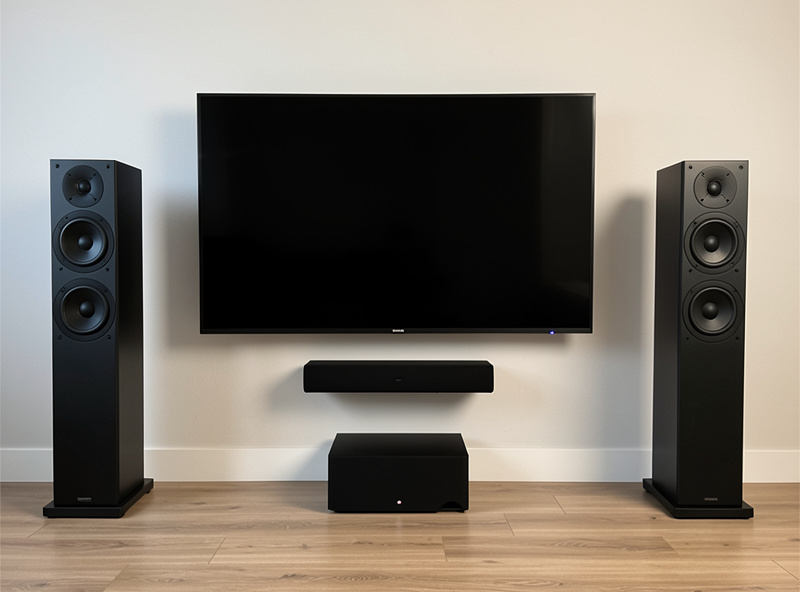
A 3.1 system — front left/right, a center, and a subwoofer, with no surround speakers — delivers roughly 80% of the cinematic benefit of 5.1 for half the speaker count and none of the behind-the-couch cabling. It gives you the two things that matter most: dialogue locked to the screen and low-end weight under effects.
I ran 3.1 for months in my room before adding surrounds, and honestly missed the rear channels far less than I expected. In a small living room where running speaker cable behind the seating means crossing a doorway, 3.1 is the pragmatic answer, and the front three can be high quality because you bought three good speakers instead of five cheap ones. The center channel is the non-negotiable part — it has to be timbre-matched to the front pair so voices do not change character as they pan. You can always add surrounds later; the receiver supports them whether or not they are plugged in.
Can One System Do Both Stereo and Surround Well?
Yes, an AV receiver with a stereo or pure-direct bypass and quality front speakers does both jobs well: it plays movies in full multichannel and music through the front pair with all processing switched off. The key is buying front left/right speakers good enough to satisfy your music listening, then letting them double as the theater’s mains.
This is exactly how my hybrid works. For films, the full surround field engages; for critical music, I switch to pure-direct, which routes the signal straight to the front two channels with the DSP, bass management, and other channels out of the path. A receiver with pre-outs takes it further, letting you feed a dedicated stereo amp for the fronts — the trade-offs of that hybrid are covered in my amplifier matching guide. The mistake is buying a 5.1 package where the front speakers are sized for surround duty, not music; they will never satisfy a serious listener no matter how the receiver is set.
Stereo vs Surround: Quick Comparison
This table sums up where each approach wins, the way I lay it out for anyone choosing between them.
| Factor | Stereo (2.0 / 2.1) | Surround (5.1+) |
|---|---|---|
| Best for | Music, single-seat listening | Movies, multi-seat rooms |
| Dialogue clarity | Phantom center, one seat only | Real center, every seat |
| Budget concentration | Two excellent speakers | Spread across five-plus |
| Cabling/placement | Simple, front only | Behind-seat surrounds needed |
| Music imaging | Best in class | Good, not better than stereo |
| Movie immersion | Limited (upmixed) | Discrete, fully immersive |
Frequently Asked Questions
Is surround sound worth it over stereo?
For movies, yes. Surround reproduces discrete Dolby and DTS channels a stereo pair cannot, and the real center speaker locks dialogue for every seat. For music, a quality stereo pair usually sounds better because your budget buys two excellent speakers instead of five average ones.
Can a stereo system play surround sound?
A stereo system cannot play true discrete surround, but an AV receiver can upmix a two-channel source into the surround speakers using Dolby Surround or DTS Neural:X. It is synthesized, not the real multichannel mix, but it spreads a soundtrack convincingly in a pinch.
Do I need a center channel speaker?
For movies, a center channel is the most valuable single speaker because it anchors dialogue to the screen for every seat. Stereo relies on a phantom center that only holds in one seat. A 3.1 system with a center delivers most of the cinematic benefit.
Is 2.1 stereo good enough for a home theater?
A 2.1 setup with a subwoofer is fine for a music-first room and casual film viewing, and the receiver can upmix movies. For a dedicated theater with multiple seats, adding a center channel for dialogue is the biggest upgrade you can make.
Why does dialogue sound clearer in surround than stereo?
Surround uses a dedicated center channel speaker that fixes dialogue to the screen regardless of where you sit. Stereo creates a phantom center from both speakers that only stays sharp in the exact middle seat, so voices drift and soften when you sit off-axis.