Adding a Subwoofer to Home Theater: Connection and Setup
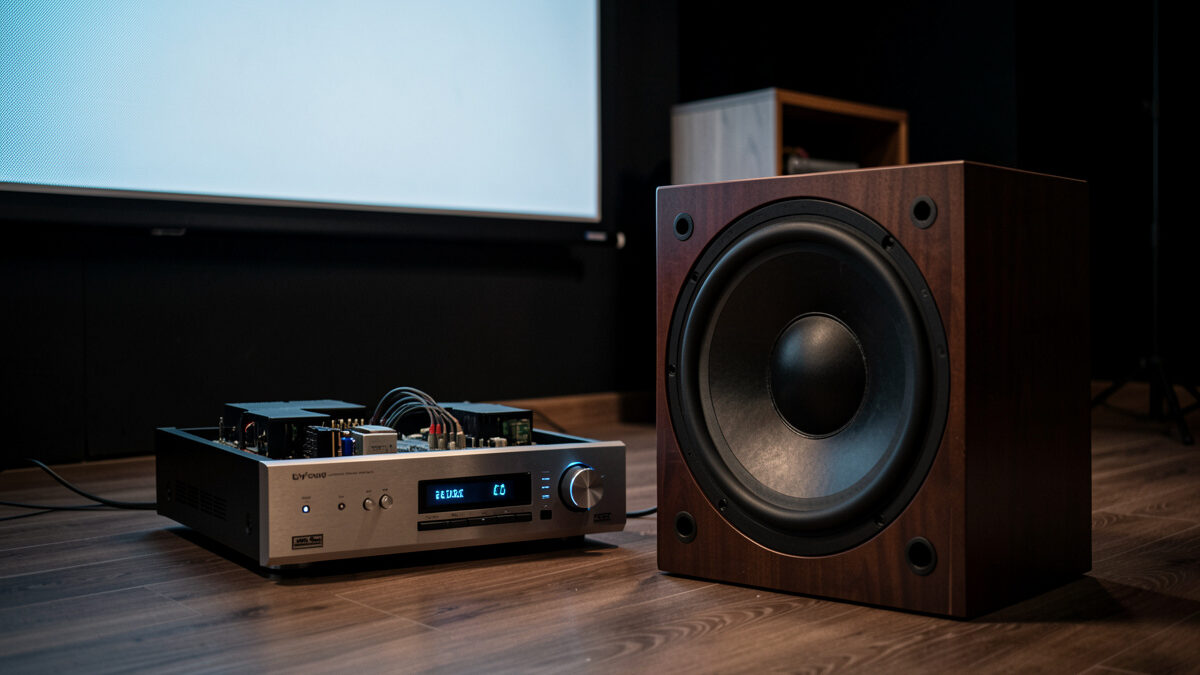
Adding a subwoofer to a home theater means connecting a powered sub to the receiver’s LFE/subwoofer pre-out, setting the speaker crossover to 80Hz, and placing the sub where bass measures most even across the seats — usually found with a crawl test, not by guessing the nearest corner. A single sub fills in the dedicated low-frequency effects channel that no satellite speaker can reproduce; a second sub, placed asymmetrically, evens out the bass across a whole couch rather than just one seat.
I integrate subs differently for theater than for music, and learning that difference fixed more bad bass in my own room than any gear swap. For music I want the sub to vanish, blending below 60–80Hz so I never hear it as a separate source. For home theater I want it felt — the LFE channel exists to put physical weight under an explosion. This guide is the home-theater-specific setup: the LFE connection, the 80Hz standard, the crawl test, and when a second sub is the real upgrade.
As an Amazon Associate I earn from qualifying purchases.
How Do You Connect a Subwoofer to a Home Theater Receiver?
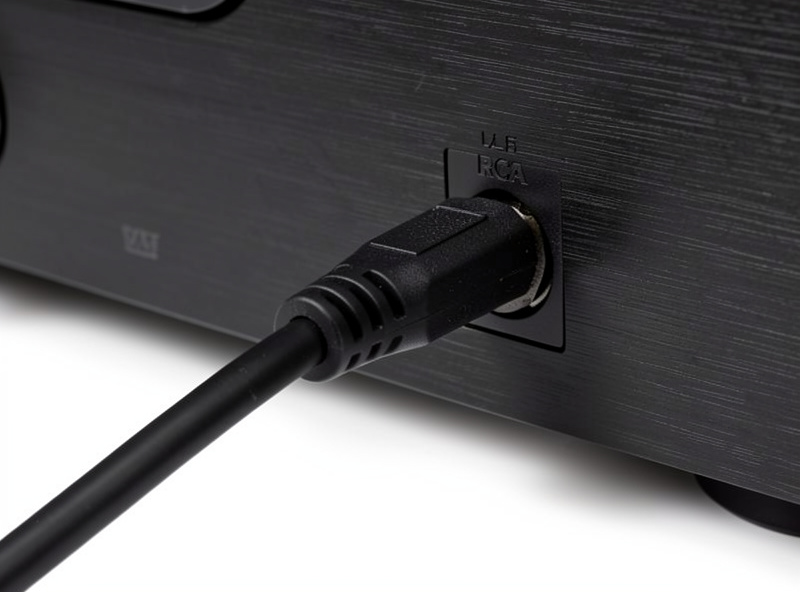
Connect a powered subwoofer by running a single RCA or LFE cable from the receiver’s “Subwoofer Out” or “LFE Out” jack to the line-level input on the sub, then enable the sub in the receiver’s speaker setup and run the auto-calibration. The sub’s own crossover should be set to bypass (or its maximum) because the receiver handles bass management.
The most common wiring mistake is leaving the subwoofer’s onboard crossover engaged at, say, 80Hz while the receiver also crosses over at 80Hz, double-filtering the low end and thinning it out. When the receiver does bass management — which any modern AV receiver does — set the sub’s crossover to LFE/bypass and let the receiver decide. The full bass-management picture sits in my home theater audio system guide, and the receiver’s role is covered in AV receiver vs stereo amplifier.
What Crossover Should a Home Theater Subwoofer Use?
Set the crossover to 80Hz for most home theaters — it is the THX reference and the point where bass becomes hard for the ear to localize, so it hands directional duties to the satellites and the heavy lifting to the sub. Raise it to 100–120Hz only for very small bookshelf or satellite speakers that cannot reach down to 80Hz cleanly.
The logic is about driver capability, not preference. A small speaker pushed to reproduce 50Hz distorts and compresses; crossing it over at 80Hz frees it to do what it does well and lets the sub, which is built for low frequencies, take everything below. In the receiver, set every speaker to “small” and the crossover to 80Hz as a starting point. If you have full-range floorstanders you can experiment lower, but 80Hz is the setting I return to after every auto-calibration that tried to set something exotic. The deeper EQ work below the crossover — taming the room mode that makes one note boom — is in my subwoofer EQ integration guide.
Where Should You Place a Home Theater Subwoofer?
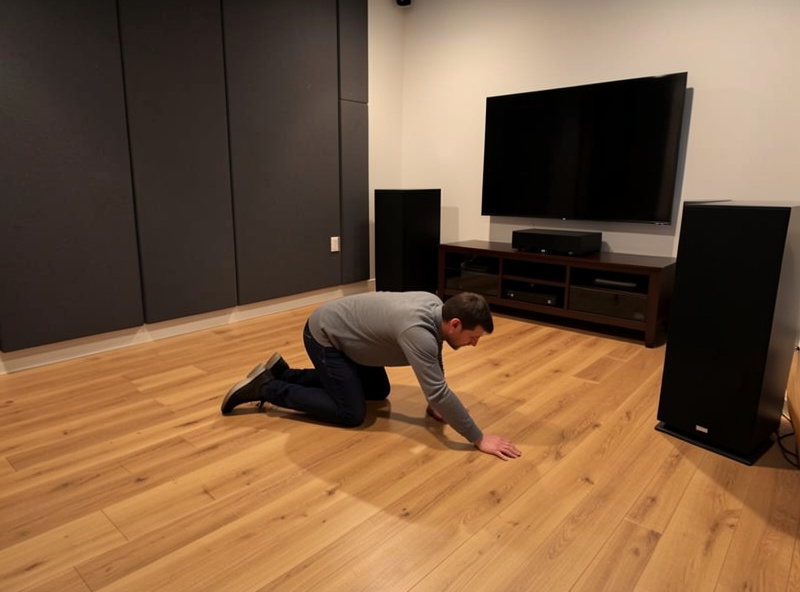
Place the sub using the crawl test: set it on the main seat, play steady bass, and crawl the front and side walls until you find where the bass sounds loudest and most even — that spot is where the sub goes. Corner placement gives the most output but often the least even bass; a position partway along a wall frequently measures flatter across multiple seats.
This reciprocal trick — the sub plays best where your ear hears best when the two are swapped — costs nothing and routinely beats expensive guesswork. In my own room the “obvious” front corner boomed on one note and starved the next; a spot a third of the way down the side wall measured dramatically smoother. Bass placement matters more than bass quantity, and a modest sub in the right spot outperforms a bigger one jammed where it fits. The placement physics overlap with my subwoofer integration for music method, though the theater goal is even coverage rather than seamless musical blend.
Do You Need Two Subwoofers for Home Theater?
You do not need two subs, but dual subs are the single best upgrade for even bass once more than one person watches. A single sub creates peaks and nulls that vary seat to seat; two subs placed asymmetrically — for example one front-center and one on a side wall — cancel each other’s worst room modes, smoothing the bass across the whole couch.
One sub gets you loud and is perfectly fine for a single-seat setup. The problem appears the moment two people sit side by side: the seat at a modal peak gets boomy bass while the seat at a null gets almost none, and no EQ fully fixes a null. Two subs change the modal pattern itself so every seat lands closer to the average. If you are buying new and the budget stretches, two smaller subs beat one large sub for a multi-seat room nearly every time. Shoppers can compare current powered home theater subwoofers and, for dual setups, a matched pair simplifies level-matching.
Sealed vs Ported Subwoofers for Home Theater
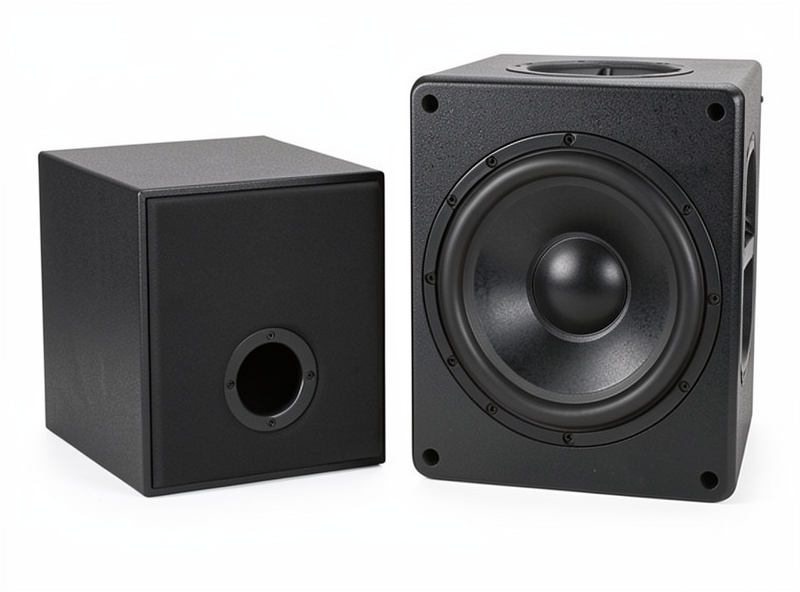
Sealed subwoofers roll off gently and trade ultimate output for tighter, more accurate low end; ported subwoofers are louder and dig deeper at their tuning frequency, which suits big rooms and effects-heavy films. For a small-to-medium theater that also plays music, a sealed sub is the safer pick; for a large room where you want chest-thumping LFE, ported wins.
The trade is real but easy to over-philosophize. A good sealed sub with EQ handles most rooms and most content, and its gentler roll-off actually works with room gain in a small space — the room reinforces the bottom octave the sub is rolling off, often flattening the result. A ported sub in a small sealed room can overload it. Match the sub type to the room size, then place and EQ it properly. A measurement mic and REW turn this from guesswork into something you can see; a calibrated USB measurement microphone is the tool that makes it possible.
Home Theater Subwoofer Setup: Quick Reference
| Setting | Recommendation | Why |
|---|---|---|
| Connection | Single LFE/sub-out RCA cable | Carries the dedicated .1 channel |
| Crossover | 80Hz (100-120Hz for tiny speakers) | THX reference, non-localizable |
| Sub onboard crossover | Bypass / LFE / max | Receiver does bass management |
| Placement | Crawl-test position | Even bass beats max output |
| Number of subs | Two for multi-seat rooms | Cancels modal peaks and nulls |
| Type | Sealed (small room) / ported (large) | Match output to room volume |
Frequently Asked Questions
How do I connect a subwoofer to my AV receiver?
Run a single RCA cable from the receiver Subwoofer Out or LFE jack to the line input on the powered sub. Enable the sub in the receiver speaker setup, set its onboard crossover to bypass or LFE, and run auto-calibration so the receiver handles bass management.
What crossover frequency is best for home theater?
80Hz is the standard and THX reference for most home theaters because bass becomes hard to localize there. Raise it to 100-120Hz only for very small satellite or bookshelf speakers that cannot reproduce 80Hz cleanly. Set speakers to small in the receiver.
Where is the best place to put a home theater subwoofer?
Use the crawl test: put the sub on your main seat, play steady bass, and crawl the walls to find where it sounds loudest and most even. That spot is where the sub goes. A position along a wall often beats a corner for even bass across seats.
Are two subwoofers better than one for home theater?
For a single seat one sub is fine. For multiple seats two subs placed asymmetrically smooth the bass dramatically by canceling room modes, so every seat hears closer to the average. Two smaller subs usually beat one large sub in a multi-seat room.
Should I get a sealed or ported subwoofer?
Sealed subs are tighter and more accurate and suit small-to-medium rooms and music. Ported subs are louder and dig deeper, suiting large rooms and effects-heavy films. In a small room a sealed sub plus EQ often measures flatter thanks to room gain.