How to Connect a Turntable to a Stereo Amplifier
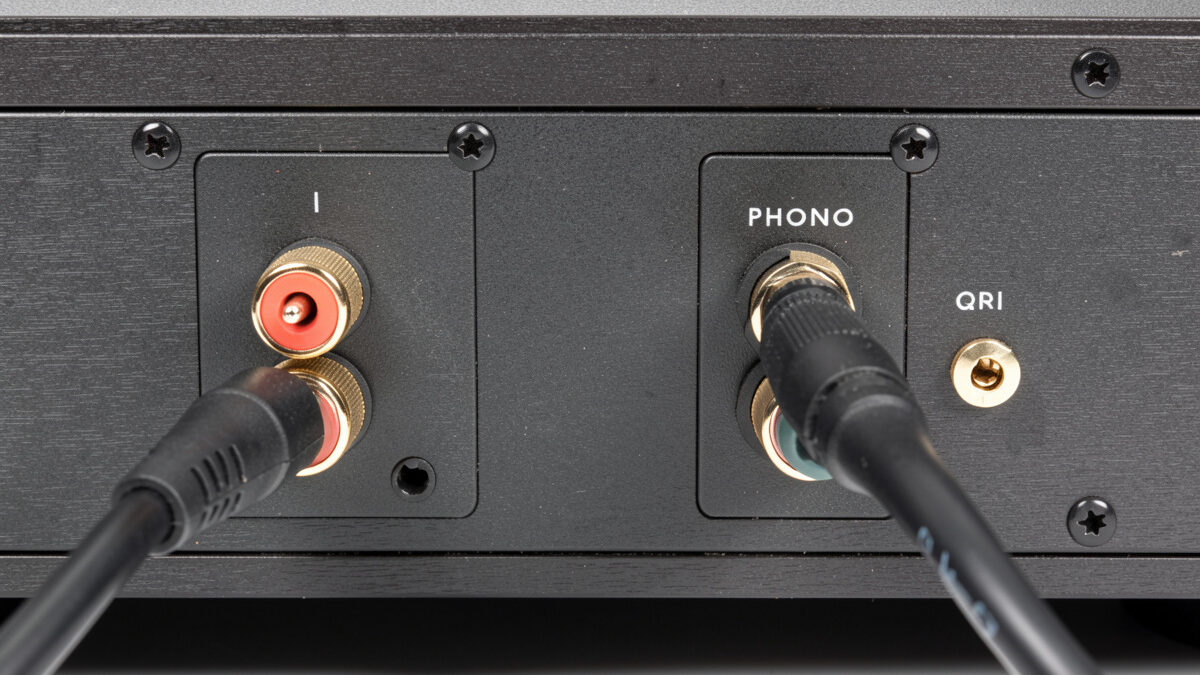
Connecting a turntable to a stereo amplifier comes down to one question: is there a phono stage in the path? A phono cartridge puts out only a few millivolts and needs about 40 dB of gain plus RIAA equalization before it reaches a line input, so you either use the amp’s dedicated phono input, switch on the turntable’s built-in preamp into any line input, or add a separate phono box in between. Get that one decision right and the rest is just plugging in RCA cables and a ground wire.
I run my deck through the same integrated amp I use for everything else, and the number of “no sound” or “sound but no bass” emails I get all trace back to this single phono-stage question. This is the connection step laid out properly; for choosing where that phono stage should live long-term, that is its own decision, and the overall chain is mapped in my turntable integration guide.
The Three Ways to Connect
There are exactly three valid wiring paths, and which one you use depends on what your amp and turntable already have. All three end with the cartridge’s signal correctly amplified and equalized before it hits the volume control — the difference is only where that happens.
First: if your amplifier has an input labeled “Phono,” run the turntable’s RCA leads straight into it and connect the ground wire to the amp’s ground post. Second: if your amp has no phono input but your turntable has a built-in preamp, switch the turntable to its “Line” setting and run it into any line input — Aux, CD, Tape. Third: if neither has a phono stage, put a standalone phono preamp between the turntable and a line input. Mixing these up — for example feeding a built-in-preamp turntable into a phono input — applies RIAA twice and produces a thin, distorted sound.
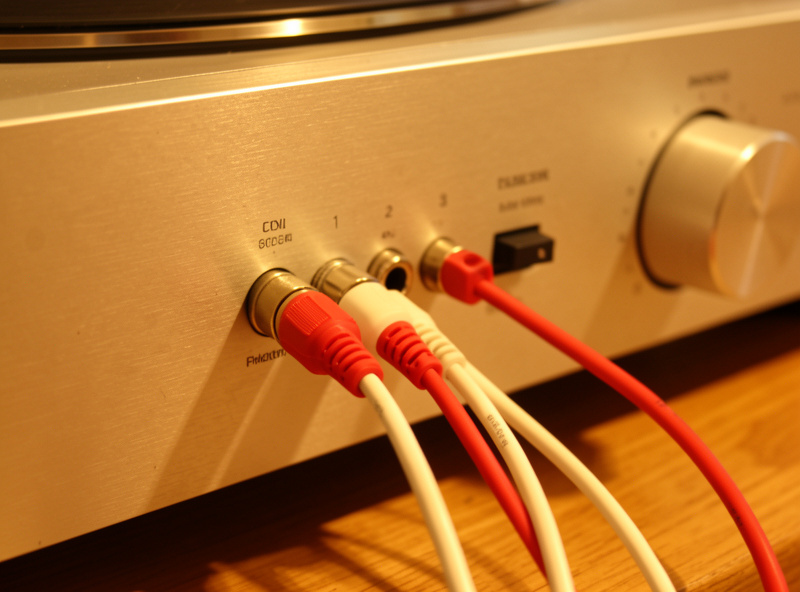
Connecting to a Phono Input
If your amplifier has a phono input, this is the cleanest path and usually the best-sounding for the money, because the phono stage is built into the same chassis with a short signal path. Plug the turntable’s left and right RCA cables into the matching Phono L and R jacks, then attach the thin separate ground wire to the grounding terminal next to them.
Make sure the phono input matches your cartridge type. Most amps with a phono stage are set for moving-magnet (MM) cartridges, which is what the vast majority of turntables ship with. If you later move to a moving-coil (MC) cartridge, you will need an MC-capable stage, because an MC cartridge’s much lower output will sound faint and lifeless into an MM input. The gain and loading details behind that are in my phono preamp buying guide.
When Your Amp Has No Phono Input
Modern integrated amplifiers increasingly omit the phono input to save cost, which leaves vinyl owners confused when the turntable plays faint and tinny into the Aux jack. The signal is missing both its gain and its RIAA curve. You have two fixes, and both add a phono stage to the chain — the only question is whether it lives in the turntable or in a separate box.
If your turntable has a built-in switchable preamp, set its rear switch to “Line” or “Pre” and run it into any line input; the turntable now does the phono job internally. If it does not, a standalone phono preamp sits between the deck and the line input. Either way you end up at a normal line-level connection. For choosing an amp that handles vinyl and digital cleanly from the start, see my integrated amplifiers roundup.
The Ground Wire and Hum
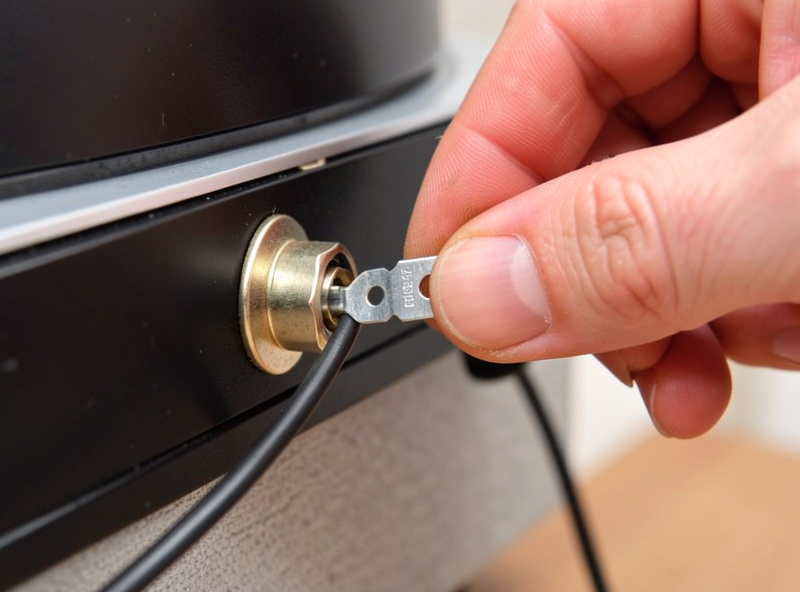
The thin spade-terminated wire coming off the turntable is the ground, and it is not optional — leaving it unconnected is the single most common cause of a loud 50 or 60 Hz hum once you turn up the volume. Land it on the ground post of whatever provides the phono stage: the amp’s phono ground terminal, or the ground post on a separate phono preamp.
If you still hear hum after grounding, the usual culprit is a ground loop between components on different outlets, or the low-level tonearm cable running parallel to a power lead. The phono stage’s high gain magnifies any of this, which is why vinyl hums when line sources stay silent. I walk through the full diagnosis order separately, but for most setups, simply connecting the ground wire to the correct post solves it outright.
Cables and What Actually Matters
The RCA interconnects from a turntable carry a tiny, fragile signal, so good shielding and a snug connection matter more here than on a line source — but exotic, expensive cable does not buy you better sound at a competent baseline. A correctly-shielded, decent-quality RCA pair is all the phono connection needs, and length should be kept reasonable to limit noise pickup.
Where it does matter: keep the phono cable away from power cables and any wall-wart switching supply, route it cleanly, and make sure the connectors seat fully. That layout discipline does more for the noise floor than any cable upgrade. I lay out why most cable upgrades do not change the sound, as a tested position, in do expensive audio cables make a difference.
Verifying It Works
Once everything is connected, set the amp to the correct input, start the platter, and bring the volume up slowly. You should hear full-bodied sound at a normal volume setting, with no excessive hum and proper bass weight. If it is faint or bass-light, your phono stage is missing or bypassed; if it is thin and screechy, you have likely doubled the RIAA by feeding a built-in preamp into a phono input.
A quick test for the doubled-stage problem: if your turntable has the built-in preamp switched on and you are plugged into a phono input, switch the turntable to “Phono” (preamp off) or move to a line input. The sound should immediately gain body and lose the harshness. As an Amazon Associate I earn from qualifying purchases, and a basic inline phono preamp is an inexpensive way to add the stage if neither your amp nor deck has one.
Frequently Asked Questions
Can I plug a turntable into the Aux input on my amplifier?
Only if the turntable has a built-in preamp switched to Line. A bare turntable into Aux sounds faint and bass-light because Aux is a line input with no gain or RIAA equalization. Add a phono stage in the turntable or a separate box first.
What is the ground wire on my turntable for?
It bleeds away electrical noise so the high-gain phono stage does not amplify it into hum. Connect its spade terminal to the ground post on the amp’s phono section or the phono preamp. Leaving it unconnected usually causes a loud 50 or 60 Hz hum.
Why does my turntable sound thin and screechy?
You have probably applied RIAA equalization twice, by feeding a turntable with its built-in preamp switched on into the amp’s phono input. Switch the turntable’s preamp off, or move it to a line input. Only one phono stage should be in the chain.
Do I need special cables to connect a turntable?
No. A decent, properly shielded RCA pair is enough. The fragile phono signal benefits from good shielding and a snug, short connection kept away from power leads, but exotic expensive cable does not improve the sound at a competent baseline.
How do I know if my amplifier has a phono input?
Look for an input labeled Phono on the back panel, usually with a small ground post beside it. If the only inputs are Aux, CD, Line, or Tape, there is no phono stage, and you need a turntable with a built-in preamp or a separate phono box.