Phono Preamp vs Built-In Phono Stage: Which to Use
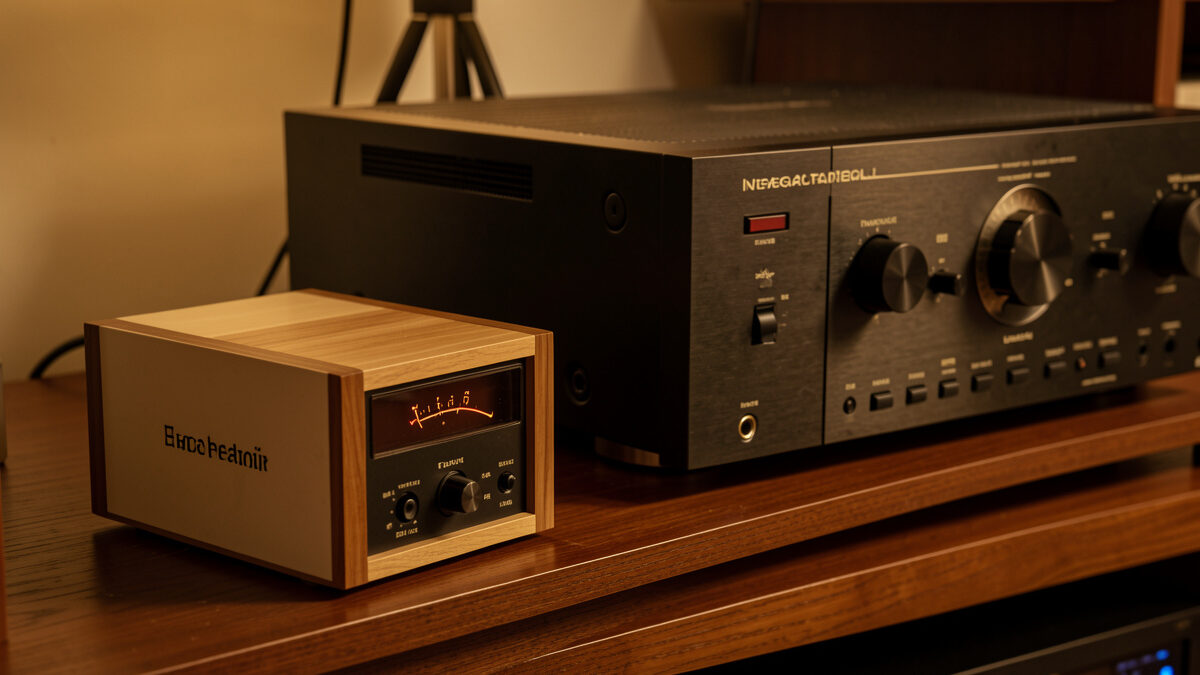
The choice between a separate phono preamp and your amplifier’s built-in phono stage comes down to ceiling versus convenience. A built-in stage costs nothing extra and is fine to start, but it shares a chassis and power supply with the rest of the amp and rarely supports moving-coil cartridges. A dedicated outboard phono preamp gives you a cleaner power supply, better parts, adjustable gain and loading, and a clear upgrade path — at the cost of another box and another cable.
I have run both in my listening room, swapping a budget deck between an amp’s onboard MM stage and a separate phono box, and the honest verdict is that the built-in stage is genuinely good enough until your cartridge or your ears outgrow it. This is the decision laid out so you can tell which side of that line you are on. The full chain it sits inside is in my turntable integration guide, and the wiring itself is covered in connecting a turntable to a stereo amplifier.
What the Phono Stage Actually Does
Both options do the same two jobs: they apply about 40 dB of gain to bring the cartridge’s few-millivolt output up to line level, and they reverse the RIAA equalization curve that was applied when the record was cut. Without this stage the signal is far too quiet and tonally wrong, with thin bass and exaggerated treble. The question is never whether you need a phono stage — you always do — but only where it lives.
A built-in stage puts this circuit inside the amplifier or, in some decks, inside the turntable. A separate phono preamp puts it in its own box with its own power supply. The electrical job is identical; the difference is in the quality of the execution and the flexibility you get. The deeper specifics of gain, loading, and MM versus MC live in my phono preamp buying guide.
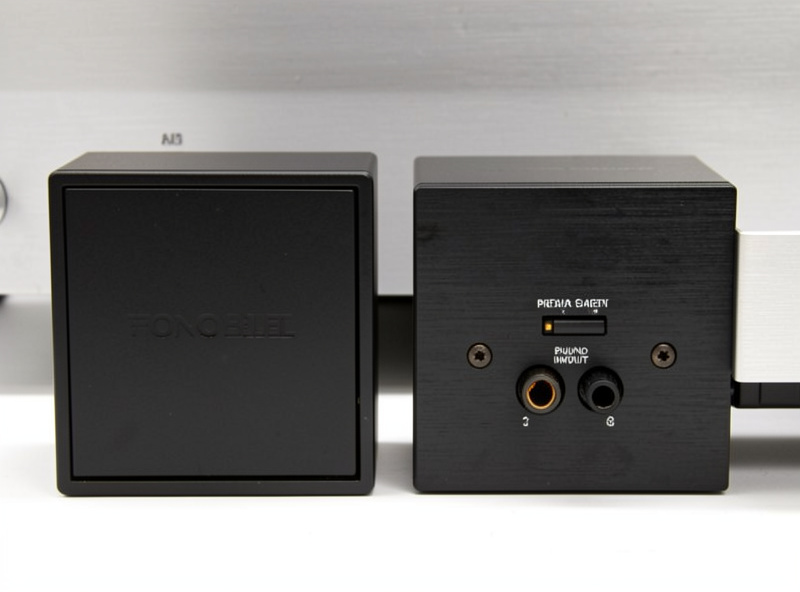
When the Built-In Stage Is Enough
If your amplifier already has a phono input and you are running a standard moving-magnet cartridge, the built-in stage is the right call for most people and most budgets. It is one less box, one less cable, one less power supply to buy, and on a competent integrated amp the onboard MM stage is quiet and accurate enough that you would struggle to hear a difference against a similarly-priced outboard box.
The built-in route makes the most sense when your whole system is in the entry-to-mid range, when your cartridge is MM, and when you value simplicity. There is no shame in it — chasing a separate phono box before the rest of your system can resolve the difference is spending in the wrong place. For where that money is better spent first, the room and speakers usually win, as I argue in the integration guide.
When a Separate Phono Preamp Wins
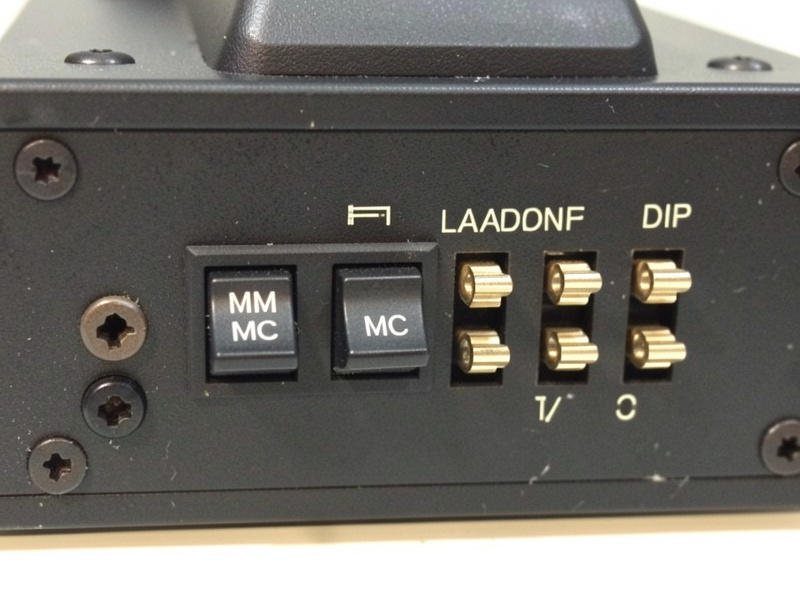
A dedicated phono preamp earns its place when you move to a moving-coil cartridge, when your amp has no phono input at all, or when the rest of your system has become resolving enough to expose the onboard stage’s limits. Its own power supply means it is not sharing noise with the amp’s circuitry, and good ones offer switchable gain and impedance loading so you can actually match the cartridge.
That adjustability is the real differentiator. An MC cartridge outputs a fraction of an MM cartridge’s voltage and needs both more gain and different loading; few built-in stages handle MC at all. If you are headed toward better cartridges, the separate box is the path that does not dead-end. Pair it with an amp chosen for clean line stages, like the ones in my integrated amplifiers roundup.
There is also the noise-floor argument, which is the one I find most consistent in my own listening. A built-in phono stage sits inches from the amplifier’s power transformer and output stage, picking up stray hum and hash that a separately-cased box with its own supply and its own grounding avoids. On a quiet system in a quiet room, that lower noise floor shows up as blacker silences between notes and a touch more low-level detail — not night and day, but real and repeatable. If your room is not yet quiet enough to hear it, that tells you the upgrade belongs elsewhere first.
Built-In vs Separate: Side by Side
Here is the trade laid out the way I weigh it when someone asks which to buy. The built-in stage wins on cost and simplicity; the separate box wins on ultimate quality and flexibility. Neither is “better” in the abstract — it depends on your cartridge and how resolving the rest of your system is.
| Factor | Built-In Phono Stage | Separate Phono Preamp |
|---|---|---|
| Extra cost | None — already in the amp | Another component to buy |
| Power supply | Shared with amplifier | Dedicated, lower noise |
| Cartridge support | Usually MM only | MM and MC, often switchable |
| Gain and loading | Fixed | Adjustable on better units |
| Upgrade path | Dead-ends with the amp | Swap the box independently |
| Best for | MM cartridge, entry-to-mid systems | MC cartridge, resolving systems, no phono input |
The Mistake to Avoid: Two Stages at Once
The one error that bites people switching between these options is running two phono stages in series. If your turntable has a built-in preamp switched on, and you feed it into an amp’s phono input or a separate phono box, you apply RIAA twice and the gain twice — the result is harsh, thin, distorted sound that is unmistakable once you know it.
Only one phono stage belongs in the chain. If you add a separate phono preamp, make sure the turntable’s internal preamp is switched off (set to “Phono”) and that you are feeding a line input, not a phono input. As an Amazon Associate I earn from qualifying purchases, and an outboard phono box with switchable MM/MC gain is the upgrade I point people to when they outgrow an onboard stage.
Frequently Asked Questions
Is a separate phono preamp better than a built-in one?
Not automatically. A separate preamp has its own power supply, better parts, and adjustable gain and loading, which matters for moving-coil cartridges and resolving systems. But a good built-in moving-magnet stage is hard to beat at entry-to-mid budgets, and it saves a box and a cable.
Do I need a phono preamp if my amp has a phono input?
No. The phono input means the amp already contains a phono stage, so you can connect the turntable directly. Add a separate preamp only if you move to a moving-coil cartridge or your system has become resolving enough to expose the built-in stage’s limits.
Can I use a built-in and a separate phono preamp together?
No. Running two phono stages in series applies RIAA equalization and gain twice, producing harsh, thin, distorted sound. Use only one. If you add an outboard preamp, switch the turntable’s internal preamp off and feed a line input, not a phono input.
What makes a separate phono preamp worth it?
Three things: a dedicated low-noise power supply not shared with the amp, support for moving-coil cartridges that most built-in stages lack, and switchable gain and impedance loading so you can match the cartridge. If none of those apply to you, the built-in stage is fine.
Will a phono preamp fix a quiet turntable?
If the turntable is quiet because there is no phono stage in the path, yes, a phono preamp supplies the missing gain. If it is already going through a phono input or a built-in preamp, the quietness is something else, such as a low-output cartridge needing more gain.