Best Turntable to Add to an Existing Hi-Fi System
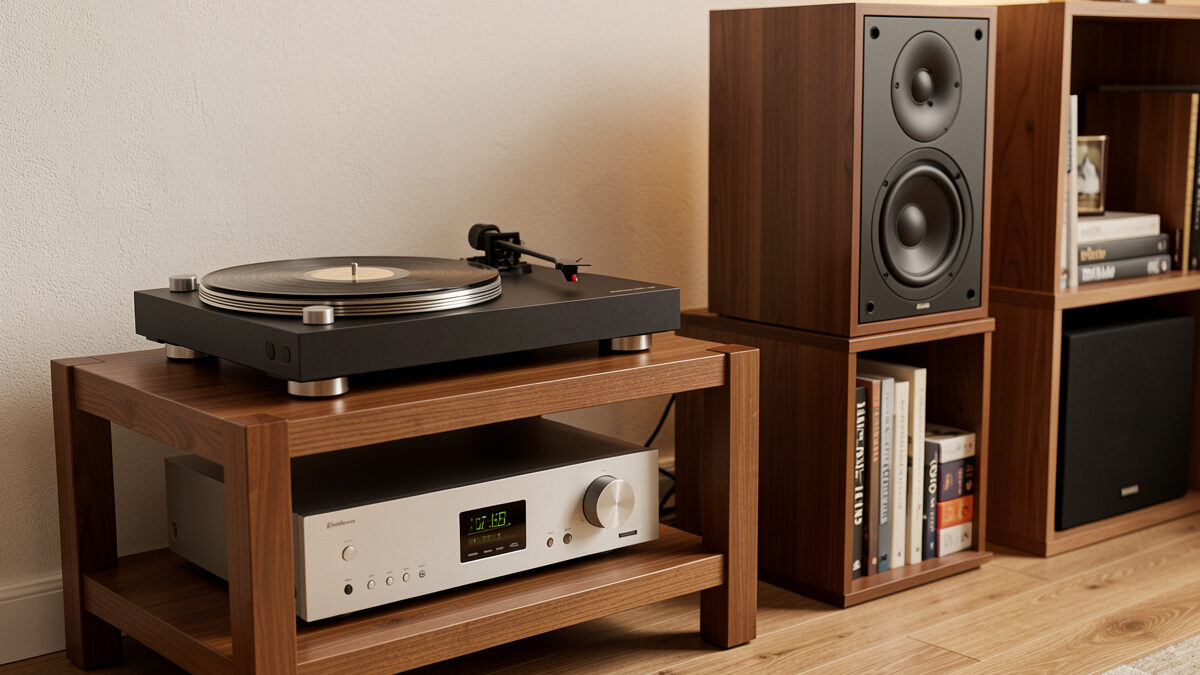
The best turntable to add to an existing hi-fi system is the one matched to the resolution you already own — not the cheapest deck that spins, and not a flashy all-in-one. If you have a real amp and speakers, a belt-drive turntable with a quality tonearm and an upgradeable moving-magnet cartridge in the $300 to $700 range hits the sweet spot for most readers, with the option to skip a built-in preamp if your amp already has a phono input. Spend to match your system’s ceiling, then upgrade the cartridge as the next step.
I have rotated a few decks through the same measured chain, and the pattern is consistent: a competent system exposes a cheap turntable instantly — wow, flutter, motor noise, and a budget stylus all show up. This guide is about choosing the deck that fits what you have. The full integration picture is in my turntable integration guide, and once it arrives, connecting it to your amplifier is the next step.
Match the Deck to Your System’s Resolution
The single most useful rule is to spend on the turntable in proportion to what the rest of your system can reveal. A revealing pair of speakers and a clean amp will expose a wobbly platter or a noisy motor that you would never notice on a cheap setup, so a $150 deck into a $1,500 system is a bottleneck you will hear immediately.
As a rough guide, a system built around bookshelf speakers and a budget integrated is well served by a $300 to $450 deck, while a more resolving setup with quality floorstanders justifies $500 to $900. The point is balance — a turntable that under-resolves drags the whole chain down. If you are still choosing speakers and amp, my integrated amplifier roundup covers the downstream side that sets your ceiling.
Belt Drive vs Direct Drive for Hi-Fi
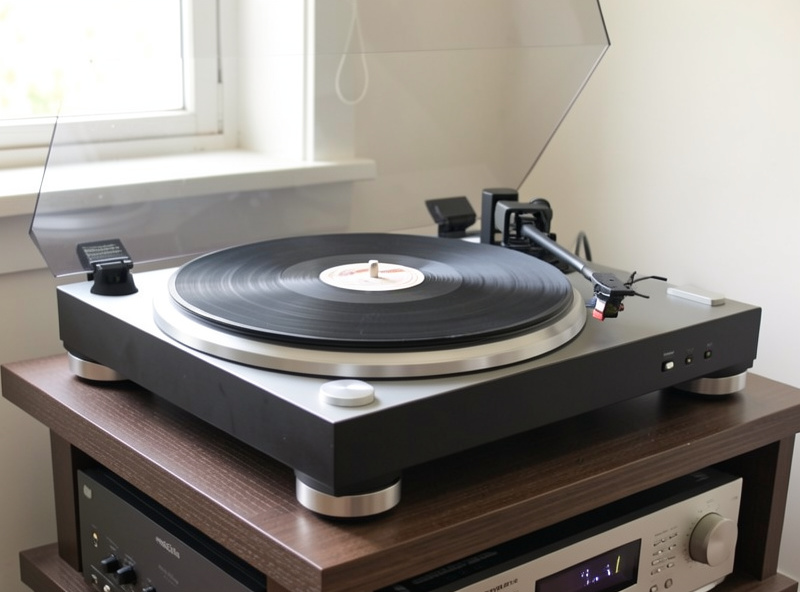
For a hi-fi listening system, belt drive is the default recommendation because the belt isolates the platter from motor vibration, which keeps the noise floor low — exactly what a revealing system needs. Direct drive has its place for DJs and for some high-end decks, but at the prices most readers shop, a good belt-drive deck is quieter and better matched to critical listening.
The trade-off is that belt drive needs occasional belt replacement and a moment to reach speed, while direct drive starts instantly and holds speed tightly. For pure home listening neither difference matters much; the isolation advantage of belt drive is the more relevant factor. The mechanical depth on platters, bearings, and isolation belongs to the deck specialists, so for that level I point you to vinylgearhq.com.
Built-In Preamp or Not?
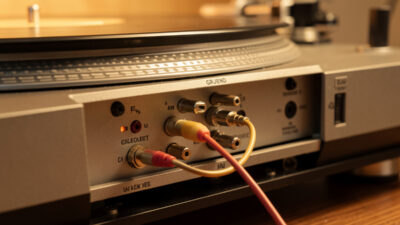
Whether to buy a turntable with a built-in phono preamp depends entirely on what your amplifier already has. If your amp has a phono input, you do not need the turntable’s built-in preamp and may get better sound bypassing it; if your amp has no phono input, a deck with a switchable built-in preamp is the simplest path to sound.
The most flexible choice is a turntable with a switchable preamp you can turn off later, which covers both situations and leaves room to add a separate phono box down the line. I break the trade-off down fully in phono preamp versus built-in stage, and the gain and loading specifics are in my phono preamp buying guide.
What to Look For in the Spec Sheet
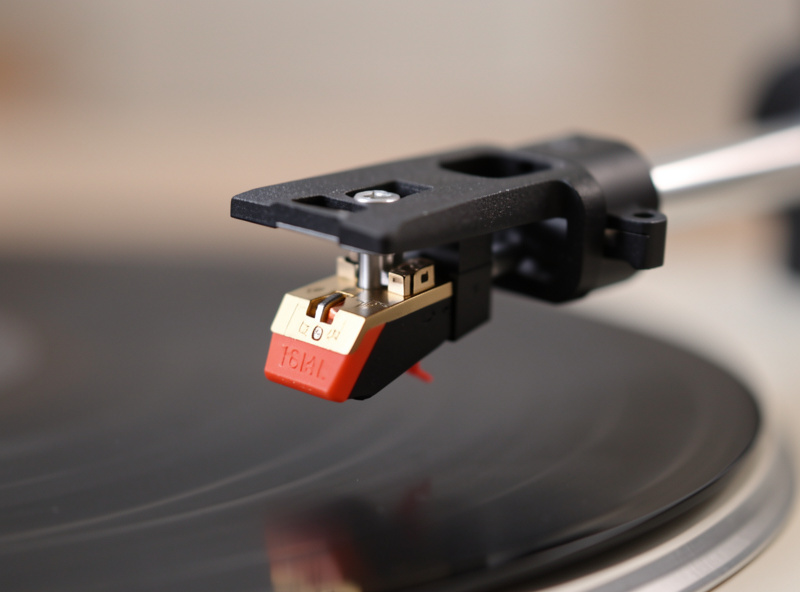
Beyond drive type and preamp, the features that actually matter for a hi-fi deck are a decent tonearm, an upgradeable cartridge, and an anti-resonant plinth. A captive, non-upgradeable cartridge caps your future; a quality tonearm with adjustable counterweight and anti-skate lets the cartridge track properly and lets you upgrade the stylus later.
Also weigh the practical features: a built-in or external speed control for 33 and 45 RPM, a removable headshell for easy cartridge swaps, and a solid platter that adds rotational inertia for steadier speed. Skip the gimmicks — Bluetooth output and USB ripping are convenience features, not sound-quality features, and they should not drive the buying decision on a hi-fi deck.
One spec I do weigh is whether the platter is decoupled from the plinth and how the feet handle vibration, because a turntable on a real system is constantly fighting feedback from the speakers and footfall through the floor. A heavier platter, a sub-platter on a quality bearing, and isolating feet all keep the stylus reading the groove rather than the room. You do not need to obsess over it at the entry tier, but as you move up the tiers below it becomes one of the things that separates a deck that merely plays records from one that lets a resolving system show what it can do.
Turntable Tiers for an Existing System
This is how I bucket decks when matching them to an existing system. The tiers map to what the rest of your chain can resolve, not to brand prestige. As an Amazon Associate I earn from qualifying purchases, and a belt-drive hi-fi turntable in these tiers is where the value is; the categories reflect price bands, not specific time-sensitive models.
| Tier | Price Band | Best Matched To | Key Features |
|---|---|---|---|
| Entry hi-fi | $300–$450 | Bookshelf speakers, budget integrated | Belt drive, MM cartridge, switchable preamp |
| Mid hi-fi | $450–$700 | Quality bookshelves or floorstanders | Better tonearm, upgradeable cartridge, no preamp needed |
| Upper mid | $700–$1,000 | Resolving floorstanders, clean amp | Heavier platter, isolated motor, MC-ready arm |
| Aspirational | $1,000+ | High-resolution reference systems | Outboard motor, premium arm, MC cartridge |
Plan the Upgrade Path
The smart move with a turntable is to buy the best deck and tonearm you can, then upgrade the cartridge over time, because the cartridge is the consumable part and the easiest meaningful improvement. A deck with a quality arm and a modest cartridge will outperform a fancier cartridge on a poor arm, so the arm and plinth are where the long-term value sits.
Once the deck is matched and connected, the rest of your system is what determines how good it can sound. If you are still building out the room and speakers, that is usually the higher-impact place to spend next, as I cover in the integration guide and the beginner’s guide to hi-fi systems.
Frequently Asked Questions
How much should I spend on a turntable for my hi-fi system?
Match the deck to your system’s resolution. A bookshelf-and-budget-integrated setup is well served by a $300 to $450 turntable, while resolving floorstanders justify $500 to $900. A cheap deck into a revealing system becomes an obvious bottleneck you can hear.
Should I buy a turntable with a built-in preamp?
Only if your amplifier lacks a phono input. If your amp has a phono input, you do not need the built-in preamp and may sound better bypassing it. A switchable built-in preamp is the most flexible choice because you can turn it off later.
Is belt drive or direct drive better for home listening?
For a hi-fi listening system, belt drive is usually better because the belt isolates the platter from motor vibration, keeping the noise floor low. Direct drive suits DJs and some high-end decks, but belt drive is the safer match for critical home listening at typical prices.
What turntable features actually matter for sound quality?
A quality adjustable tonearm, an upgradeable cartridge, an anti-resonant plinth, and a solid platter for steady speed. Bluetooth and USB ripping are convenience features, not sound-quality features, and should not drive a hi-fi deck purchase.
Should I upgrade the turntable or the cartridge first?
Buy the best deck and tonearm you can afford, then upgrade the cartridge over time. The cartridge is the consumable, easiest meaningful improvement, but a quality arm and plinth set the ceiling, so prioritize those at purchase.