Upgrading From an All-in-One Turntable to Separates
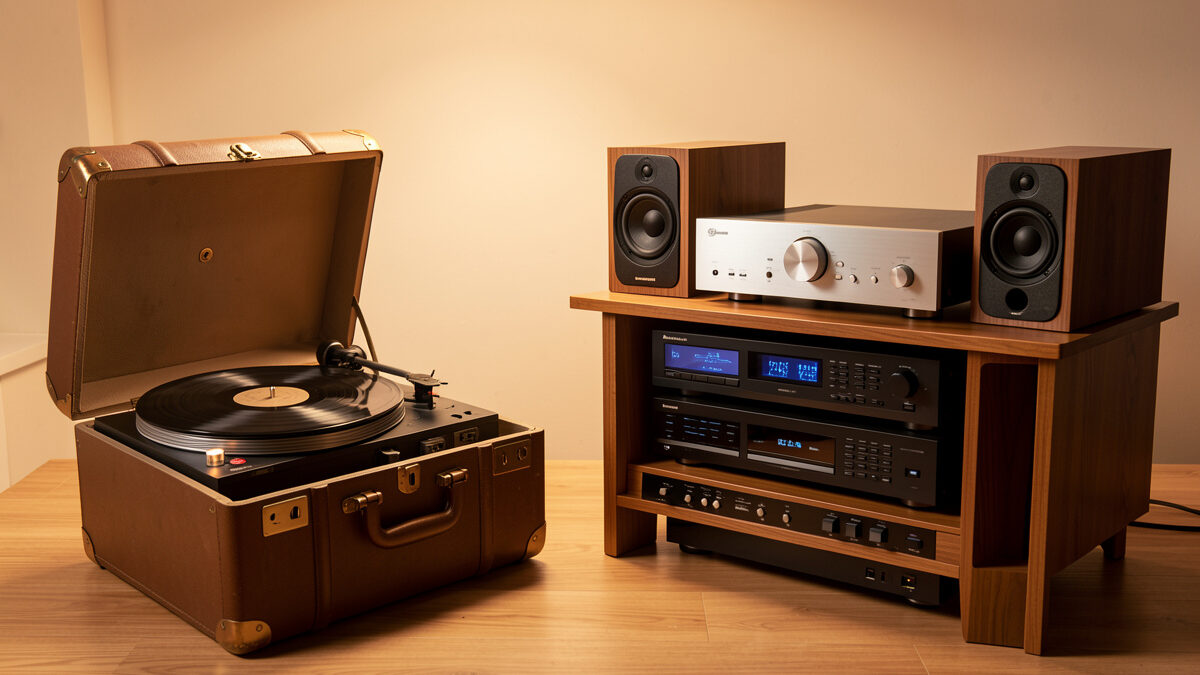
Upgrading from an all-in-one turntable to separates means splitting one compromised box into four better parts: a real deck, a proper phono stage, an amplifier, and standalone speakers. The smart order is to start at the end of the chain — buy the speakers and amp first, because they set the ultimate quality ceiling — then improve the turntable and cartridge. You do not have to replace everything at once, and doing it in the right sequence means every step is an audible improvement rather than a sideways move.
All-in-one decks with built-in speakers are a fine first taste of vinyl, but the platter, cartridge, and tiny speakers all limit each other, so the ceiling is low and you hit it fast. This is the migration path I recommend. The full system view is in my turntable integration guide, and where the whole chain leads is laid out in building a hi-fi system for vinyl.
Why All-in-Ones Hit a Ceiling
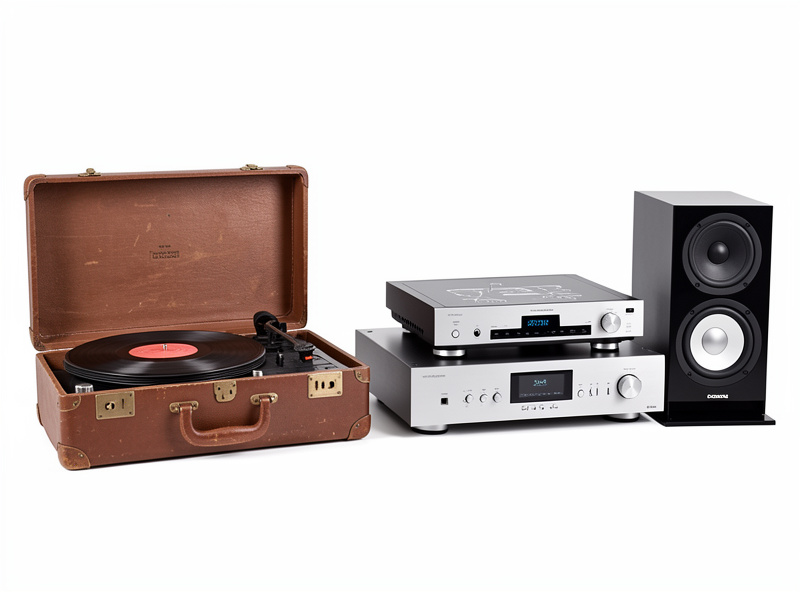
An all-in-one turntable crams the deck, the phono stage, the amplifier, and the speakers into one cheap chassis, and every one of those parts is built to a price. The platter and tonearm are basic, the cartridge is usually a captive ceramic or low-end magnetic type, the amp is a few watts, and the built-in speakers are tiny — so even if one part were good, the others would bottleneck it.
Worse, the close coupling of a spinning platter and built-in speakers in one box invites vibration and feedback. The result is a deck that plays records but cannot resolve detail, image, or produce real bass. There is nothing to fix incrementally inside the box; the upgrade path is to move the jobs out into separate, better components. That is the whole point of separates — each part can be as good as you want.
Upgrade in the Right Order
The counterintuitive but correct order is to upgrade the downstream components first. Speakers and the amplifier set the ultimate ceiling of what you can hear, so a good amp and speakers fed even by a modest deck will sound dramatically better than an all-in-one. Start there, then improve the turntable, then the cartridge — each step builds on a foundation that can reveal it.
This order also lets you keep listening throughout the transition. Add an amp and speakers, and you can run your existing all-in-one’s line output into them as a stopgap while you save for a real deck. The amp and speaker choices that set the ceiling are covered in my integrated amplifiers roundup and powered vs passive speakers.
The Four Components You Are Building
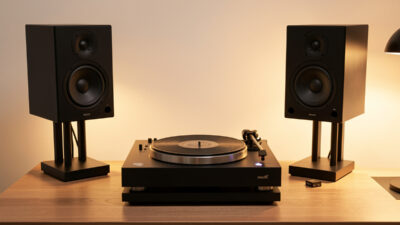
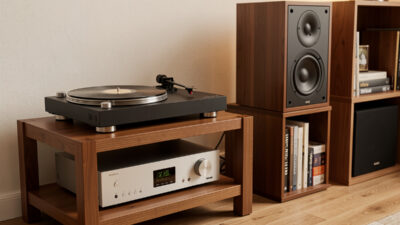
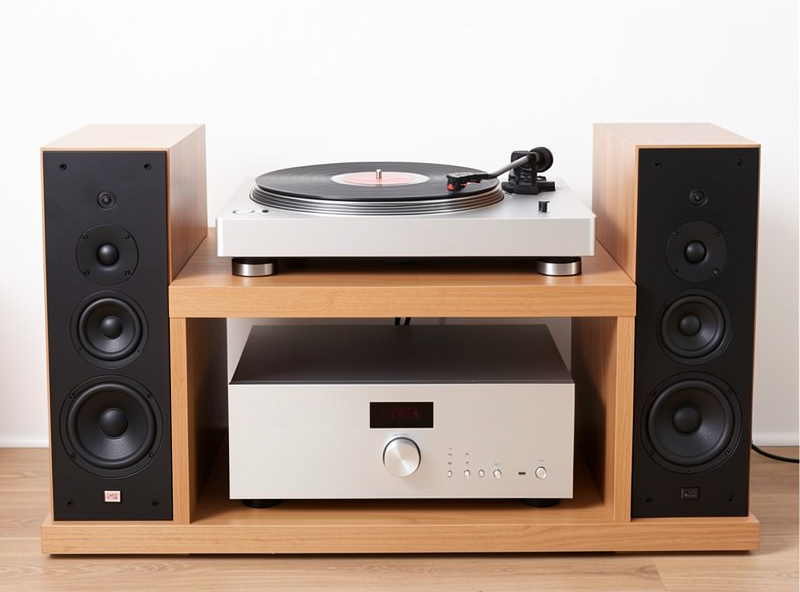
Separates means four distinct jobs, each in its own box. The turntable spins the record and tracks the groove; the phono stage applies gain and RIAA equalization; the amplifier drives the speakers; and the speakers convert it to sound. In an all-in-one, all four are compromised versions sharing one chassis — separating them lets each be chosen and upgraded independently.
You do not always need four physical boxes: an integrated amplifier may include the phono stage, and powered speakers fold the amp into the speakers. The point is that each job is now done properly rather than to a budget price. Whether the phono stage lives in the amp, the deck, or its own box is a decision I cover fully in phono preamp vs built-in stage.
All-in-One vs Separates
Here is the difference laid out plainly. The all-in-one wins only on price and footprint; separates win on every aspect of sound quality and on the ability to upgrade. This is why the move to separates is the single biggest jump in vinyl playback most people will ever make.
| Aspect | All-in-One | Separates |
|---|---|---|
| Deck quality | Basic platter and tonearm | Quality arm, steady platter |
| Cartridge | Often captive, low-end | Upgradeable, proper MM or MC |
| Amplification | A few watts, built-in | Real amp matched to speakers |
| Speakers | Tiny, in the same box | Standalone, room-filling |
| Upgrade path | None — replace the whole box | Improve any part independently |
| Footprint and cost | Small and cheap | Larger, costs more over time |
Budgeting the Transition
The most common question I get from all-in-one owners is how to split a budget across the new components, and the honest answer is to weight it toward the amp and speakers early, then rebalance toward the deck as you go. A rough first-system split puts the largest share on speakers, a solid share on the amplifier, and the rest on a modest but real turntable — because a good deck through poor speakers still sounds poor, while a modest deck through good speakers already sounds like hi-fi.
Crucially, you can stretch this over months rather than buying it all at once. Each purchase in the right order is independently worthwhile, so there is no awkward stage where the system sounds worse than the all-in-one it replaced. That staged approach is also gentler on the wallet and lets you listen and learn what you actually want before committing to the more expensive pieces. The full target chain, and where to spend at each tier, is mapped in my beginner’s guide to hi-fi systems.
What to Keep and What to Replace First
Almost nothing inside a typical all-in-one is worth carrying forward — the deck, cartridge, amp, and speakers are all entry-level. The one thing you can keep temporarily is the all-in-one itself, used as a line-level source into your new amp via its rear output, while you build the rest. Once a real deck arrives, the all-in-one retires.
If budget forces a single first purchase, buy the amp and speakers, because they unlock the quality of everything you add later, and use the all-in-one’s line output to feed them in the meantime. As an Amazon Associate I earn from qualifying purchases, and a quality bookshelf pair plus a modest integrated amp with a phono input is the foundation I point first-time upgraders toward. From there, a real turntable is the next and most satisfying step.
Frequently Asked Questions
Should I upgrade my all-in-one turntable or buy separates?
Move to separates. An all-in-one’s deck, cartridge, amp, and speakers are all built to a price and limit each other, with no internal upgrade path. Separates let each part be chosen and improved independently, which is the biggest jump in vinyl playback most people make.
What should I upgrade first when moving to separates?
Buy the amplifier and speakers first. They set the ultimate quality ceiling, so even a modest deck sounds dramatically better through them. Then upgrade the turntable, then the cartridge. You can feed your old all-in-one’s line output into the new amp as a stopgap.
Can I keep any part of my all-in-one turntable?
Usually not for long. The deck, cartridge, amp, and speakers are all entry-level. The one temporary use is running the all-in-one’s rear line output into your new amplifier as a source while you save for a real turntable, then retiring it.
How many boxes does a separates system need?
Four jobs, but not always four boxes. The turntable, phono stage, amplifier, and speakers are the four jobs. An integrated amp can include the phono stage, and powered speakers fold the amp into the speakers, so a tidy system can be as few as three pieces.
Is a separates vinyl system worth the extra cost?
For sound quality, yes. Separates resolve detail, image properly, and produce real bass that an all-in-one cannot, and you can upgrade any part over time. The all-in-one only wins on price and footprint, so it suits a casual or space-limited listener.