How to Ground a Turntable and Eliminate Hum
A turntable hums because the phono stage applies enormous gain, so any stray electrical noise or missing ground path gets amplified into an audible 50 or 60 Hz drone. The fix, in order, is almost always this: connect the ground wire to the phono stage’s ground post, break any ground loop between components on different outlets, and route the low-level tonearm cable away from power leads and switching supplies. Get those three right and the hum disappears — it is rarely the cartridge or the record.
I have chased hum out of more setups than I can count, and the diagnosis order matters because the cheapest fix is usually the first one. This walkthrough follows the sequence I actually use. The phono stage that creates this sensitivity is explained in my turntable integration guide, and the basic wiring including the ground wire is in connecting a turntable to a stereo amplifier.
Why the Phono Stage Hums and Line Sources Do Not
The reason vinyl hums when your streamer and CD player stay silent is gain. A phono cartridge outputs a few millivolts and needs roughly 40 dB of amplification, so the phono stage multiplies everything — including any hum picked up along the way — far more than a line input ever does. A tiny bit of induced noise that is inaudible on a line source becomes a loud drone after the phono stage gets through with it.
That is why grounding and cable routing matter so much more for a turntable. The same wiring that is fine for a digital source can hum badly through a phono stage. Understanding this is half the battle: you are not fighting a broken component, you are managing a very sensitive, high-gain front end that demands a clean ground and tidy layout.
It also explains why the hum tracks the volume control on some setups and not others. A hum that rises with the volume is entering before or at the phono stage and being amplified along with the music, which points at grounding or the cartridge ground inside the deck. A hum that stays constant regardless of the volume knob is usually entering later in the chain or coming from the amplifier’s own power supply, which is a different problem with a different fix. Noticing which behavior you have narrows the search before you touch a single cable.
Step One: The Ground Wire
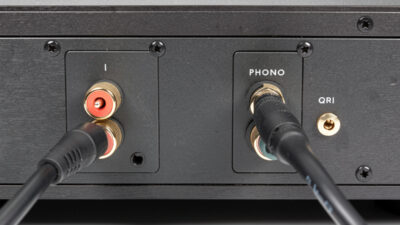
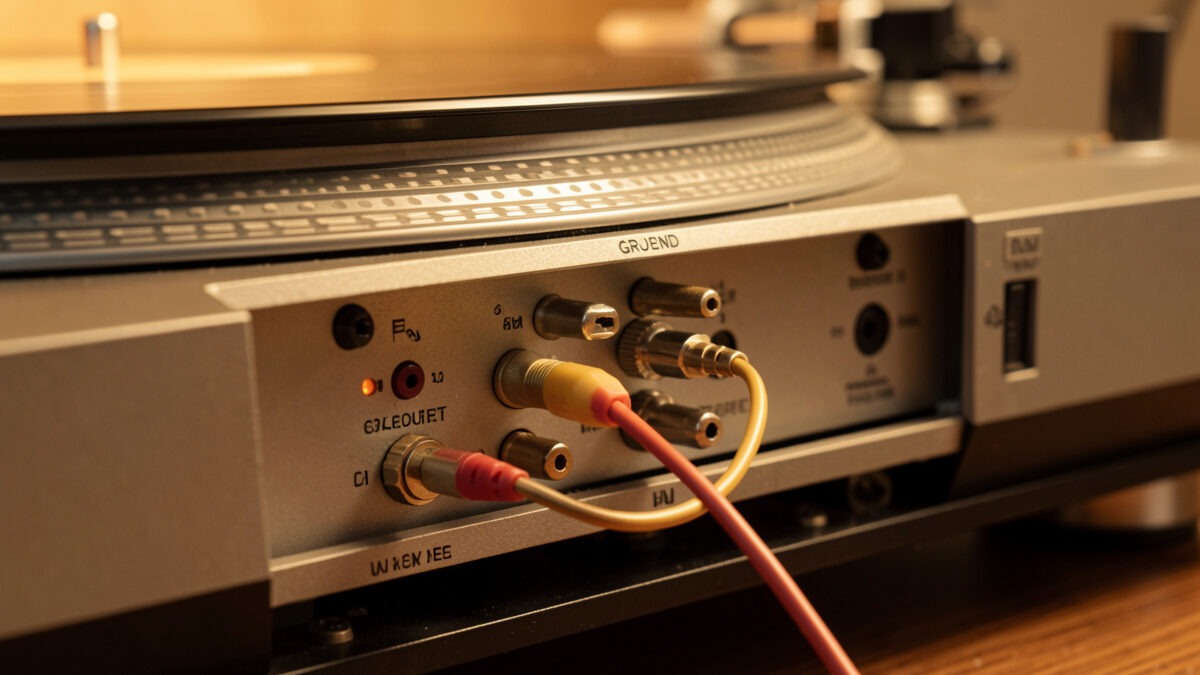
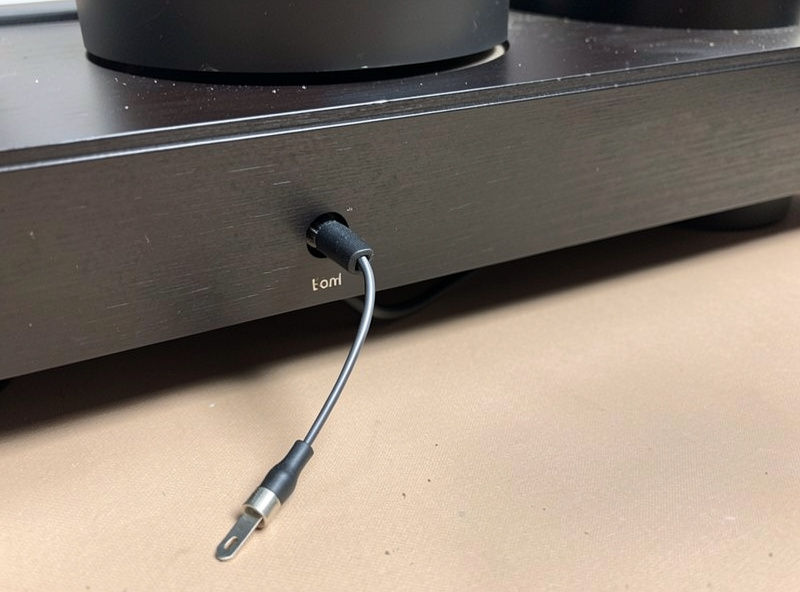
The first and most common fix is the ground wire itself — that thin separate wire, usually with a spade or fork terminal, coming off the turntable. It must connect to the ground post on whatever provides the phono stage: the GND terminal beside your amp’s phono input, or the ground post on a separate phono preamp. Leaving it unconnected is the number one cause of turntable hum.
Make sure the connection is tight and metal-to-metal. A loose spade terminal or one clamped over paint or anodizing will not ground properly. If your turntable has a built-in preamp and no separate ground wire, the grounding is handled internally and you should not see a dangling ground lead — adding one anywhere can actually create a loop. Match the grounding to your specific signal path.
Step Two: Hunt the Ground Loop
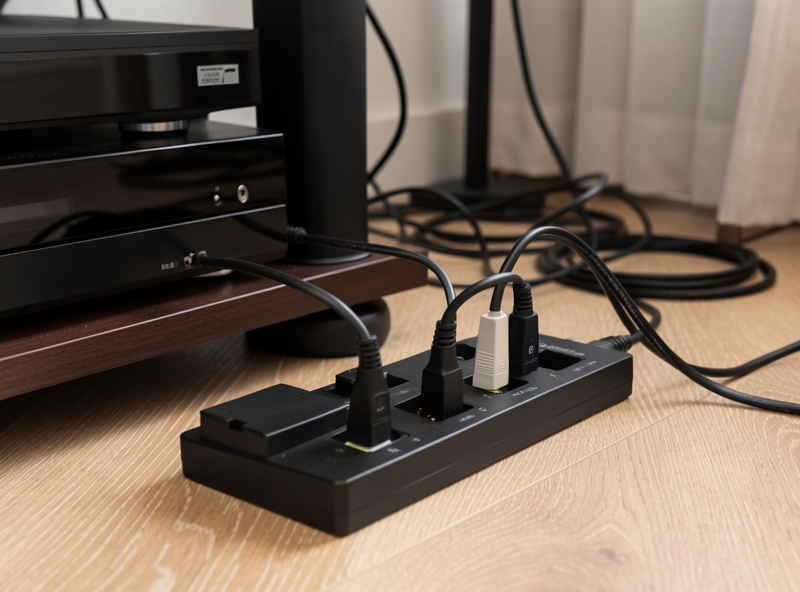
If the hum persists after grounding, the next suspect is a ground loop — a situation where two components are grounded through different paths, creating a loop that picks up mains hum. This commonly happens when the turntable, phono preamp, and amplifier are plugged into different outlets, power strips, or circuits around the room.
The fix is to get all the connected audio components onto the same outlet or power strip so they share a single ground reference. Plugging the turntable, phono preamp, and amplifier into one strip often kills a loop-induced hum instantly. If a cable TV or computer connection is tied into the system, that can introduce its own ground path and loop — disconnecting it to test is a quick diagnostic.
Step Three: Cable Routing and Interference
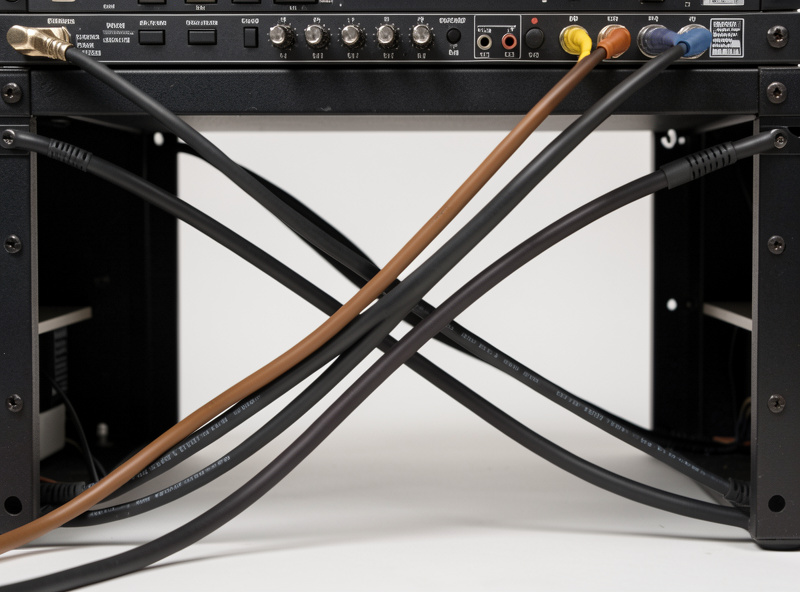
The third source of hum is induced interference, where the low-level tonearm cable runs parallel to a power cord, a wall-wart switching supply, or a transformer, picking up their field. Because the phono stage amplifies this so heavily, even a few inches of parallel routing next to a power brick can introduce an audible buzz.
Separate the signal cables from power cables — cross them at right angles rather than running them parallel, and move any external power supply or wall-wart away from the turntable and phono cable. Switching supplies for routers, hubs, and LED lighting are common culprits sitting near a hi-fi rack. A little distance and tidy routing usually clears the last of the noise.
When It Is Not the Ground
If you have done all three steps and a hum or buzz remains, a few less common causes are worth checking. A failing cartridge ground wire inside the tonearm, a cracked RCA connector, or a marginal phono preamp can each produce noise that mimics a ground problem. Swapping in a known-good cable or trying the deck on a different phono input narrows it down.
A buzz that changes when you touch the tonearm or chassis points to a grounding fault in the deck itself; a steady hum unaffected by touch points more to a loop or interference. As an Amazon Associate I earn from qualifying purchases, and a quality shielded phono interconnect or a ground-loop isolator is an inexpensive thing to try when the basics are already covered. The mechanical side of cartridge wiring belongs to the deck specialists at vinylgearhq.com.
Frequently Asked Questions
Why does my turntable hum when I turn up the volume?
The phono stage applies about 40 dB of gain, so it amplifies any electrical noise or missing ground into an audible hum. The usual cause is an unconnected or loose ground wire. Connect it to the ground post on the amp’s phono section or the phono preamp first.
Where does the turntable ground wire connect?
To the ground post on whatever provides the phono stage: the GND terminal beside the amp’s phono input, or the ground post on a separate phono preamp. The connection must be tight, metal-to-metal, not clamped over paint or anodizing.
What is a ground loop and how do I fix it?
A ground loop happens when components are grounded through different paths, picking up mains hum. Fix it by plugging the turntable, phono preamp, and amplifier into the same outlet or power strip so they share one ground reference. This often kills the hum instantly.
Can cables cause turntable hum?
Yes. The low-level tonearm cable picks up interference if it runs parallel to power cords or near a switching power supply, and the phono stage amplifies it. Cross signal and power cables at right angles and keep wall-warts away from the phono cable.
My turntable still hums after grounding. What now?
Check for a ground loop by consolidating outlets, then check cable routing. If it persists, suspect a cracked RCA connector, a failing cartridge ground inside the tonearm, or a marginal phono preamp. A buzz that changes when you touch the chassis points to a deck grounding fault.