Diffusion vs Absorption in Room Acoustics
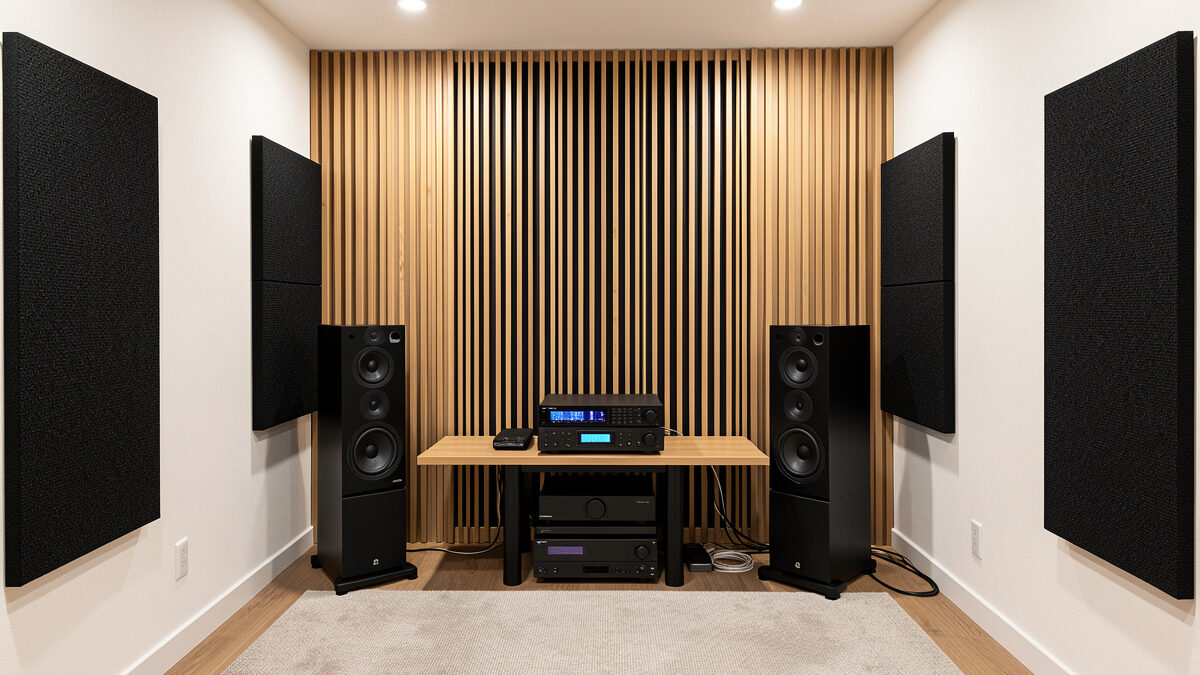
Absorption removes reflected sound energy; diffusion scatters it in many directions instead. The practical rule I follow in my listening space is simple: absorb the early reflections that smear imaging, diffuse the later reflections that add spaciousness, and never deaden the whole room. A space treated only with absorption goes flat and airless — the music loses life along with the echo.
Both tools fix reflections, but they solve different problems, and confusing them is how people end up with a room that sounds like a recording booth or one that still echoes. This guide is how I decide which to reach for, with the small-room realities that change the answer — part of my full room acoustics treatment guide.
What Absorption Does
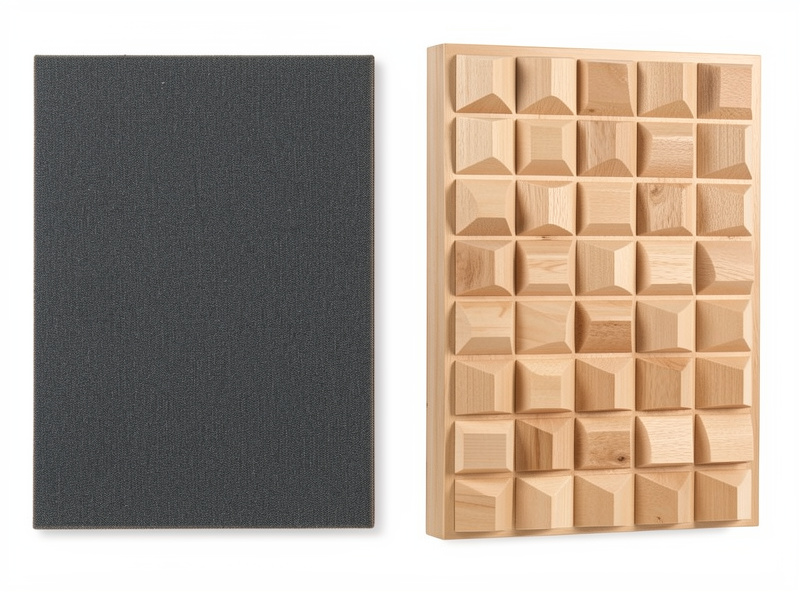
An absorber converts sound energy into a tiny amount of heat inside porous material, removing that reflection from the room. A broadband panel of 50 to 100 mm mineral wool absorbs effectively from about 250 Hz upward, which is exactly the range where early reflections smear the stereo image. Put absorption at the first reflection points and the soundstage tightens immediately.
The catch is that absorption only takes away. Use too much and the room loses its natural reverberation, the decay time drops too far, and music sounds small and lifeless. Absorption is the right tool for early reflections and corner bass, but it is the wrong tool for the whole room. The first-reflection application is covered in my first reflection points guide, and the low-frequency version in bass trapping for listening rooms.
What Diffusion Does
A diffuser scatters an incoming wavefront in many directions instead of bouncing it straight back, breaking up a strong reflection without removing the energy. The result is a room that keeps its sense of space and depth while losing the hard slap-back echo. A quadratic-residue diffuser — a structured array of wells of varying depth — is the classic device, but a deep, irregular bookshelf does a surprising amount of the same work.
Diffusion is what stops a treated room from sounding dead. By scattering later reflections rather than absorbing them, it preserves the liveliness and envelopment that make a room enjoyable to sit in for hours. The trade-off is that diffusion needs space and distance to work, which is where small rooms run into trouble.
The Key Difference and When to Use Each
The deciding factor is timing. Early reflections — the side-wall and ceiling bounces that arrive within a few milliseconds — need absorption, because scattering them would still smear the image. Later reflections — off the rear wall, arriving well after the direct sound — are candidates for diffusion, because by then your brain reads them as ambience rather than confusion.
So the layout writes itself: absorb the front of the room and the early-reflection points, diffuse the back. The front-wall and side-wall first reflections get panels; the rear wall behind your seat gets a diffuser or is left lively. That single principle resolves most of the diffusion-versus-absorption arguments you see online.
Diffusion vs Absorption at a Glance
| Property | Absorption | Diffusion |
|---|---|---|
| What it does | Removes reflected energy | Scatters reflected energy |
| Best for | Early reflections, corner bass | Later reflections, rear wall |
| Effect on liveliness | Reduces it | Preserves it |
| Space required | Low, mounts flat | High, needs distance to ears |
| Small-room priority | Primary tool | Refinement, last |
| Risk if overused | Dead, airless room | Little, but wasteful up close |
The Small-Room Reality
In a small room, absorption does most of the work and diffusion is a refinement. A diffuser needs roughly 2 metres or more between its surface and your ears for the scattered wavefront to develop properly; closer than that and it behaves more like an oddly shaped reflector than a true diffuser. In a compact listening space the rear wall is often too close for a diffuser to earn its keep, so I lean on absorption and good placement first.
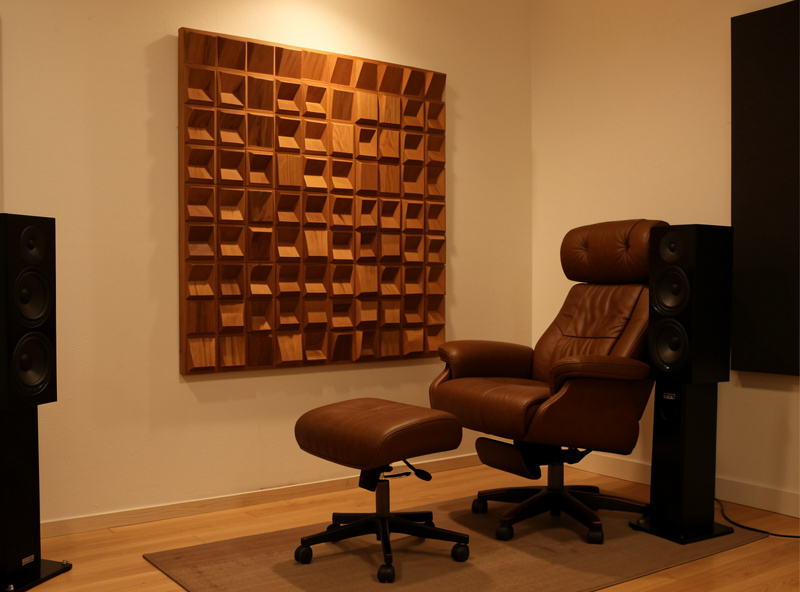
Where I do use diffusion in a small room, it goes on the rear wall behind the seat, where there is the most available distance. Even there, a well-stocked, irregular bookshelf often does the job as well as a purpose-built panel — the records and books vary the surface depth and scatter the reflection. The point is balance: enough absorption to control the image, enough scattering or live surface to keep the air in the music. Confirm the result the way I do everything else, by measuring decay before and after in REW (the free Room EQ Wizard software).
Getting the Balance Right in a Real Room
Here is how the balance actually plays out in my listening space. The front third of the room — side walls at the first reflection points, the ceiling cloud, the corners — is all absorption, because that is where reflections smear the image and where bass pressure builds. The middle is left alone. The rear wall behind the seat is the lively end: a loaded bookshelf doing diffusion duty, with no heavy absorption back there.
That front-absorb, rear-scatter split gives a room that images precisely without sounding closed-in. If I had absorbed the rear wall too, the soundstage would have collapsed forward and the music would have lost depth; if I had left the front reflections untreated, the image would never have locked in. The two tools are partners, not rivals — the skill is knowing which third of the room each one belongs in.
One honest caveat: at the genuine high end, studio mastering rooms and statement-level installs use far more elaborate diffusion schemes than a domestic room needs, and those are a different world than my bench. For a real listening room, the front-absorb, rear-diffuse rule covers the overwhelming majority of what matters, and you can confirm every step by measuring the decay time before and after each change.
Frequently Asked Questions
What is the difference between absorption and diffusion?
Absorption removes reflected sound energy by converting it to heat in porous material, while diffusion scatters the energy in many directions without removing it. Absorption reduces liveliness and suits early reflections; diffusion preserves liveliness and suits later reflections on the rear wall.
Should I use absorption or diffusion at the first reflection points?
Use absorption. Early reflections arrive within a few milliseconds and smear the stereo image, so they need to be removed, not scattered. Diffusion is for later reflections, typically on the rear wall, where the scattered energy reads as ambience instead of confusion.
Does a small room need diffusion?
Not as a priority. A diffuser needs roughly two metres or more between its surface and your ears to work properly, which many small rooms cannot provide. In a compact space, absorption and good speaker placement do most of the work and diffusion is a final refinement.
Can a bookshelf act as a diffuser?
Yes, surprisingly well. A deep, irregularly filled bookshelf varies the surface depth and scatters reflections much like a purpose-built diffuser, especially on the rear wall. It is a practical, cheap way to keep a room lively without buying a dedicated panel.
Why does my treated room sound dead?
You have probably used too much absorption and no diffusion. Absorption only removes energy, so blanketing a room in panels drops the reverberation time too far and the music sounds small. Keep some reflective or diffusive surfaces, especially on the rear wall.
Keep Reading
If you are building a treatment plan, start with the complete room acoustics guide, then get the early reflections right with the first reflection points guide and the low end with bass trapping for listening rooms. To build any of it yourself, the DIY acoustic treatment guide has the cut lists, and confirm every change by measuring decay in REW.