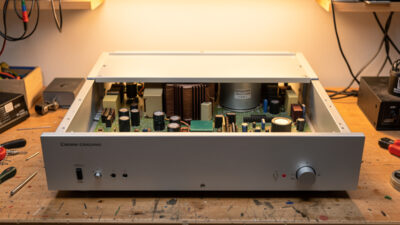
Buying Used Hi-Fi: The Complete Buying Guide
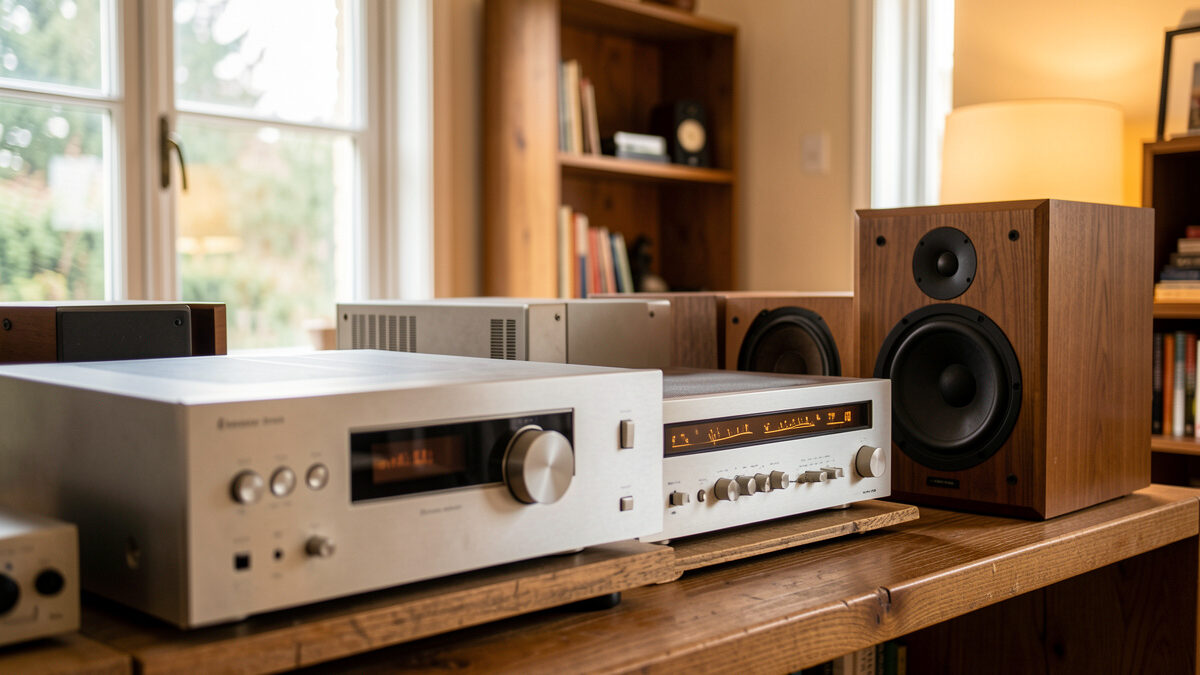
Buying used hi-fi is the single biggest value lever in this hobby: a well-kept amplifier or speaker from the secondhand market typically costs 40-60% of its original price while sounding identical to the day it shipped. The catch is knowing what degrades, what doesn’t, and how to test it before money changes hands.
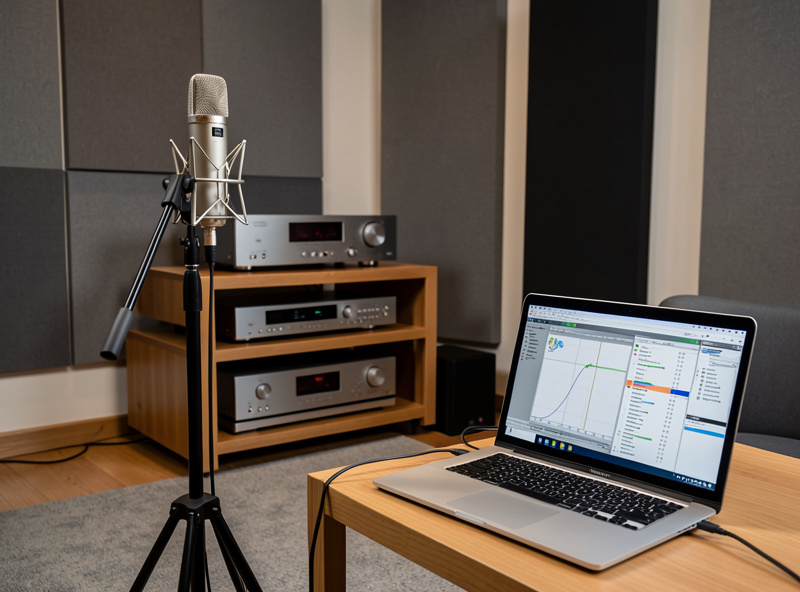
I have run this small, lightly treated listening room in Sweden for years on a rotating cast of gear, and a large share of it came used — integrated amps, passive speakers, the occasional vintage receiver swapped in to see whether the romance survives a calibrated mic. It usually does, on its own terms. This guide is the framework I actually use: how to read a listing, what to inspect, what each class of component is worth, and when to walk away. Everything here stays inside what you can verify with your ears, a multimeter, and a measurement sweep — not what the forum mythology promises.
Why Used Hi-Fi Is the Smartest Money in Audio
Audio electronics depreciate steeply for the first owner and then flatten. A capable integrated amplifier that launched at $1,500 routinely trades at $600-800 within five years, and from there it barely moves — because the engineering that matters (a clean power supply, a competent amplifier stage, honest specs) does not expire on a marketing calendar. You are buying the same THD+N and the same damping factor for half the money.
The reason this works is that most hi-fi failure modes are slow, visible, and fixable. Electrolytic capacitors dry out over decades. Switches and potentiometers get scratchy from oxidation. Speaker surrounds rot on foam-surround designs from the 1980s. None of these are mysterious, and none of them ambush a buyer who knows the checklist. The room you put the gear in will dictate far more of the final sound than the difference between a five-year-old amp and this year’s model — which is exactly why I tell people to fix the room first and buy the electronics used. Start with my room acoustics treatment guide before you spend a krona on a box swap.
The Three Things That Actually Degrade
Strip away the anxiety and used hi-fi has only three real enemies: dried capacitors, oxidized contacts, and worn mechanical parts. Capacitors lose capacitance and rise in equivalent series resistance as they age, which on a 35-year-old amp can soften the bass and raise the noise floor. Contacts — switches, relays, input selectors, volume pots — build an oxide film that makes them crackle. Mechanical parts means foam speaker surrounds, turntable belts, and the occasional tired relay.
Here is the useful part: all three are diagnosable in minutes and most are cheap to fix. A scratchy volume pot is a $12 can of contact cleaner, not a dead amp. A capacitor refresh on a vintage receiver is a weekend and a parts kit — covered in detail in my recapping vintage amplifiers guide. Knowing which problems are trivial and which are terminal is the whole game, and it is what separates a $300 score from a $300 boat anchor.
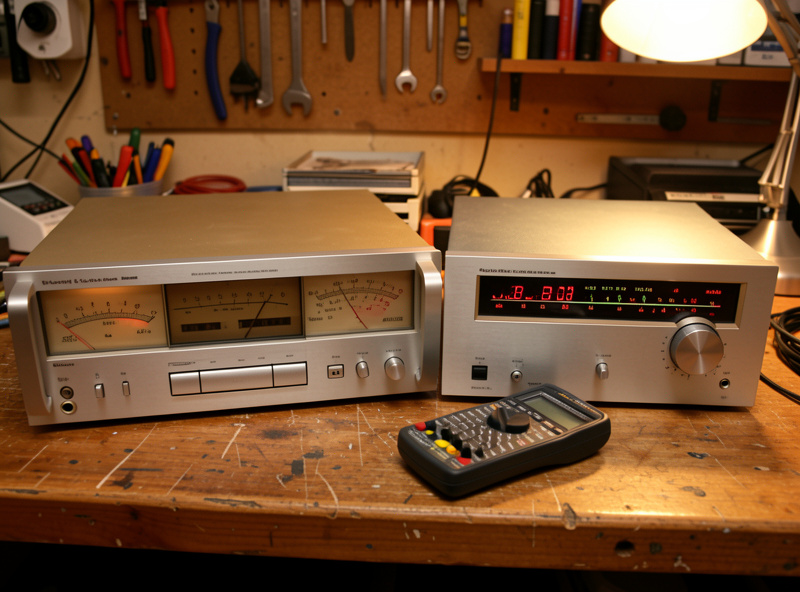
How to Read a Used Listing Like a Skeptic
Most of the risk is filtered out before you ever meet the seller. A good listing shows the actual unit powered on, photographed from multiple angles, with honest notes on any noise, dead channels, or cosmetic damage. The phrases that should make you slow down are “untested,” “as-is,” “found in storage,” and “powers on but” — not because they are always lies, but because they shift the entire repair risk onto you at a price that rarely reflects it.
Look at the photos forensically. Bulging or leaking capacitors are sometimes visible through ventilation slots. Corroded binding posts, snapped switches, and water staining all show up if the seller used decent light. Cross-check the model number against its known weak points — specific receivers and amps have documented failure patterns, and a five-minute search tells you whether this model eats output transistors or runs forever. When you are ready to commit, my guide to testing used hi-fi equipment walks through the bench checks I run on every incoming unit.
What Each Component Class Is Worth Used
Not every category is equally safe secondhand. Passive speakers and solid-state amplifiers are the lowest-risk buys because they are simple, durable, and easy to test. DACs and streamers carry a hidden tax: digital moves fast, and a six-year-old DAC may lack the inputs or app support you want even if it measures perfectly. Anything with a laser (CD transports) or a belt (turntables) has a consumable wear part to budget for.
| Component | Used Risk | Typical Used Price vs New | What to Check |
|---|---|---|---|
| Passive speakers | Low | 40-55% | Surrounds, driver scrape, cabinet joints |
| Solid-state integrated amp | Low-Medium | 45-60% | Both channels, hum, scratchy pots, DC offset |
| Vintage receiver | Medium | 30-60% | Caps, lamps, all functions, output transistors |
| Standalone DAC | Medium | 40-55% | Inputs you need, firmware/app longevity |
| Turntable | Medium-High | 40-60% | Belt, bearing, stylus wear, motor speed |
| Tube amplifier | High | 50-70% | Tube hours, transformer hum, bias drift |
The pattern is consistent: the simpler and more passive the device, the safer it is used and the better the value. That is why a pair of well-kept bookshelf speakers and a clean used integrated is the highest-confidence way to assemble a serious system on a budget. If you are weighing the whole vintage-versus-new question, I lay out the trade-offs in detail in my vintage vs modern hi-fi comparison.
Amplifiers: The Used Buyer’s Sweet Spot
Solid-state amplification is where used hi-fi makes the most sense. An amplifier’s job — deliver clean voltage and current into a speaker load — has been a solved problem for decades, and a competent integrated from 2015 will drive your speakers exactly as well as one from 2025. The specs that matter (power into the actual impedance you run, low THD+N, adequate damping factor) do not improve enough year to year to justify paying the new-price premium.
What you are checking is simple: both channels play cleanly, no hum at idle with the volume down, the volume and balance pots are quiet, and there is no audible DC thump on power-up. Match the amp to your speakers’ sensitivity and impedance rather than chasing watts — my speaker sensitivity and amplifier matching guide explains why a 50-watt amp into efficient speakers outplays 150 watts into the wrong load. The full inspection routine lives in my used hi-fi amplifier buying guide.
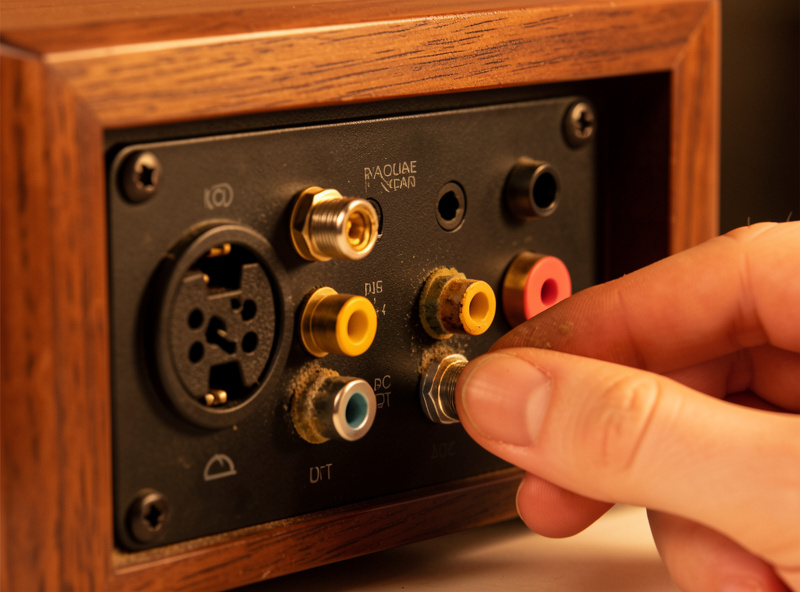
Speakers: Cheap to Buy, Cheap to Fix
Passive speakers are arguably the best used value in audio. The drivers, crossover, and cabinet age gracefully, and the one common failure — rotted foam surrounds on certain 1980s and 1990s woofers — is a known, inexpensive re-foam job rather than a death sentence. Press gently on each woofer (with the amp off) to feel for an even, scrape-free travel, and listen for buzzes that signal a rubbing voice coil.
The bigger speaker variable is the room, not the cabinet. A modest used pair placed correctly and treated at the first reflection points will outperform expensive speakers fired into bare walls. Get the triangle and toe-in right — my near-field listening setup guide and first reflection points guide cover the placement and treatment that decide most of the result. For a budget system, used speakers plus room treatment beats new speakers in a bare room every time.
Vintage Receivers: Romance Meets Reality
Silver-faced receivers from the golden era have a genuine appeal — built-in phono stages, satisfying mechanical controls, and a tank-like build that modern budget gear can’t match. They are also 40 to 50 years old, which means capacitors near or past their service life, lamps that have burned out, and switches that need cleaning. A clean, serviced example is a joy; an unserviced one is a project.
The honest framing is that a vintage receiver is two purchases: the unit and the restoration. Budget for both. A unit that needs a recap, new lamps, and a deep clean can still be a brilliant buy if the price reflects the work ahead. I cover the full process in my vintage receiver restoration guide, and the models worth hunting for in my best vintage receivers to buy roundup. Compare those against a modern integrated in my integrated amplifier guide before deciding.
DACs and Digital: Where Used Gets Tricky
Digital sources are the one place I urge caution. A DAC from six years ago can measure as transparently as today’s reference — SINAD past a certain point is inaudible — but it may lack USB-C, MQA, the streaming inputs, or the app support you now expect. You are not buying degraded sound; you are buying frozen features. Check that the inputs and outputs match your actual chain before you fall for the spec sheet.
For pure two-channel listening from a fixed source, a used DAC is often excellent value because the conversion itself was solved long ago. The differences people chase between competent modern DACs are mostly below the threshold of audibility in a real room — a point I make with measurements in my DAC buying guide. If you stream, weigh whether a used standalone DAC plus a cheap endpoint beats an all-in-one streaming DAC, which I break down in my streaming DAC vs separate streamer comparison.
Where to Buy and How to Negotiate
Local pickup is king for anything heavy or fragile — speakers and vintage receivers especially — because you can hear the unit, inspect it, and avoid shipping damage that voids the deal. For shipped purchases, buyer-protected marketplaces like Reverb and eBay give you recourse if a unit arrives dead or misrepresented. Search the model directly on eBay’s used stereo listings and Reverb’s hi-fi section to gauge a fair price before you offer.
Negotiate from knowledge, not haggling instinct. If a listing shows a scratchy pot or a burned-out lamp, those are real, quotable costs — a contact cleaner and a lamp kit — that justify a lower offer. Keep a small toolkit on hand for incoming gear: a basic digital multimeter for DC-offset and continuity checks and a can of contact cleaner handle the two most common issues on arrival. As an Amazon Associate I earn from qualifying purchases.
Building a Whole System Used
The most satisfying way to use this market is to assemble an entire system secondhand and put the savings into the room. A used integrated amplifier, a used pair of well-regarded bookshelf speakers, a used DAC, and a modest measurement mic will land you a genuinely high-fidelity setup for the price of one new mid-tier component. The order of operations matters: fix the room, match the amp to the speakers, then add sources.
If you are starting from nothing, my complete beginner’s guide to hi-fi systems lays out the signal chain, and the budget amplifier guide shows what to target. Buy the boxes used, spend on the room, and ignore the cable upgrades — a position I back with listening tests in my cable difference article. That is the whole philosophy of this site in one paragraph.
Shipping vs Local Pickup: Counting the Hidden Costs
For anything heavy or fragile, local pickup almost always wins on total cost. A pair of floorstanders or a 20-kilogram receiver shipped across a country invites the one failure mode you cannot inspect for in advance: transit damage. Drivers get knocked off-center, transformers shift on their mounts, and faceplates crack — none of which a seller can guarantee against once the box leaves their hands. When I buy locally I bring a phone, a music file I know intimately, and ten minutes to listen before I commit.
Shipping makes sense for small, robust, high-value items — a DAC, a headphone amp, a well-packed bookshelf speaker — where the savings outweigh the risk and a buyer-protected marketplace covers a dead-on-arrival unit. Factor the real shipping cost into your offer, because a $400 amplifier with $80 of freight and a 5% chance of arriving damaged is not a $400 amplifier. The math changes how aggressively you negotiate, and it changes whether a deal three towns over beats one you can collect by hand. For the components most worth shipping, my DAC-by-budget guide and headphone amp picks point at the safe categories.
A Used-Buying Checklist You Can Run From Your Phone
When I meet a seller, the inspection takes under ten minutes and follows the same order every time. Power the unit on cold and listen for hum before any music plays — a steady mains buzz that does not change with the volume points at tired power-supply capacitors. Then play something familiar and sweep the volume and balance fully through their range, listening for the crackle that betrays oxidized pots. Switch every input and engage every tone control and filter; a dead input or a scratchy switch is a negotiating point, not necessarily a deal-breaker.
For speakers, gently press each woofer with the amp off to feel for even, scrape-free travel, and inspect the surrounds for the crumbling foam that plagues certain 1980s and 1990s designs. For a turntable, watch the platter reach speed smoothly and listen for motor rumble. If you brought a multimeter, a quick DC-offset check at the speaker terminals — a few millivolts good, hundreds bad — is the single most valuable measurement you can take, because high DC offset is the fault most likely to cost real money. The complete bench routine is in my testing used hi-fi equipment guide.
Red Flags That Mean Walk Away
Most used gear is honest, but a few signals justify keeping your wallet shut. Visible bulging or leaking capacitors, a burnt smell, or brown scorch marks near the power supply suggest a fault that has already cooked something. A seller who refuses to power the unit on, or who has it conspicuously disconnected “to be safe,” is hiding a dead channel more often than not. Heavy corrosion on binding posts and connectors hints at damp storage that may have reached the circuit boards.
None of these are automatically fatal if you are a competent solderer buying at the right price — a recap and a clean can resurrect a lot of sad-looking gear. But for most buyers, a clean, tested, fully functional unit at a fair price beats a cheap gamble that turns into a parts donor. Know which camp you are in before you offer. If you want to learn the repair side deliberately, start with a low-value receiver and my restoration guide rather than betting your main system on a mystery box.
Frequently Asked Questions
Is buying used hi-fi reliable?
Yes, for most categories. Solid-state amplifiers and passive speakers are durable and easy to test, and they typically cost 40-60% of new while performing identically. The main risks are dried capacitors, oxidized switches, and worn mechanical parts, all of which are visible and usually cheap to fix.
What should I check before buying a used amplifier?
Confirm both channels play cleanly, there is no hum at idle with the volume down, the volume and balance pots are quiet, and there is no DC thump on power-up. A quick multimeter check for DC offset at the speaker terminals catches the most expensive hidden fault.
Are vintage receivers worth buying?
A clean, serviced vintage receiver can be a brilliant buy, but treat it as two purchases: the unit and the restoration. Budget for a recap, new lamps, and a deep clean on any 40-year-old example. If the price reflects the work ahead, the value is real.
Is a used DAC a good idea?
Often yes, because digital conversion was solved long ago and a six-year-old DAC can measure as transparently as a new one. The catch is features, not sound: check that it has the inputs, outputs, and app support your system needs before buying.
Where is the best place to buy used hi-fi?
Local pickup is best for heavy or fragile gear like speakers and receivers because you can test it and avoid shipping damage. For shipped purchases, use buyer-protected marketplaces like Reverb and eBay so you have recourse if the unit arrives dead or misrepresented.
Should I spend on used gear or room treatment?
Room treatment first. A modest used system placed correctly and treated at the first reflection points outperforms expensive gear fired into bare walls. Buy the electronics used, put the savings into absorbers and placement, and you get more audible improvement per krona.