Best Headphone Amps Under $300 2026
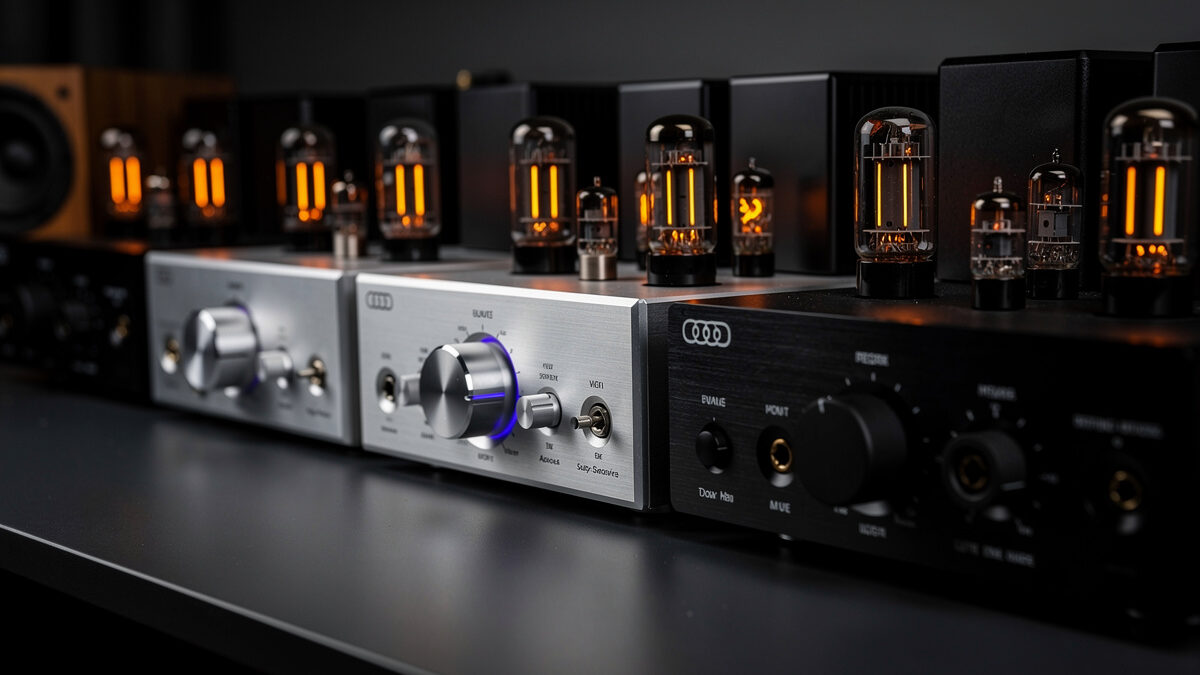
The best headphone amplifiers under $300 in 2026 deliver 500+ milliwatts of clean power with THD+N below 0.001% and output impedance under 1 ohm. Top picks include the Schiit Magni+ ($69), JDS Labs Atom Amp+ ($119), and Topping A90 Discrete ($299) — each capable of driving any headphone on the market to reference listening levels.
Headphone amplifiers have reached a performance plateau where sub-$200 models measure as well as amplifiers costing $2,000 five years ago. The engineering challenge now is power delivery and topology rather than raw distortion numbers. Whether you need a desktop stack for home listening or a portable unit for on-the-go use, the under-$300 category offers solutions that leave no headphone underpowered.
Desktop Headphone Amplifiers Under $300
Desktop headphone amplifiers deliver 1-3 watts into low-impedance loads with output impedance below 0.5 ohms. The Schiit Magni+ ($69) outputs 2.5W into 32 ohms with 0.0009% THD+N. The JDS Labs Atom Amp+ ($119) measures 0.0005% THD+N. The Topping A90 Discrete ($299) delivers 6W into 32 ohms with 0.00009% THD+N — performance that exceeds most $1,000+ amplifiers.
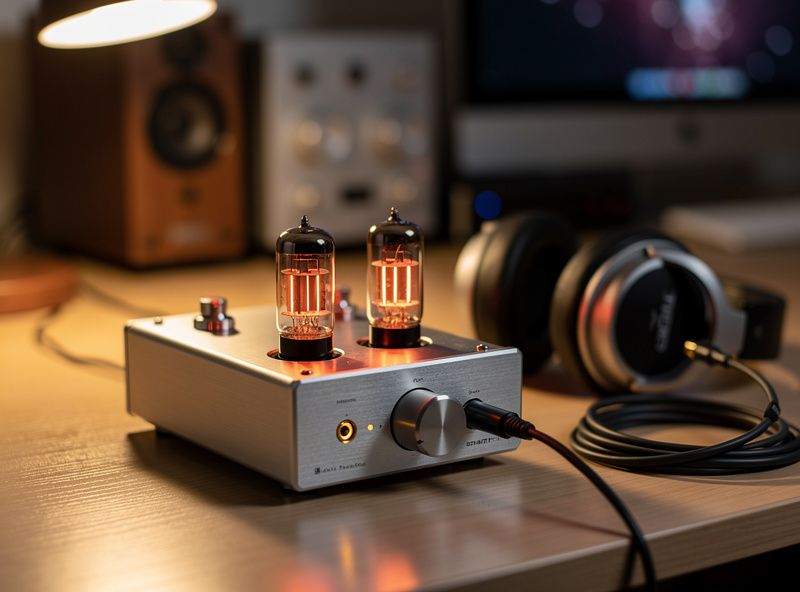
The Schiit Magni+ is the most recommended first headphone amplifier in the audiophile community for good reason: at $69, it measures better than amplifiers from a decade ago that cost ten times as much. Its 2.5W into 32 ohms drives every headphone from sensitive IEMs to 600-ohm Beyerdynamics. The 0.2-ohm output impedance yields damping factors above 80:1 for any headphone. The only limitation is its single-ended RCA input — no balanced XLR connectivity.
The JDS Labs Atom Amp+ prioritizes measurement transparency over features. Its 0.0005% THD+N at 1 kHz is inaudible by any standard, and its frequency response is flat from 5 Hz to 100 kHz within 0.01 dB. The Atom includes a preamp output for feeding powered speakers, making it a versatile desktop centerpiece. JDS Labs manufactures in the USA with a 2-year warranty and free return shipping.
The Topping A90 Discrete represents the pinnacle of sub-$300 desktop amplification. Its fully discrete Class AB output stage (no integrated op-amps) delivers 6W into 32 ohms with vanishingly low distortion. The balanced 4-pin XLR headphone output provides 6 dB more headroom than single-ended, ideal for power-hungry planar magnetic headphones like the Audeze LCD-X. The A90 Discrete pairs perfectly with a quality USB DAC as the front end.
Other notable desktop amplifiers include the Monolith Liquid Spark ($100), designed by Cavalli Audio with a warm Class A topology that adds pleasing harmonic richness. The Schiit Asgard 3 ($250) uses Schiit’s Continuity output stage for Class A bias up to 500mW, delivering the smooth midrange character of Class A without the heat or cost. Both pair exceptionally well with solid-state amplifier preferred listeners who want a touch of warmth.
Portable DAC/Amp Combos Under $300
Portable DAC/amp combos combine a DAC chip and headphone amplifier in a pocket-sized device powered by USB or battery. The FiiO BTR7 ($129) offers Bluetooth LDAC and USB-C input. The iFi Go Bar ($299) delivers 475mW from a USB stick form factor. The Questyle M15 ($189) uses current-mode amplification for unique performance with IEMs.
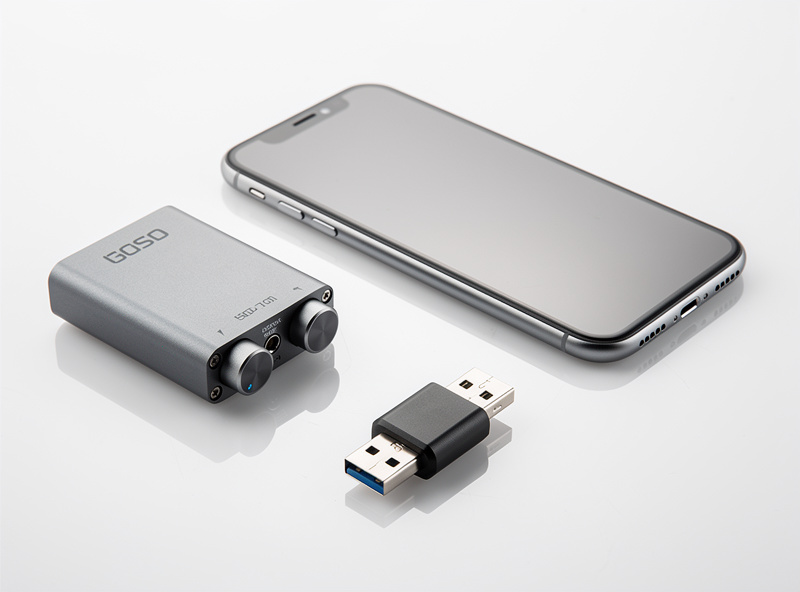
The FiiO BTR7 serves double duty as a wireless Bluetooth receiver and USB-C DAC/amp. Its Qualcomm QCC5171 chip supports LDAC, aptX Adaptive, and AAC codecs, while the dual ES9219C DAC chips handle 32-bit/384kHz PCM via USB. Output power reaches 290mW into 32 ohms via the 4.4mm balanced output — sufficient for demanding over-ear headphones. The built-in battery provides 9 hours of USB playback and 12 hours of Bluetooth playback.
The iFi Go Bar packs audiophile-grade components into a USB-A/C dongle format. Its 16-core XMOS processor handles MQA rendering and DSD256 natively, while the Class A discrete output stage delivers 475mW into 32 ohms. The iEMatch switch reduces output impedance to near-zero for sensitive IEMs without affecting over-ear headphone performance. At 29 grams, it disappears in a pocket while delivering sound quality rivaling desktop stacks.
The Questyle M15 uses current-mode amplification rather than traditional voltage-mode, which maintains consistent frequency response regardless of headphone impedance. This makes it ideal for multi-driver IEMs with complex impedance curves that interact poorly with conventional voltage amplifiers. The M15 delivers 62mW into 32 ohms — modest on paper, but current-mode architecture ensures this power transfers efficiently to any load.
Tube Amplifiers Under $300
Budget tube amplifiers add harmonic richness and spatial depth to high-impedance headphones. The Schiit Valhalla 2 ($349, just over budget) drives headphones above 150 ohms with OTL topology. The Little Dot MKII ($200) offers tube rolling flexibility. The xDuoo TA-20 ($250) hybrid tube/solid-state design works with headphones as low as 32 ohms.
The Little Dot MKII is the entry point for tube rolling — swapping different vacuum tubes to alter sound character. It ships with 6N6 driver tubes and 6AK5 power tubes, both of which have dozens of compatible alternatives from Western Electric, Mullard, and Amperex. Rolling a Mullard M8100 into the driver position adds warmth and smoothness to the upper midrange, while an Amperex 7308 tightens bass and extends treble. Output impedance is approximately 40 ohms, limiting use to headphones above 150 ohms.
The xDuoo TA-20 uses a hybrid topology: a 12AU7 vacuum tube handles the voltage gain stage while a solid-state output buffer provides low-impedance current delivery. This combination achieves 2-ohm output impedance while adding tube harmonic coloration to the signal. The TA-20 drives headphones from 16 to 600 ohms, making it the most versatile tube amplifier under $300. Output power reaches 2W into 32 ohms — more than enough for demanding planar magnetic headphones.
The Schiit Valhalla 2 is the purest OTL (output transformerless) tube amplifier under $350. Its 14-ohm output impedance and 1.2W output into 32 ohms limit it to headphones above 120 ohms, but the sound quality with high-impedance Sennheisers and Beyerdynamics is exceptional. The Valhalla 2 adds tube warmth without the bass bloat of cheaper OTL designs, thanks to Schiit’s custom output stage with low-frequency feedback control.
Tubes pair naturally with high-impedance dynamic headphones like the Sennheiser HD 600 at 300 ohms. The impedance interaction between tube output and voice coil resonance adds a subtle bass emphasis and midrange bloom that many listeners prefer for jazz, classical, and vocal recordings. However, planar magnetic headphones with flat impedance curves do not benefit from tube coloration in the same way.
Power Output: Matching Amp to Headphone Requirements
Power requirements depend on headphone sensitivity and impedance. Headphones rated at 100+ dB/mW need less than 10 milliwatts for comfortable listening. Headphones rated at 85-95 dB/mW may require 100-500 milliwatts for dynamic peaks. IEMs need milliwatts; planar headphones need hundreds of milliwatts; electrostatic headphones need dedicated energizers.
Calculate your headphone’s power requirement using this formula: Power (mW) = 10^((Target SPL – Sensitivity) / 10). For the HIFIMAN Sundara at 94 dB/mW targeting 110 dB SPL peaks: 10^((110 – 94) / 10) = 10^1.6 = 40 milliwatts. Any amplifier delivering 250+ milliwatts provides over 8 dB of headroom above 110 dB, ensuring clean reproduction of dynamic peaks.
Planar magnetic headphones are current-hungry despite moderate power requirements. The Audeze LCD-X needs 40 milliwatts for 110 dB SPL but sounds best with amplifiers rated for 1+ watt into 20 ohms because the low impedance draws high current during transient peaks. An amplifier that delivers 40 milliwatts from a voltage-limited rail will clip on demanding transients even if the average power is sufficient.
All six amplifiers in the comparison table below deliver sufficient power for any headphone on the market. The differences lie in noise floor, output impedance, topology, and feature set rather than raw power delivery. Choose based on your headphone collection, aesthetic preference, and whether you need balanced output.
DAC Pairing: Building a Complete Stack Under $300
A complete DAC and amplifier stack under $300 is achievable with careful selection. The Schiit Modi+ ($99) and Magni+ ($69) total $168 and drive any headphone. The Topping E30 II ($150) and L30 II ($140) total $290 with flagship-level measurements. These stacks provide 95%+ of the performance of $1,000+ setups.
The Schiit Modi+ uses an AKM AK4490 DAC chip with 24-bit/192kHz USB input and outputs 2.0V RMS via RCA. Its measured SINAD (Signal to Noise and Distortion) of 118 dB exceeds the audible threshold by 30+ dB. Paired with the Magni+, the Modi+ provides a transparent signal chain that adds no audible coloration to any headphone. Total cost: $168.
The Topping E30 II / L30 II stack represents the measurement pinnacle under $300. The E30 II’s AK4493S DAC chip achieves 120 dB SINAD, while the L30 II’s NFCA (Nested Feedback Composite Amplifier) topology delivers 0.00006% THD+N. This stack measures as well as any DAC/amp combination regardless of price. The L30 II includes a 4.4mm balanced preamp output for connecting to balanced amplifiers or active speakers.
For all-in-one solutions, the FiiO K7 ($200) combines an AK4493S DAC with a THX AAA 788+ amplifier in a single chassis. It delivers 2W into 32 ohms with 0.0003% THD+N — performance that satisfies all but the most demanding measurement-focused listeners. The best headphone amp and DAC combos guide covers more all-in-one options.
Comparison Table: Headphone Amplifiers Under $300
| Amplifier | Price | Power (32 ohm) | THD+N | Output Z | Topology | Balanced Out |
|---|---|---|---|---|---|---|
| Schiit Magni+ | $69 | 2.5W | 0.0009% | 0.2 ohm | Class AB | No |
| JDS Labs Atom Amp+ | $119 | 1.0W | 0.0005% | 0.7 ohm | Class AB | No |
| Topping L30 II | $140 | 3.5W | 0.00006% | 0.1 ohm | NFCA Class AB | 4.4mm pre-out |
| FiiO K7 | $200 | 2.0W | 0.0003% | 1.0 ohm | THX AAA 788+ | 4.4mm |
| Topping A90 Discrete | $299 | 6.0W | 0.00009% | 0.1 ohm | Discrete Class AB | 4-pin XLR |
| FiiO BTR7 | $129 | 290mW | 0.0005% | 0.8 ohm | Portable Class AB | 4.4mm |
| iFi Go Bar | $299 | 475mW | 0.0008% | 0.5 ohm | Class A discrete | 4.4mm |
| Monolith Liquid Spark | $100 | 1.5W | 0.0015% | 0.5 ohm | Class A/B | No |
| Little Dot MKII | $200 | 0.5W | 0.05% | 40 ohm | OTL tube | No |
| xDuoo TA-20 | $250 | 2.0W | 0.005% | 2 ohm | Hybrid tube/SS | No |
Do I really need a headphone amplifier?
Headphones with sensitivity above 100 dB/mW and impedance under 80 ohms usually work fine from a phone or laptop. Headphones below 95 dB/mW or above 150 ohms benefit significantly from dedicated amplification. Planar magnetic headphones like the HIFIMAN Sundara at 94 dB/mW need an amplifier for proper bass impact and dynamic range.
What is the best headphone amplifier under $100?
The Schiit Magni+ at $69 is the best headphone amplifier under $100. It delivers 2.5W into 32 ohms with 0.0009% THD+N and 0.2-ohm output impedance. This drives every headphone on the market with performance rivaling amplifiers costing ten times as much. The JDS Labs Atom Amp+ at $119 is the next step up.
Can a headphone amplifier improve sound quality?
A headphone amplifier improves sound quality when the previous source could not adequately power the headphone. Going from a 50-ohm laptop output to a 0.2-ohm dedicated amp with an HD 600 produces dramatic improvement in bass control, dynamic range, and soundstage. Going from an iPhone output to a dedicated amp with a 32-ohm IEM produces minimal audible difference.
Should I buy a DAC and amp combo or separate units?
Separate units offer more flexibility for upgrading and typically measure slightly better due to reduced interference between digital and analog sections. Combo units save space and money. Under $300, the FiiO K7 combo measures within 1 dB of separates. Above $300, separates like the Topping E30 II / L30 II pull ahead in measurement performance.
Do tube amplifiers sound better than solid-state?
Tube amplifiers add harmonic distortion and frequency response coloration that some listeners prefer, especially with high-impedance dynamic headphones like the Sennheiser HD 600. Solid-state amplifiers measure better in every distortion metric and work with all headphone impedances. Neither is objectively better — the preference depends on your headphones and musical tastes.
What amplifier do I need for planar magnetic headphones?
Planar magnetic headphones need amplifiers with high current delivery into low impedance loads. The Topping A90 Discrete (6W into 32 ohm) and Schiit Magni+ (2.5W into 32 ohm) both handle demanding planars. Avoid OTL tube amplifiers — their high output impedance creates poor damping factor with planar headphones’ low, flat impedance curves.