Open-Back vs Closed-Back Headphones: Which to Buy
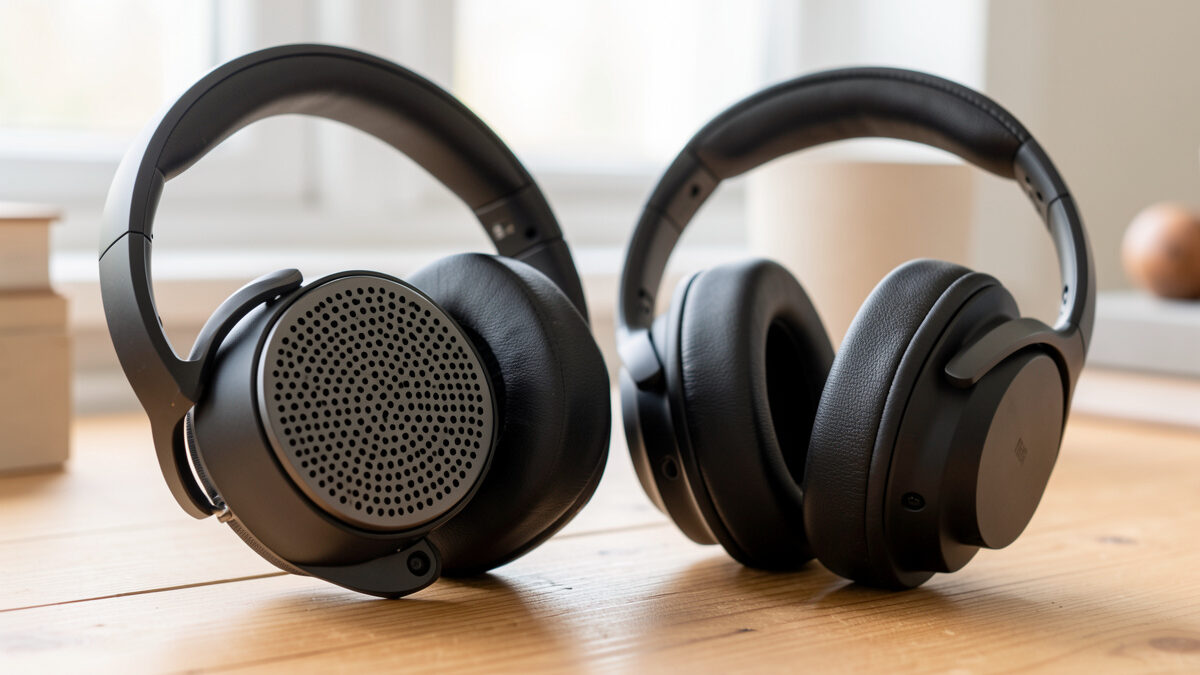
Open-back headphones vent the rear of the driver to the open air for a wider soundstage and lower distortion, but they leak sound in both directions and isolate almost nothing — a few decibels of passive attenuation versus the 15-25 dB a sealed closed-back can manage. Closed-back headphones seal the rear for isolation and reinforced bass at the cost of stage width. The right choice is decided by your room, not by which one sounds “better” in a quiet shop.
This is the first real fork in any serious headphone purchase, and it’s the one people get backwards most often. I run both kinds in my listening space in Sweden because they don’t compete — they solve different problems. Get the environment question right first and the rest of the decision follows. For the wider context of where this sits in a system, start with the audiophile headphone guide.
What “Open” and “Closed” Actually Mean
The difference is purely mechanical: an open-back earcup has a perforated or grille rear that lets the back wave of the diaphragm escape into the room. A closed-back earcup traps it. That one design choice cascades into everything you hear — soundstage, bass, isolation, and even how the headphone measures.
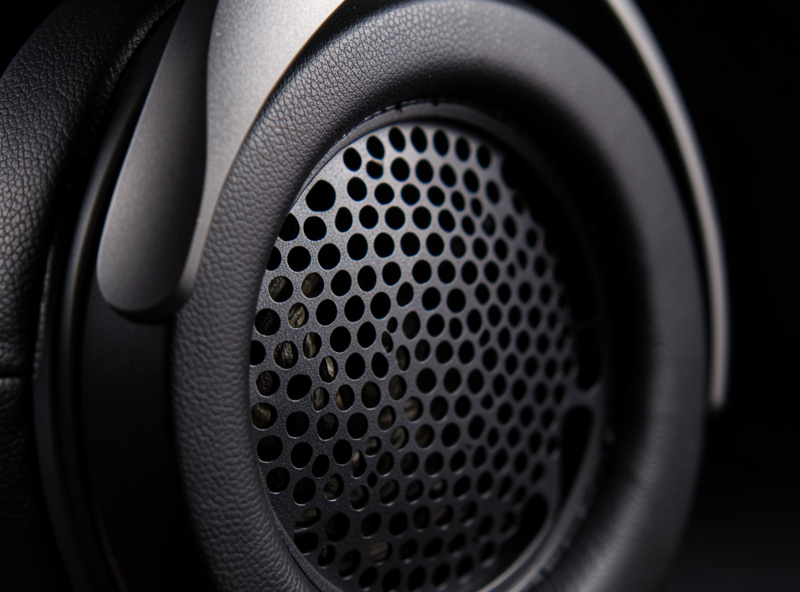
When the rear wave is free to leave, the driver isn’t fighting a sealed pocket of air behind it. That lowers internal resonance and reduces the colouration you get from sound bouncing inside a small sealed cup. The price is that the same openness lets outside noise in and your music out. There’s no clever engineering that escapes this — it’s the physics of a vented enclosure, the same trade-off I deal with on a ported versus sealed speaker box, just shrunk to the size of an earcup.
Soundstage and Imaging: Where Open-Back Wins
The headline reason audiophiles love open-backs is the sense of space. Because the cup isn’t sealing pressure against your ear and the rear wave isn’t reflecting back, the presentation feels less like sound clamped to your head and more like it’s happening slightly outside it. My HD 600 images with a precision that closed cans in the same price class can’t match — instruments sit in stable positions rather than smearing together.
It’s worth being honest about the limit, though. Open-back “soundstage” is still nothing like speakers in a treated room; the cues are subtler. What you’re really buying is lower distortion and a more natural decay, which the brain reads as space. If imaging and a relaxed, out-of-head presentation matter most to you, open-back is the answer, and the best open-back headphones for home listening is where to shop.
Isolation and Bass: Where Closed-Back Wins
Closed-backs do two things open-backs simply cannot. First, they isolate — both blocking outside noise and containing your music, which is non-negotiable in an office, on a train, or next to a sleeping partner. Second, the sealed cup lets the driver pressurise the space against your ear, which can give a more physical, extended bass response.

The catch is that the trapped rear wave has to go somewhere, and managing those internal reflections is hard. A poorly damped closed-back develops a “cupped” colouration and resonant peaks. A well-engineered one — a good Beyerdynamic closed model, for instance — controls this and gives you isolation with only a modest hit to openness. If your environment isn’t private, this is the side of the fork you’re on, and the best closed-back headphones for 2026 is the shortlist to use.
What the Measurements Show
When I put a calibrated mic at the earcup — on an IEC 60318-1 ear simulator, the standard for circumaural and supra-aural headphones — and sweep both kinds, the open-back’s biggest measurable advantage usually shows up in the decay plot, not the frequency response — the energy clears faster and there are fewer narrow resonant ridges. Closed-backs more often show a low-frequency rise from the seal and a couple of cup-resonance peaks that a designer has had to tame.
That decay behaviour is the technical reason open-backs sound “cleaner” to most listeners even when the two have a similar tonal balance against the Harman over-ear target from Olive and Welti’s AES research. It’s not magic and it’s not the cable — it’s the absence of a sealed cavity ringing behind the driver. Neither result is automatically better; a thoughtfully damped closed-back can measure beautifully, and a cheap open-back can be a mess. Buy the specific model’s measured behaviour, not the category badge.
Open-Back vs Closed-Back at a Glance
| Attribute | Open-Back | Closed-Back |
|---|---|---|
| Soundstage / imaging | Wider, more natural | Narrower, more in-head |
| Isolation | Essentially none | Good to excellent |
| Sound leakage | High (heard across a room) | Low |
| Bass character | Even, less reinforced | More physical, sealed reinforcement |
| Internal resonance | Low (vented rear) | Designer must manage it |
| Best environment | Quiet private room | Shared spaces, travel, recording |
How to Actually Choose
Skip the forum arguments and answer three questions. Will anyone else be in the room while you listen? If yes, closed-back. Do you need to block outside noise to concentrate or travel? If yes, closed-back. Is your listening done alone in a quiet space where the last few percent of imaging and naturalness matter? Then open-back, every time.
If you genuinely sit in both situations, the honest answer is that you’ll eventually own one of each — that’s why I do. Start with the pair that matches your most common listening, and treat the second as a later addition rather than a compromise that tries to do both jobs at once. Whichever side you land on, a few EQ filters will fine-tune the tonal balance further; the method is in EQ for headphones, and the broader shortlist is in the best audiophile headphones for 2026.
Where Driver Type Fits In
Open versus closed is about the enclosure; it’s a separate question from what kind of driver is inside. You’ll find dynamic and planar drivers in both open and closed designs, and the two choices interact. Most planars are open-back because the technology suits a vented design, though sealed planars exist. If you’re weighing a planar against a dynamic on top of this decision, the trade-offs are covered in planar magnetic vs dynamic driver headphones, and the full type primer is the headphone buying guide.
Frequently Asked Questions
Are open-back headphones better for sound quality?
For pure sound character in a quiet room, often yes — the vented rear lowers internal resonance and improves imaging and decay. But that advantage only exists in a quiet, private space. In any shared or noisy environment a good closed-back will sound better because isolation matters more than the last few percent of openness.
Can you use open-back headphones in an office?
Not realistically. Open-backs leak sound in both directions, so colleagues will hear your music and you will hear the office. They are designed for private, quiet listening. For shared spaces choose closed-back headphones, which contain the sound and block outside noise.
Do closed-back headphones have worse soundstage?
Generally they present a narrower, more in-head image because the sealed cup reflects the rear wave back at the driver. A well-damped closed-back narrows the gap considerably, but in the same price class an open-back usually images wider and more naturally.
Why do open-back headphones have better bass quality if they leak?
Open-backs trade bass quantity for evenness. They do not pressurise a sealed cavity, so the bass is less reinforced but often flatter and less resonant. Closed-backs give more physical, extended bass from the seal, which some listeners prefer even though it can be less even.
Should my first audiophile headphone be open or closed?
Match it to where you listen most. If you usually listen alone in a quiet room, start with an open-back for the imaging. If you share space or travel, start with a closed-back. Most enthusiasts eventually own one of each because they solve different problems.
Do open-back headphones need an amplifier?
Not because they are open — that depends on impedance and sensitivity. Many popular open-backs happen to be high-impedance designs that benefit from an amp, but the openness itself is unrelated to power needs. Check the specific model’s impedance and sensitivity, not its enclosure type.