Audiophile Headphone Guide: Drivers, Amps, and How to Choose
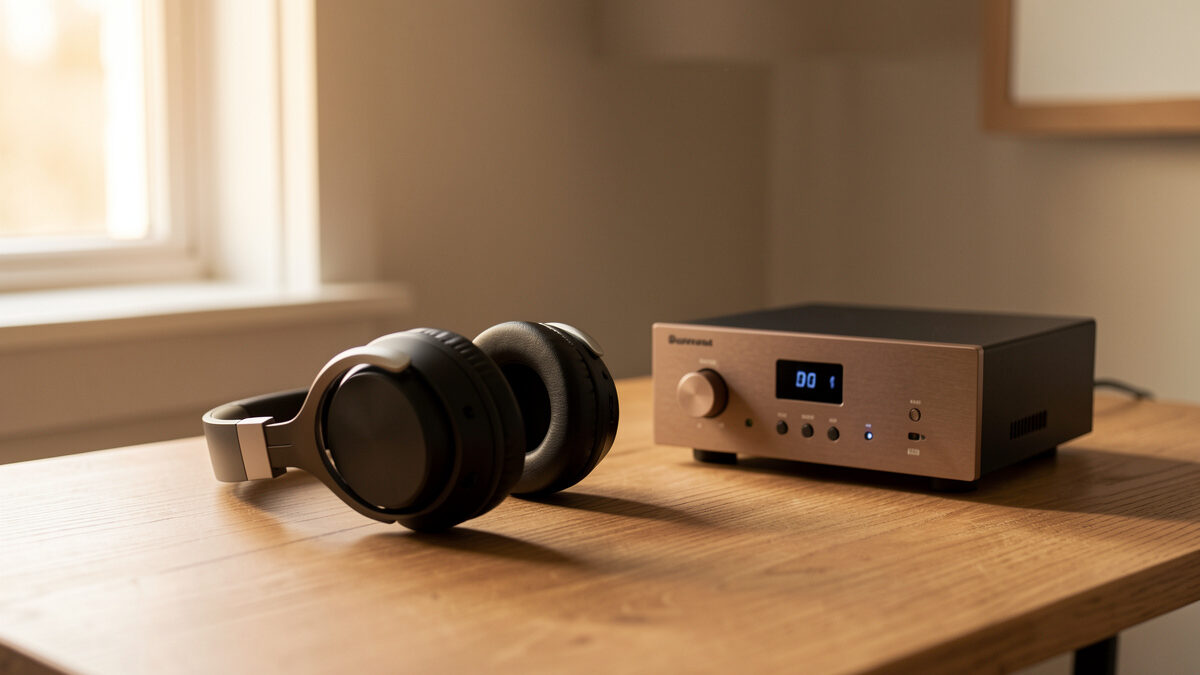
An audiophile headphone setup is less about the headphone and more about matching three things to your ears and your room: the driver type, the amplifier that drives it, and the seal against your head. Spend roughly 60% of your budget on the headphone, keep the source clean, and most “upgrades” past that are spent chasing a curve you could have measured.
I run a small, lightly treated listening room in Sweden, but headphones are the one part of this hobby where the room stops mattering — the transducer sits a centimetre from your eardrum, so the cabin you build with the earcup is the room. That changes the whole order of operations. With speakers I tell people to fix the room first. With headphones, the headphone is the room, the source feeds it, and the only acoustic variable left is the pad seal. This guide is the map of how those pieces fit, and every deeper question links out to a dedicated breakdown below.
Start With How You Listen, Not the Spec Sheet
Before you read a single review, answer one question: where do these headphones live? A pair that sits on a desk in a quiet home office has different requirements than something you wear on a train. That single fact decides open versus closed, over-ear versus in-ear, and whether you even need an amplifier. The spec sheet comes last.
The mistake I see most often is buying the headphone the forums rave about and then discovering it leaks sound across an open-plan office, or needs a desktop amp the buyer never budgeted for. Sennheiser’s HD 650 is a benchmark for a reason, but it is an open-back can with a 300-ohm load — wonderful in a quiet room, useless on a commute, and underwhelming straight out of a phone. The gear has to fit the use, not the other way round. Start there and half the decisions make themselves. For the broad version of this decision tree, our headphone buying guide for 2026 walks the same fork from the consumer side.
Open-Back vs Closed-Back: The First Real Fork
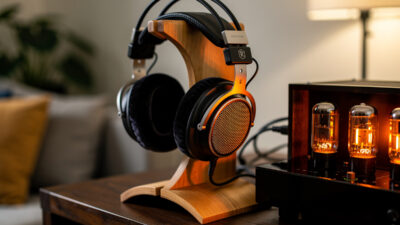
Open-back headphones vent the rear of the driver to the air, which kills internal resonance and produces the wide, out-of-head soundstage audiophiles chase. The trade is total: they leak sound both ways and offer near-zero isolation. Closed-back seals the rear, giving you isolation and bass reinforcement at the cost of a smaller stage and more cup colouration. There is no “better” — there is only your environment.
In my listening space I reach for open-backs by default because the room is quiet and the imaging is simply better. My HD 600 images like a small pair of near-field monitors; the soundstage isn’t artificially huge, it’s just correct, which is what I want from a reference can. But the moment I need to record, sleep-listen, or share a room, a closed-back like the Beyerdynamic DT 1990 (in its closed pads) or a sealed planar earns its place. The full teardown of why the vented rear changes decay time and perceived stage lives in open-back vs closed-back headphones, and if you’ve already picked a side, see the best open-back headphones for home listening or the best closed-back headphones for 2026.
Driver Technology: Dynamic, Planar, and Balanced Armature
Three driver types dominate audiophile headphones. Dynamic drivers — a voice coil moving a cone — are the cheapest to make well and still produce most of the great reference cans. Planar magnetic drivers stretch a thin diaphragm across an array of magnets; the whole surface moves in unison, which lowers distortion and tightens bass, but the load is power-hungry and the headphones are heavy. Balanced-armature drivers live almost exclusively in IEMs, where their tiny size and efficiency are decisive.
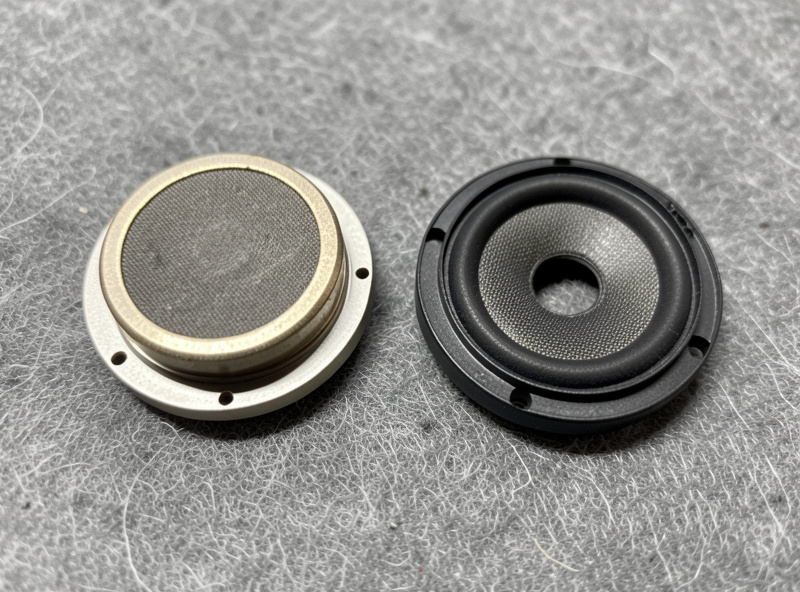
The honest summary after months with both on my bench: a good dynamic and a good planar in the same price tier sound different, not better or worse. My HiFiMan Sundara (planar) has a flatter, more even bass shelf and a faster decay than my dynamic cans; the HD 600 has a midrange presence and an ease that the planar doesn’t quite match. People assign these to the driver technology as if it were destiny. It isn’t — it’s tuning. A planar can be tuned dark and a dynamic can be tuned bright. Buy the measured response and the listening impression, not the marketing word “planar.” The deep dive on this is planar magnetic vs dynamic driver headphones.
The Power Problem: Why Some Headphones Need an Amp
A headphone amplifier does two jobs: it supplies enough voltage and current to drive the load to your target volume with headroom to spare, and it presents a low output impedance so the headphone’s frequency response isn’t bent by the source. A phone can drive efficient IEMs to deafening levels. It cannot drive a 300-ohm HD 650 or a current-hungry planar to its potential, and you’ll hear that as soft dynamics and anaemic bass long before you run out of volume.
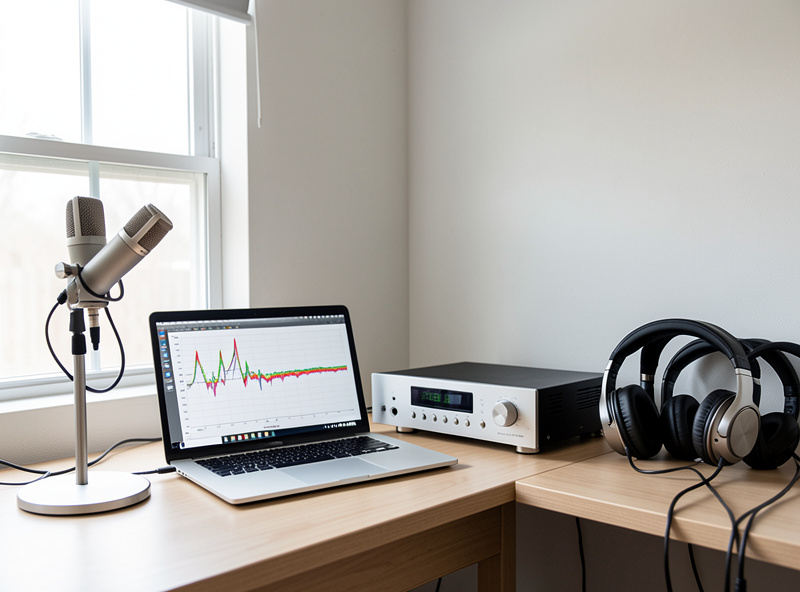
Here’s the part the hype cycle gets wrong: once a headphone is being driven to its target level with headroom, a competent amp adds nothing audible over another competent amp. The differences people describe between two well-engineered solid-state amps almost always vanish under a level-matched blind comparison. What you’re buying with a better amp is sufficient power for a difficult load and a clean, low-impedance output — not “amp sound.” I run my cans from an RME ADI-2 and a discrete desktop amp; the RME measures transparently and that’s exactly why it’s my reference. If you want the order-of-operations for matching power to a load, read the headphone amplifier buying guide, the picks under budget in best headphone amps under $300, and the all-in-one route in best headphone amp and DAC combos.
Impedance and Sensitivity, Demystified
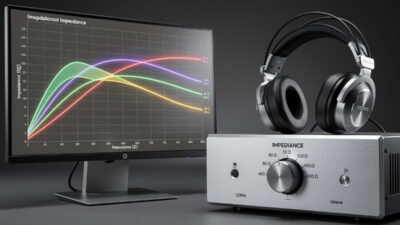
Two numbers tell you whether a headphone and source will get along. Impedance (in ohms) is the electrical load; sensitivity (dB per milliwatt or per volt) is how loud the headphone gets for a given input. A high-impedance, low-sensitivity headphone wants voltage and is the classic case for a real amp. A low-impedance, high-sensitivity headphone — most IEMs — wants almost nothing and can actually be made worse by a high-output-impedance source.
The rule I keep coming back to: source output impedance should be under one-eighth of the headphone’s impedance to keep the frequency response flat — a rule that supersedes the legacy IEC 61938 recommendation of a 120-ohm source for modern low-impedance headphones. A 32-ohm IEM on a 10-ohm output is a recipe for a lumpy bass response, because the IEM’s impedance curve interacts with that source resistance. This is measurable and repeatable, not subjective. The complete matching method, with the damping-factor maths kept simple, is in how to match headphone impedance with your source.
Balanced vs Single-Ended Output: Does It Matter?
Balanced headphone outputs (4-pin XLR, 4.4mm Pentaconn) run separate amplifier stages for each channel with no shared ground. On paper that doubles voltage swing and improves channel separation. In practice, whether it matters depends entirely on the amp’s topology and whether you actually need the extra power. On a well-designed amp, the balanced output often gives you more clean watts; on a poorly designed one, “balanced” is a marketing socket wired to the same circuit.
My position, tested: for a hard-to-drive planar, the balanced output’s extra headroom can be the difference between “fine” and “effortless.” For an efficient dynamic already loafing along, single-ended is identical. Don’t buy a headphone because it has a balanced cable; buy the amp that has the power you need and use whichever output delivers it cleanly. The full argument, including why the same logic applies on the source side, is in balanced vs single-ended headphone output and its sibling on the DAC stage, balanced vs single-ended DAC.
IEMs vs Over-Ears for Serious Listening
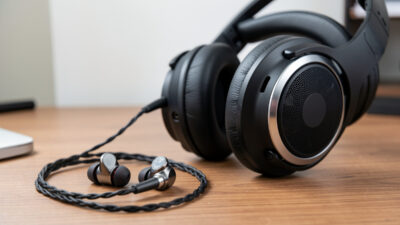
In-ear monitors have closed the quality gap with over-ears to the point where, for a lot of listeners, a good IEM is the more sensible reference. They isolate, they need no amp, they cost a fraction of a flagship over-ear, and a well-tuned multi-driver IEM resolves detail that embarrasses headphones twice the price. What they can’t fully replicate is the spatial presentation and the long-session comfort of a proper over-ear.
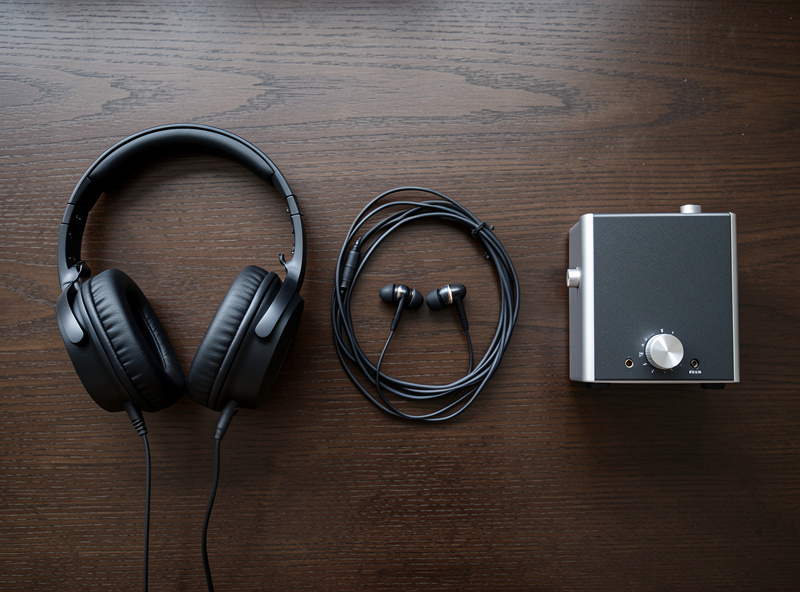
I keep both classes on the bench because they answer different questions. The over-ear is for the evening session in the quiet room where soundstage and comfort matter. The IEM is for everywhere else, and increasingly it’s what I reach for when I want to hear exactly what’s on the recording with no room and no leakage. The honest comparison — fit, isolation, stage, and where each wins — is in IEM vs over-ear headphones for hi-fi, the type-by-type primer is over-ear vs on-ear vs in-ear headphones, and the curated picks are in best IEMs for audiophiles.
How Much to Spend, and Where Diminishing Returns Hit
The price-to-performance curve in headphones is brutally steep at the bottom and nearly flat at the top. The jump from a $30 headphone to a $300 reference can is enormous and obvious. The jump from $300 to $1,500 is real but small, and most of it is comfort, build, and the last few percent of resolution. Past roughly $1,500 you are paying for materials, scarcity, and the last fraction of a decibel of measured improvement that you will struggle to hear.
If I were rebuilding from scratch on a sensible budget, I’d put a 300-dollar-class open-back on the desk, a clean DAC and a modestly powered amp under it, and stop. That setup outperforms what most people assume costs four figures, and it leaves money for the part that actually transforms a system — the recordings. For the shortlist that survives this logic, see the best audiophile headphones for 2026, and if portability matters, the best wireless headphones for audiophiles.
Building a Headphone Chain That Makes Sense
The chain is source → DAC → amplifier → headphone, and the budget should be weighted heavily toward the last link. The table below is the rough allocation I’d defend for three realistic budgets. Notice the DAC and amp shrink as a share of the total as you go up — past a point, the transducer is the only thing left worth spending on.
| Component | $400 system | $1,000 system | $2,500 system |
|---|---|---|---|
| Headphone | ~$250 open-back dynamic | ~$650 planar or flagship dynamic | ~$1,700 flagship |
| DAC | ~$80 clean budget USB DAC | ~$200 measurement-grade | ~$500 reference DAC |
| Amplifier | Onboard or $70 dongle | ~$150 desktop | ~$300 high-current desktop |
| Where the money goes | The headphone | The headphone | Still the headphone |
| Gain vs tier below | Baseline | Large and obvious | Small, mostly comfort and detail |
A clean DAC matters because it’s the floor of the whole chain, but it’s also the part where differences are smallest and most over-sold. The selection logic — where DAC differences are real versus measurement-noise — is laid out in the DAC buying guide. As an Amazon Associate I earn from qualifying purchases. If you want to start auditioning, a Sennheiser HD 600 or a HiFiMan Sundara are the two cans I’d hand a newcomer to hear what reference actually means, and a clean desktop DAC and amp finishes the chain without overspending.
EQ: The Cheapest Real Upgrade
Because a headphone is its own little acoustic system, its frequency response is largely fixed by physics and tuning — and that means EQ works astonishingly well on headphones, far better than it does in a room full of reflections. A few well-chosen parametric filters can take a headphone you find slightly bright or bass-shy and put it exactly where you want it, repeatably, for free.
This is the upgrade nobody sells you because there’s no margin in it. I keep a small set of EQ profiles for each of my cans, built from published measurements (typically against the Harman target curve from Olive and Welti’s AES research) and a few minutes of my own listening, and the improvement is larger than what most people get from spending another few hundred on hardware. The how-to, with software and starting profiles, is in EQ for headphones.
Comfort and the Pad Seal: The Hidden Variable
Comfort isn’t a luxury in headphones — it’s a performance spec. A headphone you take off after an hour never gets used, and clamp force, weight distribution, and pad material decide whether a three-hour session disappears or becomes a chore. But pads do something more important than comfort: the seal they make against your head directly shapes the bass response. A worn or poorly fitting pad leaks low frequencies and thins the sound.
This is the most overlooked variable in the whole hobby. I’ve measured the same headphone with fresh pads and tired ones and seen a real difference in the bass shelf — not subtle, not imagined, a visible change on the sweep. Glasses break the seal too, which is why bass can vanish the moment you put them on. Before you blame the headphone or reach for an upgrade, check the pads and the seal. Replacement pads are cheap, and on an older headphone they can be the single biggest improvement available. It’s the same logic as a speaker in a room: the coupling to your ears is as much a part of the sound as the driver itself.
Wired, Wireless, and What Actually Degrades the Signal
For critical listening, wired is still the reference — not because Bluetooth “ruins” the sound, but because a wired connection removes a layer of variables. Modern Bluetooth codecs are genuinely good, and a quality wireless headphone is more than fine for most listening. But the wireless cans worth buying for fidelity are the ones with competent DSP and a sensible tuning, not the ones marketed on codec acronyms. If portability and convenience matter, a good wireless pair is a legitimate choice; the picks are in the best wireless headphones for audiophiles.
What I’d push back on is the idea that the cable itself is a meaningful sound variable on a wired headphone. At a competent baseline, an adequately built, correctly terminated cable does its job and a boutique replacement doesn’t change what you hear — I’ve compared and heard nothing the measurements don’t explain. Spend on the transducer, the source, and the seal. The cable is plumbing: it needs to be intact and correctly gauged, not exotic. That tested position runs through everything on this site, and it’s why the budget table above puts essentially nothing toward wire.
Frequently Asked Questions
Do I really need a headphone amp?
Only if your headphones are hard to drive. Efficient IEMs and most consumer cans run fine from a phone. A high-impedance can like the 300-ohm HD 650 or a current-hungry planar genuinely needs an amp to reach its potential, which you hear as fuller dynamics and bass, not just more volume.
Are open-back headphones better than closed-back?
Neither is better; they solve different problems. Open-back gives a wider soundstage and lower distortion but leaks sound and offers no isolation, so it suits a quiet private room. Closed-back isolates and reinforces bass at the cost of stage width, which suits shared spaces and travel.
Do expensive DACs make headphones sound better?
Rarely in an audible way. Once a DAC measures cleanly, paying more buys features and reassurance, not sound. Spend the bulk of a headphone budget on the headphone itself, since the transducer is where real, measurable differences live.
Is balanced output worth it for headphones?
It depends on the amp. On a well-designed amp the balanced output usually delivers more clean power, which helps hard-to-drive planars. On an efficient headphone already driven with headroom, balanced and single-ended sound identical. Buy for the power you need, not the socket.
Can EQ fix a headphone I find too bright or bass-light?
Yes, and remarkably well. Because a headphone is a fixed acoustic system without room reflections, a few parametric EQ filters reshape its response reliably. EQ is the cheapest genuine upgrade in headphone audio and often beats spending more on hardware.
How much should I spend on audiophile headphones?
The biggest jump is from budget to roughly the $300 reference class. From $300 to $1,500 the gains are real but small, mostly comfort, build, and the last few percent of resolution. Above that you pay mostly for materials and scarcity.