Best Wireless Headphones for Audiophiles 2026
The best wireless headphones for audiophiles in 2026 use LDAC codec at 990 kbps for near-lossless Bluetooth transmission, with models like the Focal Bathys ($699) and Mark Levinson No. 5909 ($999) delivering sound quality within 90% of wired equivalents. Active noise cancellation, battery life exceeding 30 hours, and multipoint connectivity are now standard above $300.
Wireless headphone technology has matured dramatically since the early days of SBC codec compression. Modern Bluetooth 5.3 and LE Audio implementations support high-resolution codecs with bit depths and sample rates that approach wired performance for most listeners. The remaining gap lies primarily in dynamic range limitations and codec-induced latency rather than frequency response or tonal quality.
Bluetooth Codec Comparison: LDAC, aptX Adaptive, AAC, and SBC
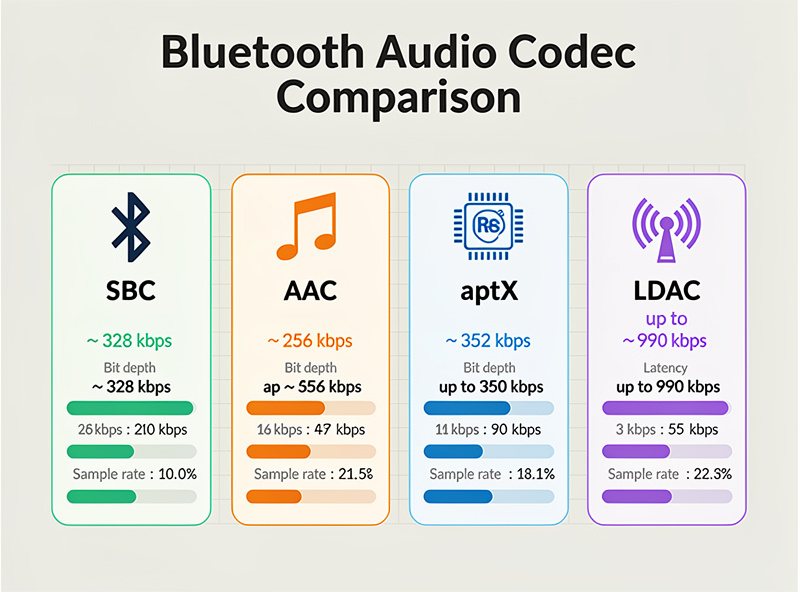
LDAC transmits up to 990 kbps at 24-bit/96kHz, making it the highest-quality Bluetooth codec available. aptX Adaptive dynamically adjusts between 279-420 kbps based on connection stability. AAC encodes at 256 kbps and is standard on Apple devices. SBC maxes at 345 kbps with poor encoding quality. Codec selection determines whether your wireless headphones sound like a $50 wired pair or a $500 wired pair.
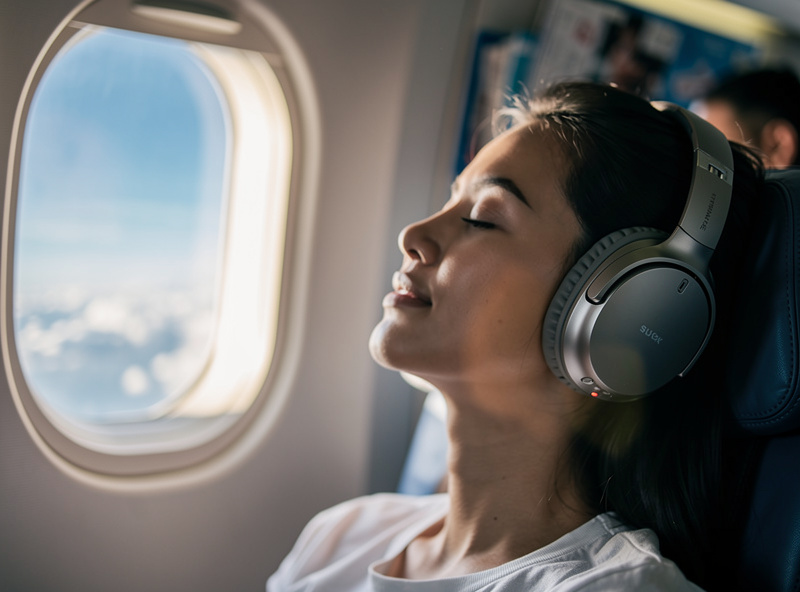
LDAC, developed by Sony, operates in three modes: Quality (990 kbps), Normal (660 kbps), and Connection (330 kbps). Most Android phones default to Normal mode, which provides 16-bit/44.1kHz quality equivalent to CD resolution. Forcing Quality mode in developer settings maximizes fidelity but requires stable Bluetooth signal — movement or interference above 5 meters causes frequent dropouts that degrade the listening experience more than the lower bitrate mode.
aptX Adaptive from Qualcomm offers the best balance of quality and stability. Its dynamic bitrate adjustment maintains connection integrity in congested wireless environments like offices and transit while maximizing quality in clean environments. aptX Adaptive supports 24-bit/96kHz at its maximum rate and introduces only 50-80 milliseconds of latency — low enough for video synchronization without lip-sync issues.
AAC is Apple’s preferred codec and performs well on iOS devices with hardware-optimized encoding. On Android, AAC encoding quality varies by manufacturer because Android uses a software encoder that performs inconsistently. The result: AAC on iPhone sounds noticeably better than AAC on most Android phones despite identical 256 kbps bitrate. Apple’s AirPods Max achieve their best sound quality through AAC on iOS.
SBC (Sub-Band Coding) is the mandatory baseline codec that all Bluetooth audio devices support. It sounds mediocre at 345 kbps due to its primitive sub-band encoding algorithm, which introduces audible artifacts on complex musical passages. If your source device and headphones negotiate SBC as the codec, expect sound quality comparable to 128 kbps MP3 — acceptable for podcasts and calls but far below audiophile standards.
Active Noise Cancellation: How It Works and Which Models Excel
ANC uses external microphones to capture ambient noise, generates an inverted waveform, and plays it through the headphone drivers to cancel incoming sound. Modern ANC chips from Qualcomm and Sony cancel 30-40 dB of low-frequency noise below 1 kHz. Effective ANC extends battery life by reducing the volume needed to overcome background noise.
The best ANC implementations in 2026 use adaptive algorithms that continuously adjust cancellation based on the noise profile. Sony’s Integrated Processor V1 in the WH-1000XM5 samples external noise at 700 times per second, adjusting the anti-noise waveform in real time. This technology reduces jet engine rumble by 35-40 dB and office HVAC noise by 25-30 dB while maintaining natural tonality without the “pressure” sensation of earlier ANC systems.
AirPods Max ANC uses the H2 chip with 10 audio cores to process 48,000 samples per second from nine microphones. The computational audio pipeline includes transparency mode that selectively passes voice frequencies while canceling everything else — essential for brief conversations without removing the headphones. The AirPods Max achieve approximately 30 dB of cancellation across 50-2000 Hz, with particularly strong performance against wind noise.
Bose QuietComfort Ultra headphones use CustomTune technology that plays a calibration tone each time you put them on, mapping your ear canal geometry to optimize ANC for your specific ear shape. This personalization improves cancellation by 3-6 dB in the 500-2000 Hz range where ear shape significantly affects sound propagation. The QC Ultra achieves approximately 32 dB average noise reduction.
ANC affects sound quality by adding processing overhead and reducing available amplifier headroom. When the ANC processor generates anti-noise, it consumes part of the driver’s excursion budget, potentially compressing dynamic range by 2-3 dB during heavy noise cancellation. Most audiophile-grade wireless headphones offer a passive wired mode that bypasses ANC and all digital processing, restoring full analog performance. The headphone buying guide covers wired mode performance in detail.
Battery Life and Charging in 2026
Battery life for premium wireless headphones ranges from 20 hours (AirPods Max) to 60 hours (Sennheiser Momentum 4). ANC reduces battery life by 20-30%. Quick-charge features provide 3-5 hours of playback from 10-15 minutes of charging via USB-C. Wireless charging is available on select models but adds weight and cost.
The Sennheiser Momentum 4 leads battery endurance at 60 hours with ANC active, using a 700mAh lithium polymer cell and efficient Qualcomm QCC5171 chipset. This three-day runtime eliminates range anxiety entirely — charge once on Monday and listen through Thursday even with 4-5 hours of daily use. The tradeoff is slightly bulkier ear cup design to accommodate the larger battery.
Sony WH-1000XM5 achieves 30 hours with ANC and 40 hours without, using a proprietary battery management system that optimizes power draw based on playback volume and ANC intensity. Quick charge delivers 3 hours of playback from a 3-minute charge — a lifesaver at airport gates. The USB-C port supports Power Delivery for faster charging from compatible adapters.
Battery degradation is the primary longevity concern for wireless headphones. Lithium polymer cells lose approximately 20% capacity after 500 charge cycles, meaning a headphone rated at 30 hours will deliver approximately 24 hours after 2-3 years of daily charging. Some manufacturers like Apple and Sony offer battery replacement services, while many brands treat the headphone as disposable after battery degradation. Check replacement availability before purchasing any wireless headphone above $300.
Audiophile Wireless Headphone Recommendations
The Focal Bathys ($699) sets the audiophile wireless standard with Focal’s aluminum-magnesium M-driver, 30-hour battery, and a 3.5mm wired mode that rivals the Focal Clear. The Mark Levinson No. 5909 ($999) delivers reference-grade Harman target tuning with 34-hour battery. The Apple AirPods Max ($549) remains the best-sounding option for iOS users with Spatial Audio support.
The Focal Bathys stands alone as a wireless headphone designed by a serious audiophile manufacturer. Its 40mm aluminum-magnesium driver shares DNA with Focal’s open-back Clear and Utopia flagships, delivering timbral accuracy and micro-detail that consumer-focused wireless headphones cannot match. The DAC mode via USB-C bypasses Bluetooth entirely, accepting 24-bit/192kHz digital audio from computers and DAPs. This makes the Bathys a legitimate wired audiophile headphone when connected via USB-C or 3.5mm analog.
The Mark Levinson No. 5909 targets the luxury audiophile market with its distinctive red ear cups and reference-grade tuning. The 40mm beryllium-coated driver produces frequency response within 1 dB of the Harman target curve from 20 Hz to 20 kHz — flatter than most wired headphones at this price. LDAC and aptX Adaptive support ensure maximum wireless quality from Android devices, while AAC handles iOS.
For mid-budget audiophile wireless listening, the Sennheiser Momentum 4 ($300) and Sony WH-1000XM5 ($350) deliver 90% of the Bathys’ sound quality at half the price. The Momentum 4 emphasizes neutral tuning and extended battery, while the Sony prioritizes ANC quality and computational audio features. Both support LDAC and multipoint connectivity to two devices simultaneously. Pair them with a quality USB DAC in wired mode for critical listening sessions.
Latency, Gaming, and Video Synchronization
Bluetooth audio latency ranges from 50 ms (aptX Adaptive low-latency mode) to 200+ ms (SBC). Video playback tolerates up to 100 ms before lip-sync becomes noticeable. Gaming requires under 40 ms for competitive play. aptX Adaptive and Sony’s LDAC gaming mode are the only Bluetooth codecs suitable for real-time audio-visual synchronization.
Standard Bluetooth SBC codec introduces 150-250 milliseconds of latency due to its encoding and decoding buffer requirements. This makes it unsuitable for any application requiring real-time audio feedback. AAC reduces this to 100-120 ms on Apple devices, which is acceptable for video playback but not for rhythm games or video editing.
aptX Adaptive’s low-latency mode achieves 50-80 ms end-to-end latency by using smaller frame sizes and predictive buffering. This is low enough for casual gaming and video editing where occasional micro-stutters are acceptable. For competitive gaming, dedicated 2.4 GHz wireless gaming headsets like the SteelSeries Arctis Nova Pro Wireless achieve under 20 ms latency using proprietary USB dongle transmission rather than Bluetooth.
Most audiophile wireless headphones prioritize sound quality over latency, accepting the latency penalty of high-bitrate codecs like LDAC Quality mode (990 kbps). If you need both audiophile sound quality and low latency, look for headphones that support aptX Adaptive, which dynamically adjusts between quality and low-latency modes based on the application. The wired headphone amp and DAC combos eliminate latency entirely for desktop use.
Comparison Table: Wireless Headphones for Audiophiles
| Model | Price | Codec Support | ANC | Battery | Driver | Wired Mode |
|---|---|---|---|---|---|---|
| Focal Bathys | $699 | LDAC, aptX HD, AAC, SBC | Yes (30 dB) | 30 hours | 40mm Al-Mg | 3.5mm + USB-C DAC |
| Mark Levinson No. 5909 | $999 | LDAC, aptX Adaptive, AAC | Yes (32 dB) | 34 hours | 40mm Be-coated | 3.5mm |
| Apple AirPods Max | $549 | AAC | Yes (30 dB) | 20 hours | 40mm DD | Lightning (limited) |
| Sony WH-1000XM5 | $350 | LDAC, AAC, SBC | Yes (35 dB) | 30/40 hours | 30mm carbon fiber | 3.5mm |
| Sennheiser Momentum 4 | $300 | aptX Adaptive, AAC, SBC | Yes (28 dB) | 60 hours | 42mm DD | 3.5mm + USB-C |
| Bose QC Ultra | $429 | aptX Adaptive, AAC, SBC | Yes (32 dB) | 24 hours | 35mm DD | 3.5mm |
| Bowers & Wilkins PX8 | $699 | aptX Adaptive, AAC, SBC | Yes (28 dB) | 30 hours | 40mm carbon cone | 3.5mm + USB-C |
Is LDAC better than aptX Adaptive?
LDAC at 990 kbps transmits more data than aptX Adaptive at 420 kbps maximum, giving it a theoretical quality advantage. However, aptX Adaptive offers lower latency (50-80ms vs 200ms+) and more stable connections in congested environments. For pure audio quality, LDAC Quality mode wins; for gaming and video, aptX Adaptive wins.
Do wireless headphones sound as good as wired?
High-end wireless headphones like the Focal Bathys and Mark Levinson No. 5909 achieve 85-90% of wired headphone sound quality via LDAC codec. In wired mode, these same headphones match dedicated wired models. The gap comes from Bluetooth bandwidth limitations and codec compression artifacts that affect dynamic range and micro-detail retrieval.
How long do wireless headphone batteries last?
Premium wireless headphone batteries last 20-60 hours per charge depending on ANC usage and codec. The Sennheiser Momentum 4 leads at 60 hours with ANC. Battery capacity degrades approximately 20% after 500 charge cycles (2-3 years of daily use). Check if the manufacturer offers battery replacement before purchasing.
Can I use wireless headphones for gaming?
Most wireless headphones introduce 100-200ms Bluetooth latency, causing noticeable lip-sync delay in gaming. aptX Adaptive low-latency mode achieves 50-80ms, acceptable for casual gaming. For competitive gaming requiring under 40ms latency, use dedicated 2.4 GHz wireless gaming headsets or wired headphones with a DAC.
Which wireless headphone has the best noise cancellation?
The Sony WH-1000XM5 provides the strongest noise cancellation, reducing ambient noise by 35-40 dB below 1 kHz with its Integrated Processor V1. Apple AirPods Max and Bose QC Ultra follow at 30-32 dB. All three outperform passive closed-back headphones by 10-15 dB in low-frequency cancellation.
Do wireless headphones work with all phones?
All Bluetooth headphones work with any phone via SBC baseline codec. For optimal quality: Android phones should use LDAC or aptX Adaptive; iPhones are limited to AAC. Check your phone’s supported codecs in developer options (Android) or assume AAC (iPhone). Multipoint connectivity lets premium headphones connect to two devices simultaneously.