Headphone Buying Guide 2026: Types, Sound, and Top Picks
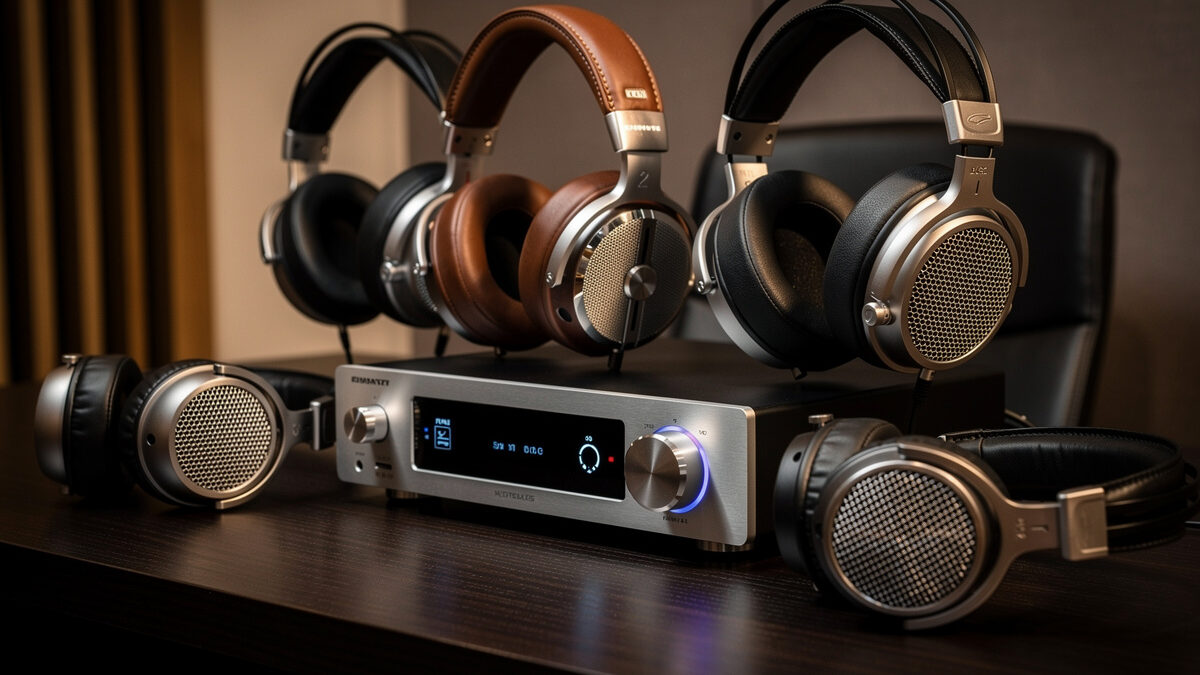
Choosing headphones starts with understanding three core variables: driver type, enclosure design, and impedance matching. Over-ear headphones with dynamic drivers dominate 72% of the audiophile market, but planar magnetic models deliver flatter frequency response below 200 Hz. This guide covers every headphone type, driver technology, and sound signature so you can match the right pair to your hi-fi audio system.
Whether you are upgrading from earbuds or building a dedicated listening station, the headphone landscape in 2026 offers more variety than ever. From $50 chi-fi IEMs to $4,000 electrostatic flagships, understanding the fundamentals of driver design, impedance, and sound signatures will save you from costly mismatches and buyer’s remorse.
Headphone Types: Open-Back, Closed-Back, IEM, and More
Headphones fall into four primary categories based on enclosure design and wearing style: open-back, closed-back, in-ear monitors (IEMs), and semi-open. Open-back designs vent sound through the ear cup, creating a wider soundstage but zero noise isolation. Closed-back models seal the driver chamber, providing 15-25 dB of passive noise isolation at the cost of narrower staging.
Open-back headphones like the Sennheiser HD 600 and HIFIMAN Sundara excel in quiet listening environments where soundstage width and natural tonality matter most. The open design prevents pressure buildup inside the ear cup, reducing ear fatigue during sessions exceeding three hours. However, sound leaks both directions — people nearby hear your music, and background noise enters freely.
Closed-back models serve commuters, studio recording engineers, and anyone who needs isolation. The sealed chamber boosts sub-bass response by 3-6 dB compared to open equivalents, making genres like hip-hop and electronic music more visceral. Tradeoffs include narrower soundstage, faster heat buildup, and potential resonance artifacts in the 200-500 Hz range.
IEMs bypass the outer ear entirely, inserting a balanced armature or dynamic driver directly into the ear canal. Modern multi-driver IEMs with 4-8 balanced armatures achieve frequency response from 8 Hz to 40 kHz, exceeding most full-size headphones in treble extension. They offer 25-35 dB of passive isolation with foam or silicone tips.
Driver Types: Dynamic, Planar Magnetic, Electrostatic, and Hybrid
Dynamic drivers use a voice coil attached to a thin diaphragm suspended in a magnetic field. This design powers 90% of consumer headphones and produces punchy, engaging bass with natural roll-off above 10 kHz. Planar magnetic drivers vibrate a flat diaphragm embedded with conductors between two magnetic arrays, delivering faster transient response and lower distortion below 500 Hz.
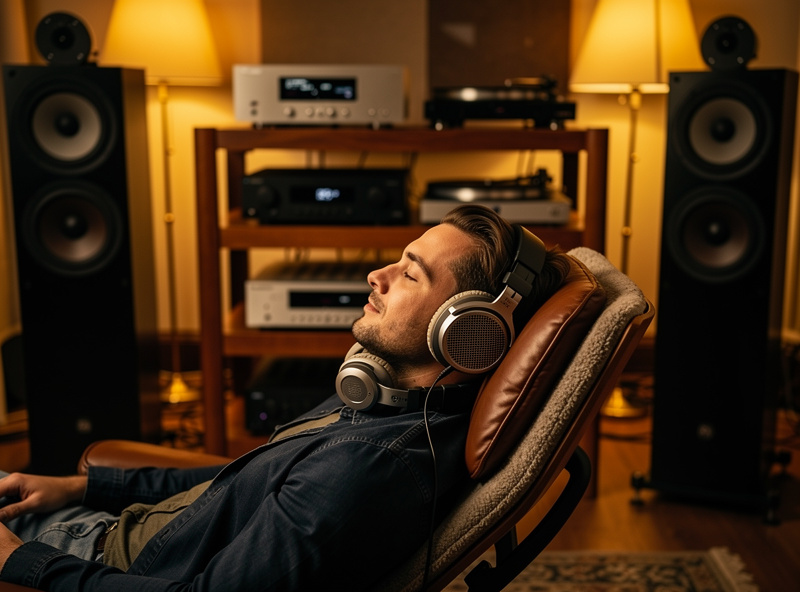
Dynamic drivers remain the most popular choice because they are efficient, lightweight, and inexpensive to manufacture. A 40mm dynamic driver in a closed-back headphone like the Audio-Technica ATH-M50x produces 99 dB/mW sensitivity, making it easy to drive from smartphones and laptops. The moving-coil design naturally emphasizes bass warmth due to diaphragm excursion limits creating harmonic distortion that listeners perceive as richness.
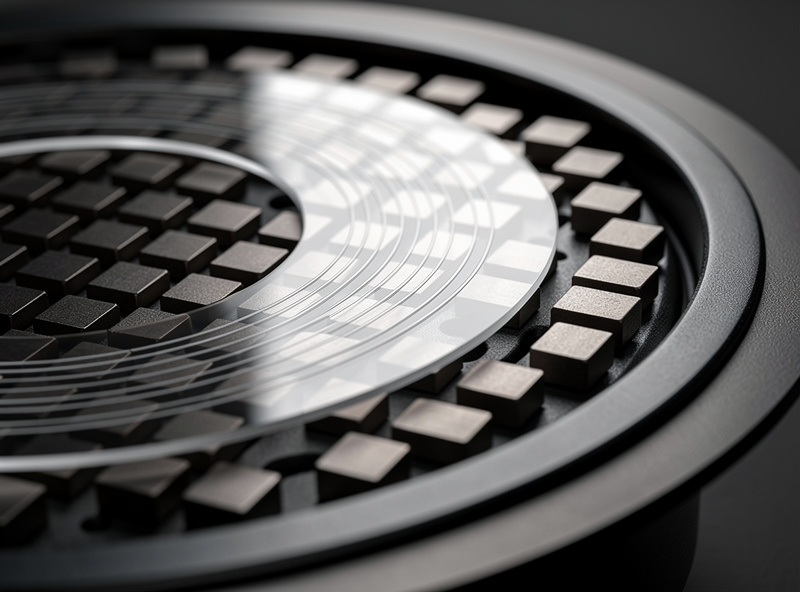
Planar magnetic headphones such as the HIFIMAN Sundara and Audeze LCD-X use an ultra-thin diaphragm (often under 2 microns) suspended between opposing magnet arrays. The entire diaphragm surface moves uniformly rather than pistoning from the center like a dynamic driver. This eliminates breakup modes that cause frequency response irregularities above 2 kHz in dynamic designs. Planar bass extends flat to 20 Hz with under 0.1% THD at 94 dB SPL.
Electrostatic drivers charge a metallized film with 100-500 volts DC bias and drive it between perforated stators. The result is vanishingly low distortion (under 0.01% THD) and the fastest transient response of any headphone technology. Stax SR-X9000 and Sennheiser HE-1 represent the pinnacle, but electrostatic headphones require dedicated energizer amplifiers costing $500-$5,000.
Hybrid IEMs combine dynamic drivers for bass, balanced armatures for mids and treble, and sometimes electrostatic tweeters for ultra-high frequencies. Models like the Moondrop Variations use a 10mm dynamic driver for sub-bass and three balanced armatures covering 500 Hz to 20 kHz, achieving 20 Hz-45 kHz frequency response with under 0.5% total harmonic distortion. Bone conduction drivers represent an emerging category that bypasses the ear canal entirely, transmitting sound through the skull bones to the cochlea. While not yet competitive with traditional driver types for audiophile listening, bone conduction technology excels in situational awareness applications where keeping the ear canal open for environmental sounds is critical.
Impedance and Sensitivity: Matching Headphones to Sources
Headphone impedance ranges from 16 ohms (portable IEMs) to 600 ohms (studio reference models). Sensitivity ratings indicate how loud a headphone plays at 1 milliwatt of power. Low-impedance, high-sensitivity headphones work directly from phones and laptops; high-impedance models require dedicated amplification to reach satisfying volume levels and proper damping.
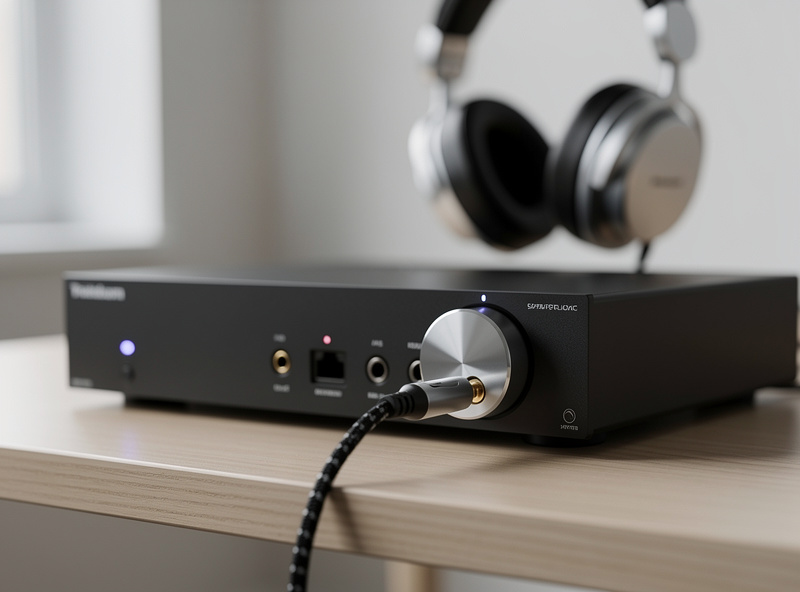
Impedance is not a quality indicator — it reflects the voice coil resistance and inductance of the driver. A 32-ohm Sennheiser HD 660S2 sounds different from a 300-ohm HD 600 despite similar driver designs because the lower impedance variant uses a different voice coil geometry optimized for portable sources. The HD 600 at 300 ohms requires approximately 20 milliwatts to reach 110 dB SPL, while the HD 660S2 at 30 ohms reaches the same level with 2 milliwatts.
Sensitivity ratings measured in dB/mW or dB/V tell you how efficiently a headphone converts electrical power to acoustic output. A headphone rated at 105 dB/mW will play at 105 decibels when receiving 1 milliwatt of power. Most smartphones deliver 5-15 milliwatts into 32-ohm loads, sufficient for headphones rated above 100 dB/mW sensitivity. The impedance matching guide covers damping factor calculations in detail.
The damping factor — the ratio of headphone impedance to amplifier output impedance — determines how well the amplifier controls the driver’s movement. A damping factor below 4:1 causes audible bass bloom and reduced transient precision. For a 300-ohm HD 600, the amplifier output impedance must stay below 75 ohms. For a 32-ohm IEM, it must stay below 8 ohms, which eliminates most tube amplifiers from consideration.
Sound Signature Profiles: Warm, Neutral, Bright, V-Shaped
Sound signatures describe a headphone’s frequency response curve shape. Neutral targets the Harman target curve with slight bass shelf and controlled treble. Warm signatures boost 100-300 Hz by 2-4 dB. Bright models emphasize 3-8 kHz. V-shaped curves boost both bass and treble while recessing midrange.
The Harman target curve, developed by Sean Olive’s research team at Harman International, represents the preferred frequency response for over-70% of listeners worldwide. It features a gentle bass shelf of +5.5 dB below 200 Hz, flat midrange from 200 Hz to 1 kHz, and a controlled treble peak centered at 3 kHz followed by gradual rolloff above 10 kHz. Headphones that closely track this curve include the Sennheiser HD 600, Dan Clark Audio Aeon 2 Noire, and AKG K371.
Warm headphones like the Meze 99 Classics and ZMF Auteur attenuate treble energy while boosting mid-bass, creating a lush, forgiving presentation that excels with poorly recorded material. The warmth comes from 2-4 dB elevation between 100-300 Hz combined with 3-6 dB rolloff above 8 kHz. This signature fatigue-free for extended listening but may obscure fine detail in complex orchestral passages.
Bright headphones such as the AKG K701 and Grado SR325x emphasize upper midrange and treble energy, bringing vocal presence and cymbal articulation forward. This works well for acoustic, classical, and jazz recordings where harmonic texture matters. However, bright signatures cause listening fatigue above two hours and expose sibilance in compressed pop recordings.
V-shaped signatures found in many consumer headphones like the Sony WH-1000XM5 and Beats Studio Pro boost sub-bass by 6-10 dB and treble by 4-6 dB while scooping midrange by 2-4 dB. This creates an exciting, “wow factor” first impression that emphasizes rhythm and sparkle at the expense of vocal clarity and instrumental body. Open-back headphones tend to be less V-shaped than closed models because open enclosures cannot artificially boost sub-bass through seal pressure.
Matching Headphones with Sources: Amps, DACs, and Streaming
Source matching determines whether a headphone performs to its full potential. High-impedance headphones (150+ ohms) benefit from dedicated amplifiers with low output impedance. Low-impedance IEMs require sources with output impedance under 2 ohms. USB DACs like the Schiit Modi+ provide clean line-level output for any headphone amp and DAC combo.
The signal chain — source file, DAC, amplifier, headphone — is only as strong as its weakest link. A $1,500 headphone fed by a laptop’s integrated audio codec with 50-ohm output impedance and 90 dB SNR will sound worse than a $300 headphone driven by a dedicated DAC/amp stack with 0.5-ohm output impedance and 118 dB SNR. Budget allocation should follow a roughly 40/30/30 split between headphone, DAC, and amplifier.
Streaming services like Tidal, Qobuz, and Apple Music now offer lossless and hi-res tiers. While the audible difference between 320 kbps AAC and 16/44.1 FLAC is debated, the quality of the master recording matters far more than the file format. A well-mastered 256 kbps AAC file will outperform a poorly mastered 24/192 FLAC file every time. Focus your budget on transducers and amplification before chasing hi-res streaming.
For tube amplifier users, higher-impedance headphones (150-600 ohms) are ideal because tube output transformers naturally have higher source impedance. Pairing a 32-ohm headphone with a tube amp with 20-ohm output impedance yields a damping factor of 1.6:1, causing uncontrolled bass and frequency response deviation. Solid-state amplifiers with near-zero output impedance work with any headphone impedance. Hybrid tube/solid-state designs bridge this gap by using tubes for voltage gain and solid-state output stages for low-impedance current delivery, combining harmonic richness with broad headphone compatibility.
Price Tiers: What to Expect at Each Budget Level
Under $100, expect competent dynamic drivers with good tuning but limited technical performance. The $100-300 range introduces planar magnetic options and multi-driver IEMs with significantly improved detail retrieval. Above $500, diminishing returns kick in — you pay for refinement in staging, timbral accuracy, and build quality rather than dramatic sound quality leaps.
The $50-100 tier includes outstanding performers like the Koss Porta Pro, Moondrop Chu II, and Samson SR850. These deliver 85-90% of the listening satisfaction of $300 headphones for casual listening. The KPH30i at $30 remains one of the best value propositions in audio, with warm, engaging tonality that embarrasses many $200 headphones.
The $100-300 tier is the sweet spot for most listeners. The HIFIMAN Sundara ($230) offers planar magnetic technology at a price point that was impossible five years ago. The Sennheiser HD 560S ($150) delivers reference-grade neutral tuning. Moondrop Aria 2 ($80) and Truthear Hexa ($80) bring multi-driver IEM performance to budget pricing. This tier represents the best performance-per-dollar in 2026.
Above $500, headphones like the ZMF Atrium ($1,800), Focal Clear MG ($1,300), and Audeze LCD-X ($1,200) offer genuine improvements in micro-detail retrieval, soundstage depth, and timbral accuracy. However, the jump from a $250 Sundara to a $1,200 LCD-X delivers perhaps 15-20% improvement in measurable performance while costing five times as much. The best headphone amp and DAC combos in this tier become essential to extract full performance.
Build Quality, Comfort, and Long-Term Use
Comfort matters as much as sound quality for headphones worn 3+ hours daily. Clamp force measured in Newtons, ear pad material, headband weight distribution, and driver angle all affect long-term wearability. Metal construction and replaceable pads extend headphone lifespan to 10+ years, while plastic builds with glued pads often fail within 2-3 years of daily use.
Clamp force below 3 Newtons feels loose and unstable during head movement; above 5 Newtons creates pressure points on the temporal bone after 90 minutes. The Sennheiser HD 600 measures approximately 4.2N out of the box, which loosens to 3.5N after break-in over 2-4 weeks. The Meze 99 Classics at 3.8N offer all-day comfort with protein leather pads that distribute pressure evenly.
Ear pad depth determines whether your ears contact the driver baffle — a common source of discomfort. Ears that protrude more than 20mm need pads at least 22mm deep. The Dekoni Elite Velour pads add 5mm of depth over stock pads and improve airflow, reducing heat buildup by approximately 30% during extended sessions. Replaceable pads are a must for any headphone above $200.
Headband design affects weight distribution across the crown of the head. Suspended headband designs like the Audio-Technica ATH-R70x and HIFIMAN Ananda distribute weight across a wider area, reducing pressure hotspots. Self-adjusting mechanisms add convenience but introduce potential failure points. Metal headbands with padding outlast plastic headbands with spring-loaded adjustment.
Comparison Table: Headphone Types by Use Case and Price
| Type | Best For | Isolation | Soundstage | Entry Price | Flagship Example |
|---|---|---|---|---|---|
| Open-Back Over-Ear | Home listening, critical analysis | None (0 dB) | Wide, airy | $150 | Sennheiser HE-1 ($59,000) |
| Closed-Back Over-Ear | Commute, studio tracking | 15-25 dB passive | Narrow, intimate | $80 | Focal Stellia ($3,000) |
| On-Ear | Portability, casual use | 5-15 dB passive | Moderate | $30 | Grado GS3000x ($2,000) |
| IEM (Single DD) | Daily carry, gym | 25-35 dB passive | In-head | $20 | Moondrop Blessing 3 ($270) |
| IEM (Multi-BA/Hybrid) | Stage monitoring, audiophile portable | 25-35 dB passive | In-head, precise | $80 | 64 Audio U18t ($2,400) |
| Planar Magnetic | Home listening, mixing | Varies by design | Wide (open) / moderate (closed) | $130 | Audeze LCD-5 ($4,500) |
| Electrostatic | Reference listening | None (open design) | Extreme width and depth | $500 | Stax SR-X9000 ($5,200) |
| Wireless ANC | Travel, office, commuting | 30-40 dB (active+passive) | Narrow, processed | $100 | Apple AirPods Max ($549) |
Common Headphone Buying Mistakes to Avoid
The most expensive headphone is not the best headphone for your use case. A $200 closed-back IEM will outperform a $2,000 open-back planar magnetic headphone on a noisy subway. Prioritize isolation and comfort for portable use, technical performance for home listening, and impedance matching for every scenario.
Buying a headphone without testing it or reading measurements is the fastest path to disappointment. Frequency response graphs from sources like Crinacle, Resolve Reviews, and oratory1990 reveal exactly how a headphone sounds before you spend a dollar. A headphone that measures with a 6 dB peak at 4.5 kHz will sound piercingly bright regardless of brand reputation or price. Always cross-reference at least two independent measurement sources before purchasing any headphone above $200.
Ignoring the source chain is another common error. Pairing a 150-ohm Sennheiser HD 650 with a smartphone headphone jack produces thin, lifeless sound because the phone cannot supply adequate voltage swing. The HD 650 needs approximately 1.5 volts RMS to reach 110 dB SPL, while most phones max out at 0.7-1.0 volts into 150 ohms. Budget at least $100 for a dedicated DAC/amp when buying headphones above $300.
Finally, buying based on brand alone ignores the massive variance within each manufacturer’s lineup. Sennheiser makes the neutral HD 600 and the bass-heavy Momentum 4. HIFIMAN produces the bright Sundara and the warm HE1000se. Focal offers the analytical Utopia and the warm Elegia. Grado’s lineup ranges from the laid-back Hemp to the aggressive GS3000x. Judge each headphone model on its own merits using independent measurements and reviews rather than assuming a brand’s house sound applies uniformly across their product range.
What type of headphone is best for audiophiles?
Open-back over-ear headphones with planar magnetic or dynamic drivers are preferred by most audiophiles. They offer the widest soundstage, most natural tonality, and lowest distortion. The Sennheiser HD 600 and HIFIMAN Sundara are two benchmark models under $300.
Do I need a headphone amplifier?
Headphones with impedance above 150 ohms or sensitivity below 100 dB/mW benefit significantly from dedicated amplification. Low-impedance IEMs and efficient closed-back headphones under 80 ohms usually work fine from a phone or laptop headphone jack.
What is the difference between open-back and closed-back headphones?
Open-back headphones vent sound through the ear cup, creating wider soundstage and natural presentation but zero noise isolation. Closed-back headphones seal the driver chamber, providing 15-25 dB passive isolation and stronger sub-bass but narrower staging and faster heat buildup.
How much should I spend on my first audiophile headphone?
The $150-300 range delivers the best performance-per-dollar in 2026. Models like the Sennheiser HD 560S ($150), HIFIMAN Sundara ($230), and Moondrop Aria 2 ($80) offer 90%+ of the satisfaction of $1,000+ headphones for most listeners.
What headphone impedance works with a phone?
Headphones rated at 32 ohms or below with sensitivity above 100 dB/mW work well with smartphones. Phones typically deliver 5-15 milliwatts into 32-ohm loads, reaching 105-110 dB SPL. Headphones above 80 ohms generally require a dedicated portable amplifier.
Are expensive headphones worth the money?
Diminishing returns begin sharply above $300. A $250 Sundara delivers 85-90% of the performance of a $1,200 LCD-X. Above $500, improvements are in staging refinement and timbral accuracy, not dramatic sound quality leaps. Invest in a good DAC and amp before upgrading past $500.