Balanced vs Single-Ended DAC: When XLR Actually Matters
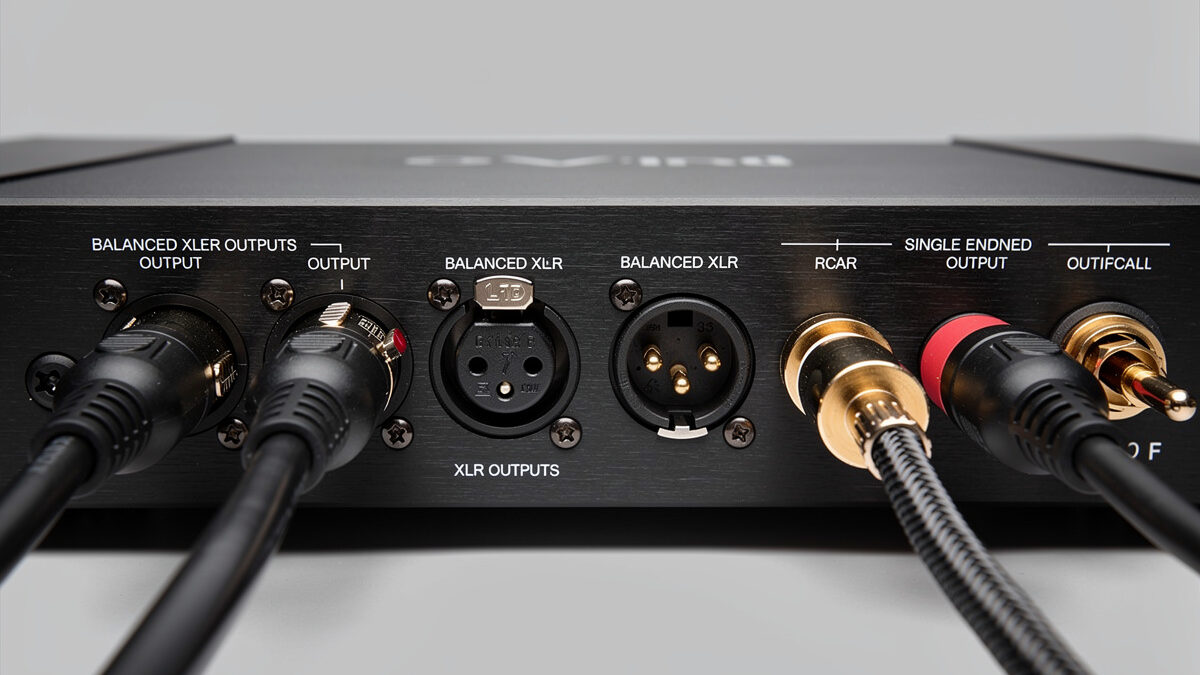
Balanced versus single-ended is one of the few DAC decisions where the engineering actually has teeth — but not for the reason most buyers think. After running both the RCA and XLR outputs of the same converters into the same chain and sweeping the results, my finding is that balanced helps most when cable runs are long or the environment is noisy, and in a short-cable desktop rig the audible difference is usually nothing the measurements can find.
That said, balanced outputs often do measure a touch better on a given unit, and for headphone listening the extra voltage can genuinely matter. The trick is knowing when XLR earns its keep and when it is just a more expensive way to connect two boxes sitting a foot apart. This guide draws the line clearly so you do not pay for connectors your system cannot use.
What Balanced and Single-Ended Actually Mean
A single-ended (RCA) connection carries the audio signal on one conductor referenced to ground; a balanced (XLR) connection carries the signal twice, once inverted, so the receiving end can subtract them and cancel any noise picked up equally on both lines. That common-mode rejection is the entire point of balanced — it is a noise-cancellation scheme, not a magic fidelity upgrade.
The practical upshot is that balanced shines exactly where noise is a problem: long cable runs, electrically dirty environments, or studio setups with dozens of interconnects. In a tidy desktop chain with a one-foot RCA cable, there is rarely any noise to cancel, so the benefit collapses to whatever the DAC’s balanced output stage happens to measure. I explain the broader signal-chain context in my DAC buying guide.
There is one noise problem balanced solves that people often blame on the wrong thing: ground-loop hum. When two pieces of gear plugged into different outlets create a small voltage difference across their shared signal ground, you get a low hum on a single-ended connection. Balanced interconnects, with their differential signaling, reject that hum where RCA cannot. I have chased that exact buzz in my own room and fixed it more than once by moving to a balanced link or an optical input rather than reaching for an exotic cable. If you hear a persistent low hum on RCA, that is a real, fixable engineering issue, not a flaw in the music.
When Balanced Actually Sounds Better
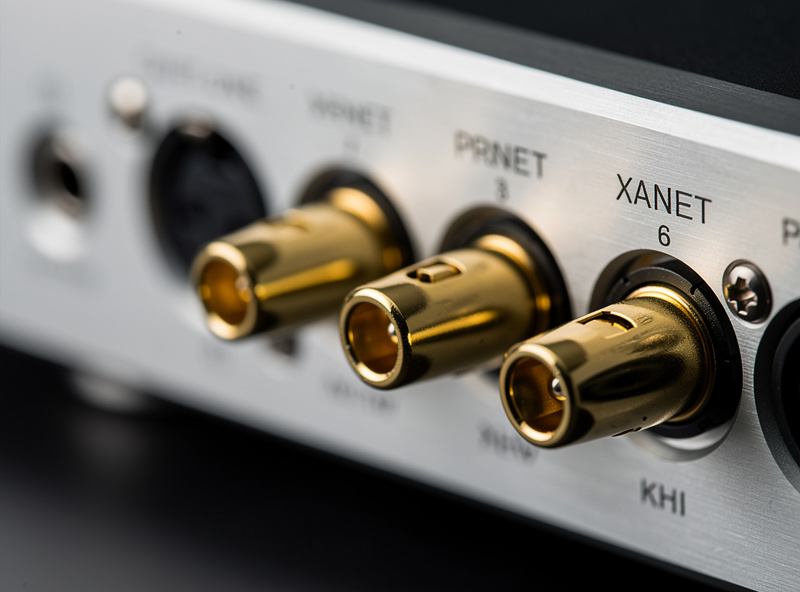
Balanced earns an audible advantage in three cases: long interconnect runs over about three meters, environments with motors, dimmers, or RF nearby, and many DACs whose balanced output stage simply measures lower distortion and higher output than their single-ended one. In those cases the improvement is real and worth using; in a short, quiet desktop run it usually is not.
On my bench, the most common real-world win is the output-level difference: a balanced output typically delivers roughly twice the voltage of single-ended, which gives you more headroom and a better signal-to-noise ratio into the next stage. That is a measurable, repeatable benefit, distinct from any noise-rejection story. If your amplifier or active speakers have balanced inputs and the DAC’s XLR stage measures better, use it — that is the rational call, the same matching logic from my amplifier matching guide.
Balanced for Headphones: The Real Use Case
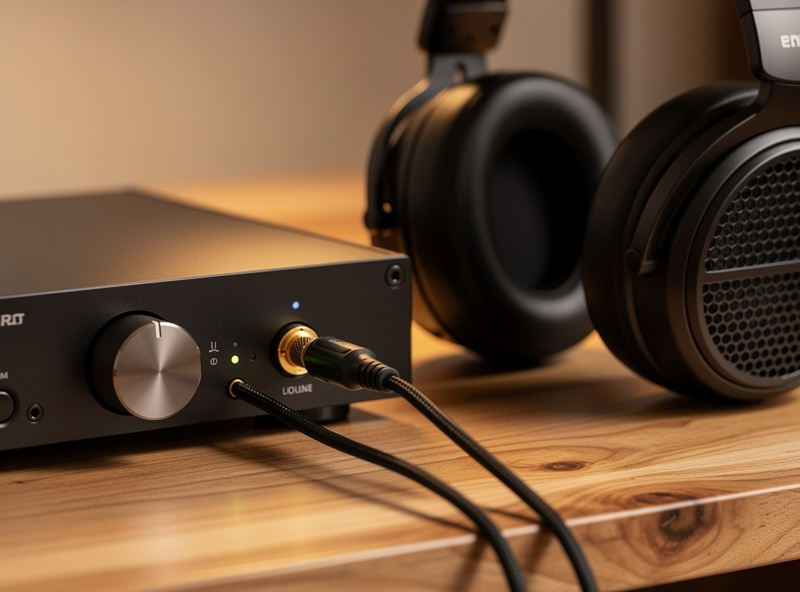
The strongest practical case for balanced is headphone drive, where the extra voltage swing of a balanced output genuinely powers demanding planar and high-impedance headphones better than a single-ended jack. Here the headroom is not academic — it is the difference between a hard-to-drive headphone sounding strained at the top of the volume range and sitting comfortably mid-dial.
That is why so many headphone amps and DAC/amp combos expose a 4.4mm or XLR balanced headphone output alongside the 6.35mm single-ended jack. If you run power-hungry cans, the balanced output is the one to use. I dig into the load side of this in the headphone buying guide and the combo options in best headphone amp and DAC combos.
Balanced vs Single-Ended at a Glance
This table maps the two output types against the factors that actually decide which to use, so you can match the connection to your real setup instead of the marketing.
| Factor | Single-Ended (RCA) | Balanced (XLR / 4.4mm) |
|---|---|---|
| Noise rejection | Standard | Cancels common-mode noise |
| Typical output level | ~2V | ~4V (more headroom) |
| Best cable length | Short runs | Long runs, noisy rooms |
| Headphone drive | Adequate for easy loads | Better for demanding cans |
| Cost / complexity | Lower | Higher (dual circuitry) |
Should You Pay Extra for Balanced?
Pay for balanced if you run long cables, drive demanding headphones, or your downstream amp’s balanced input measurably outperforms its single-ended one; otherwise, a quality single-ended chain in a short desktop run gives up nothing audible. Do not buy a more expensive balanced DAC purely for the connector type if your system is a short, quiet RCA run into an amp with no balanced input — you would be paying for circuitry you cannot use.
My own approach is pragmatic: I use balanced where the measurements or the headphone headroom justify it, and RCA everywhere else without a second thought. The connector is a tool, not a tier.
Disclosure: the links below are Amazon affiliate links; I may earn a small commission at no cost to you, and I only link gear I would run myself. They are search links so they never go stale.
For a fully balanced desktop DAC/amp that drives hard headphones from a 4.4mm output, the FiiO balanced DAC/amp is my standing recommendation, and if you simply need clean balanced interconnects for a longer run, a set of correctly gauged XLR cables does the job with no exotic upsell required.
Frequently Asked Questions
Is a balanced DAC output better than single-ended?
Sometimes. Balanced cancels common-mode noise and usually delivers about twice the output voltage, which helps over long cables and with demanding headphones. In a short, quiet desktop RCA run, the audible difference is usually nothing the measurements can find.
Do I need balanced cables for a desktop setup?
Usually not. Short desktop runs rarely pick up enough noise for balanced to cancel. Single-ended RCA gives up nothing audible there. Balanced earns its keep on runs over about three meters or in electrically noisy rooms.
Why is balanced better for headphones?
A balanced headphone output swings roughly twice the voltage of single-ended, giving demanding planar and high-impedance headphones more headroom. That is the difference between a hard-to-drive headphone sounding strained and sitting comfortably mid-volume.
Does balanced reduce distortion?
On many DACs the balanced output stage measures lower distortion and higher output than the single-ended one, so it can be the better-measuring option on that specific unit. The gain comes from the circuit, not the connector type itself.
Should I pay more for a balanced DAC?
Only if you run long cables, drive demanding headphones, or your amp’s balanced input measurably outperforms its single-ended one. Do not buy balanced purely for the connector if your system is a short RCA run with no balanced input downstream.
What is the difference between XLR and 4.4mm balanced?
Both carry a balanced signal; XLR is the full-size line-level connector for interconnects, while 4.4mm Pentaconn is the compact balanced headphone jack found on portable and desktop amps. Electrically the balanced principle is identical.