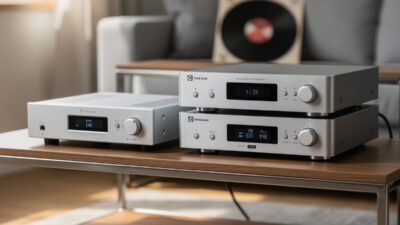
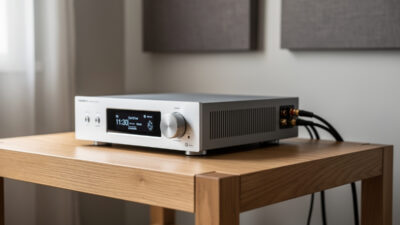
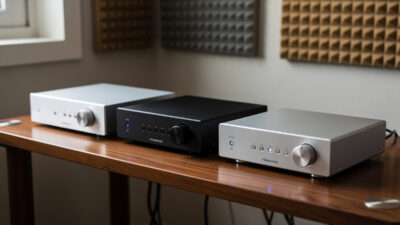
DAC Chips Explained: ESS, AKM, and Why It Barely Matters
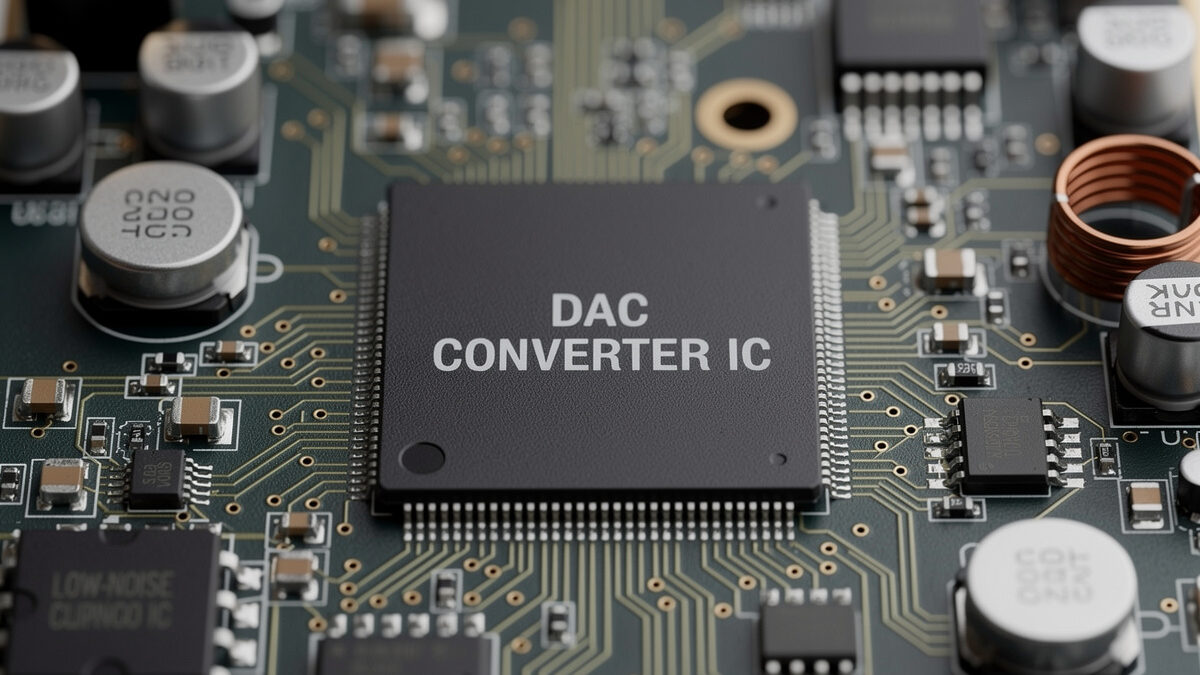
DAC chips get named on faceplates the way engines get badged on cars, and buyers treat the chip number as a quality grade. After running converters built around ESS, AKM, Cirrus, and discrete ladder designs through the same room and the same sweeps, my position is blunt: the chip is the cheapest, least important part of a good DAC. The power supply, clocking, and analog output stage around it decide how the thing actually performs.
This guide explains what the major DAC chips are, what they actually do, and why “it uses the latest ESS flagship” tells you almost nothing about whether a unit is worth buying. If you internalize one idea, make it this: implementation beats silicon, every time, and a great chip in a sloppy circuit measures worse than a modest chip done right.
What a DAC Chip Actually Is
A DAC chip is the integrated circuit that performs the core digital-to-analog conversion, but it is only one stage in a longer signal path. Around it sit the clock that times the conversion, the power regulation that keeps it clean, and the analog output stage that buffers and filters the result. The chip’s datasheet numbers are a ceiling the rest of the design either reaches or squanders.
This is why two DACs using the identical chip can measure and sound noticeably different. One designer feeds it a low-jitter clock and a quiet, well-regulated supply and pairs it with a competent output stage; another bolts the same chip to a noisy board and calls it done. The chip did not change — the engineering around it did. That gap is exactly what my DAC buying guide tells you to look past the marketing for.
The Major DAC Chip Families
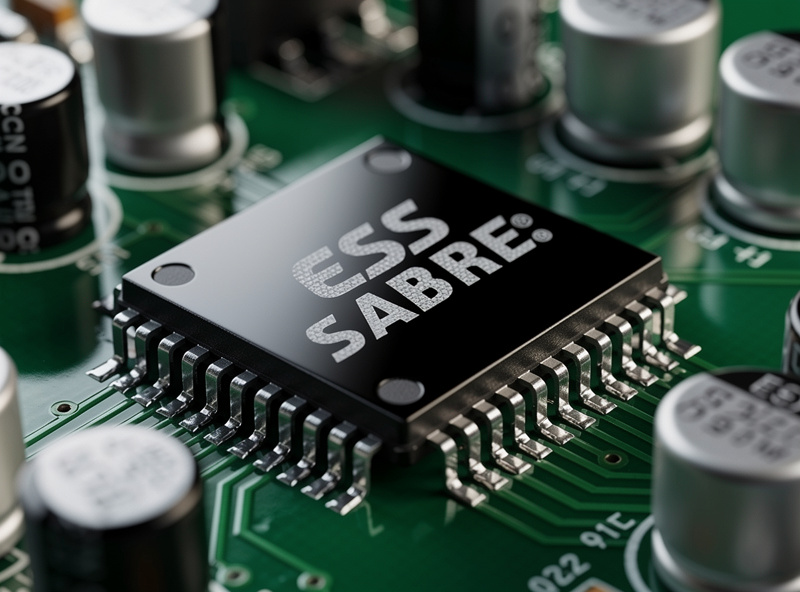
The market is dominated by a handful of names: ESS Technology (the Sabre line), AKM (Asahi Kasei), Cirrus Logic, Texas Instruments/Burr-Brown, and discrete ladder implementations that use no off-the-shelf converter chip at all. Each has a reputation, much of it inherited from specific famous implementations rather than the silicon itself.
ESS Sabre chips post the highest headline numbers and show up in everything from dongles to flagships; they are sometimes accused of a “glare” that is really an old filter-implementation issue, long since solvable. AKM built a loyal following for a slightly softer voicing — again, an output and filter choice. Cirrus and Burr-Brown are workhorses behind countless transparent units. The discrete ladder route is the boutique option I cover in the R2R vs delta-sigma teardown. None of these names is a guarantee; all of them have produced both excellent and mediocre products.
It is also worth knowing how chip reputations get made and unmade. A single famous, well-engineered product using a given chip cements that chip’s “sound” in the community’s mind for a decade, even though the credit belongs to the circuit designer, not the silicon vendor. When AKM’s main fab was knocked out by a fire and supply dried up, plenty of makers swapped to ESS or Cirrus parts with no audible change to their finished units once they re-implemented carefully — the clearest real-world proof that the chip is not the product. I treat every “this chip sounds like X” claim as a statement about one implementation until measurements say otherwise.
The Chip Numbers That Actually Matter
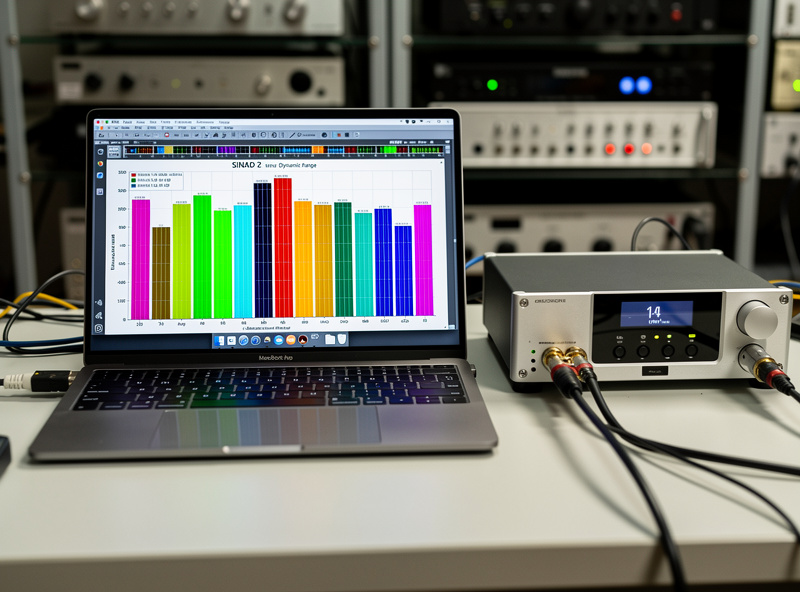
If you must read a datasheet, the figures worth anything are dynamic range, SINAD (signal-to-noise-and-distortion), and low-level linearity — not the maximum sample rate or the bit-depth headline. A chip rated for 130 dB dynamic range is already far beyond what any room and any pair of ears can use; chasing a few more decibels on paper is pure number-worship.
What never appears on the chip’s datasheet is the thing that decides the product: how well the manufacturer implemented it. That is why I trust a unit’s own measured SINAD and linearity over the chip’s theoretical maximum. SINAD is a sanity check, not a religion — once a DAC clears roughly 110 dB SINAD it is transparent in any real system, and the difference between that and 122 dB is a bragging right, not an audible one.
Digital Filters: Where the “Chip Sound” Hides
Most of the audible character people attribute to a DAC chip actually comes from its selectable digital filters, which trade off pre-ringing, post-ringing, and high-frequency rolloff. These filters shape the response right at the top of the audible band and just above it, and switching them is the closest thing to a real “tone control” a transparent DAC offers. The chip enables the filters; the listener chooses the sound.
On my bench, when I A/B filter settings at matched level, the differences are subtle and mostly live above 15 kHz, where age has already taken most of our hearing. I generally leave a linear-phase or minimal-phase filter set and move on, because the room and speakers swamp anything the filter does. If a reviewer raves about a chip’s “sound,” they are usually describing its default filter plus its output stage — not the conversion silicon.
How to Shop Without Falling for the Chip
Ignore the chip badge and shop the finished unit: look at its independently measured SINAD and linearity, the inputs and outputs you actually need, and the features you will use daily. A modest chip in a well-engineered $200 DAC will outperform a flagship chip in a poorly executed one, and it will do everything your speakers and amplifier can resolve.
Put the money you would have spent chasing the latest converter into the parts of the chain that move the needle — room treatment first, then matching, as I lay out in the amplifier matching guide.
Disclosure: the links below are Amazon affiliate links; I may earn a small commission at no cost to you, and I only link gear I would use myself. They are search links so they never go stale.
For a clean, well-implemented chip in a unit that punches far above its chip badge, the Topping desktop DAC line is my standing value pick, and for a headphone-first desk the SMSL desktop DACs deliver flagship-tier measurements at a budget chip-agnostic price.
Frequently Asked Questions
Does the DAC chip determine sound quality?
Mostly no. The chip is one stage; the clock, power supply, and analog output stage around it decide real performance. Two DACs with the same chip can measure and sound different. Implementation beats silicon, so shop the finished unit, not the chip badge.
Is an ESS Sabre chip better than AKM?
Neither is inherently better. Reputations come from specific implementations, not the silicon. ESS posts higher headline numbers; AKM is often voiced softer. Both produce excellent and mediocre products depending on the engineering around the chip.
What chip specs actually matter?
Dynamic range, SINAD, and low-level linearity matter; maximum sample rate and bit-depth headlines do not. Once a DAC clears about 110 dB SINAD it is transparent in any real system, so chasing higher numbers is bragging rights, not audible gain.
What are DAC digital filters?
Selectable filters trade pre-ringing, post-ringing, and high-frequency rolloff, shaping response at the very top of the audible band. Most of the character people credit to a chip is really its default filter plus output stage. Differences are subtle and mostly above 15 kHz.
Should I buy the DAC with the newest chip?
No. A modest chip in a well-engineered unit beats a flagship chip in a sloppy one. Check the finished DAC’s independently measured SINAD and linearity, get the inputs and outputs you need, and put saved money into room treatment.