R2R vs Delta-Sigma DACs: What the Topology Really Changes
R2R versus delta-sigma is the DAC debate that generates the most heat and the least light. The short version, after running both topologies through the same fixed room and the same REW sweeps on my bench: a well-implemented example of either one can be audibly transparent, and the “house sound” people attribute to the topology is almost always a deliberate filter choice or an output-stage decision, not the conversion method itself.
That does not mean the two approaches are identical engineering. They convert digital to analog in genuinely different ways, with different cost structures and different failure modes. Understanding what actually differs — and what is folklore — saves you from paying a topology premium for a sound your upstream gear and room have already decided. And upstream matters: the transport feeding the DAC is often overlooked — my streaming DAC vs separate streamer guide covers whether combining or splitting those functions changes what you hear. This is the teardown I keep coming back to when readers ask which “kind” of DAC to buy.
How the Two Topologies Actually Convert
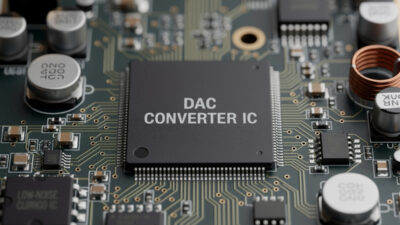
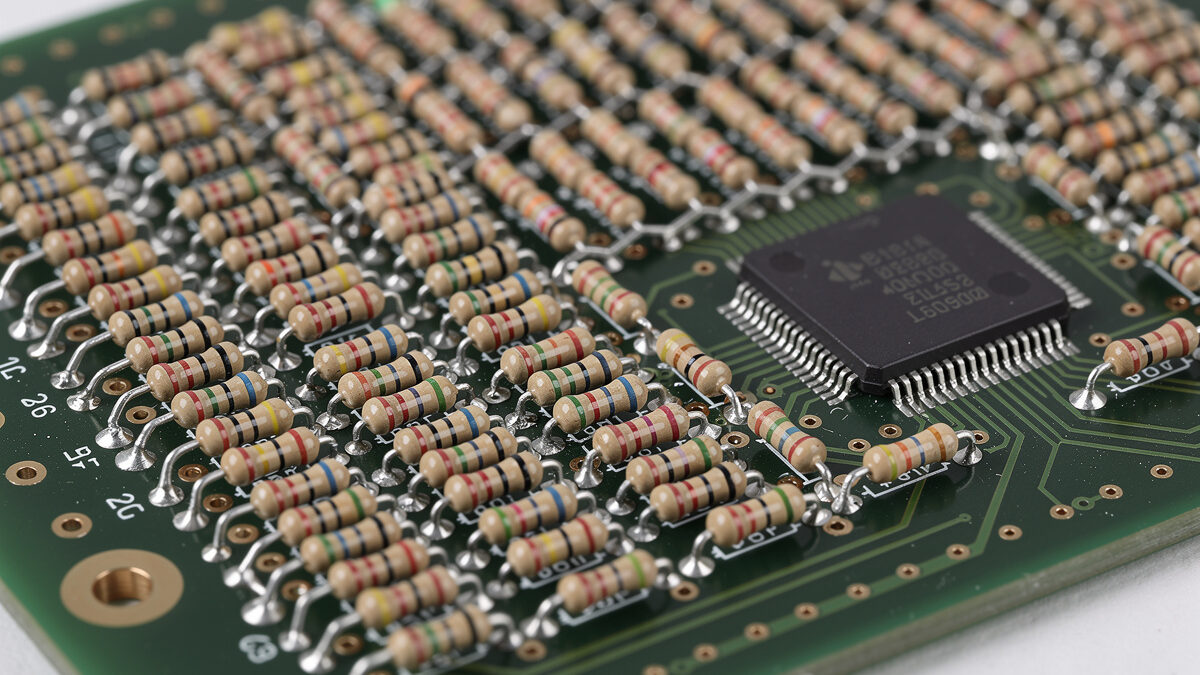
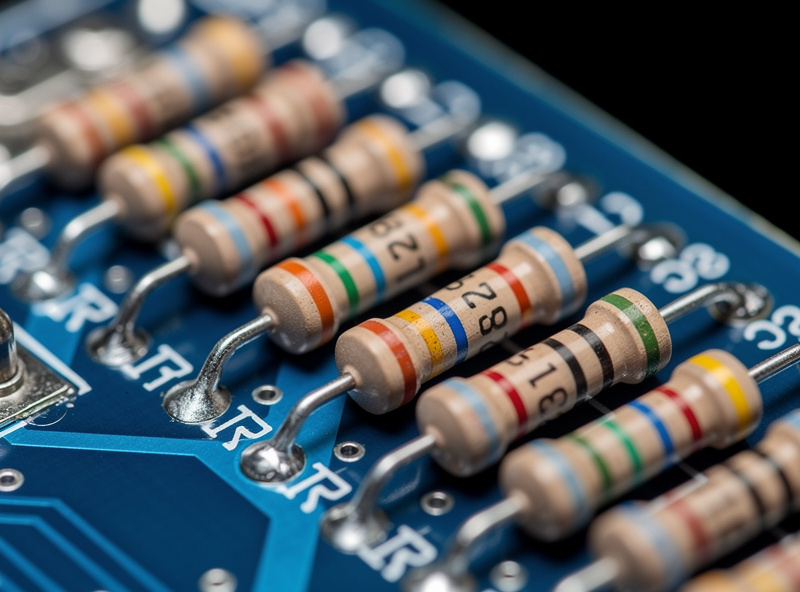
A delta-sigma DAC oversamples the signal to a very high rate and uses a noise-shaping modulator with a small number of bits, pushing quantization noise up out of the audible band where a filter removes it. An R2R (resistor-ladder) DAC instead uses a network of precision resistors to build the analog voltage directly from the digital word, one bit at a time. Delta-sigma dominates the market because it is cheap to integrate and measures superbly; R2R is older, costlier to build well, and prized by a vocal minority.
The practical consequence is where the difficulty lives. In delta-sigma, the hard engineering is in the modulator and the clocking; in R2R, it is in matching the resistors precisely enough that the ladder stays linear at low levels. A cheap R2R ladder with mediocre resistor matching measures worse than a competent delta-sigma chip, which is exactly the trap buyers fall into when they assume “ladder DAC” automatically means “better.”
There is also a hybrid worth knowing about: some so-called R2R designs are actually sign-magnitude ladders or use multiple ladders to handle the low-level linearity problem, and many delta-sigma units now run multibit modulators that blur the old textbook distinction. The marketing rarely makes this clear. When you read “true R2R,” check whether the maker publishes low-level linearity figures — that single measurement tells you more about the unit’s quality than the topology label ever will, and it is the number a real audio nerd looks for first.
What I Actually Measure When I Swap Them
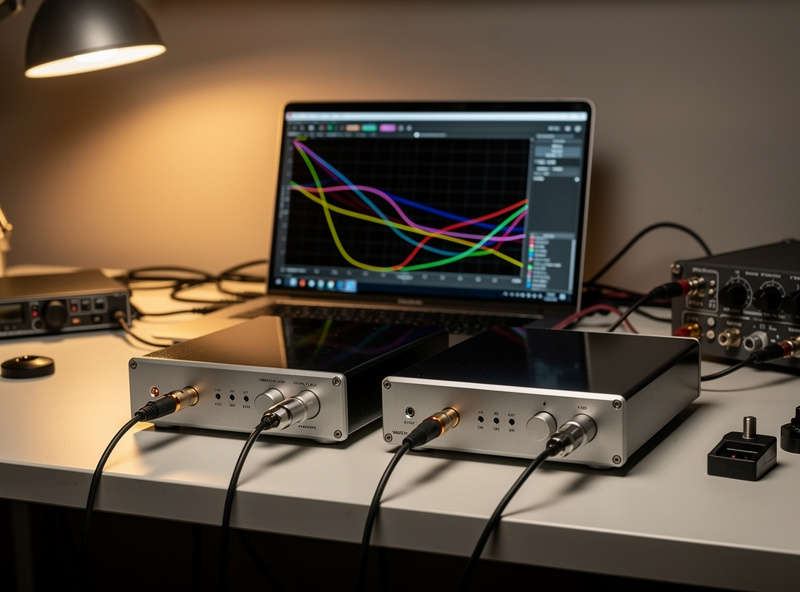
When I put an R2R unit and a delta-sigma unit through the same chain at matched output levels, the frequency response traces overlap almost perfectly across the audible band. The differences that do show up are small and predictable: filter behavior near 20 kHz, low-level linearity on the R2R unit, and sometimes a slightly different noise floor shape. None of it is the night-and-day gap the forums describe.
The honest finding from my bench is that level-matching kills most of the “difference.” Before I match output to within a tenth of a decibel, the louder unit always sounds “better” — more open, more detailed — and people read that as the topology. After matching, the gap collapses to something I would not bet on in a blind test. That is the discipline the whole site is built on, and it is laid out in full in my DAC buying guide.
The R2R “House Sound”: Real or Imagined?
The famous R2R “warmth” or “analog smoothness” is mostly a filter choice and, in some designs, a deliberate touch of low-order distortion or a gentle high-frequency rolloff. It is a voicing decision a manufacturer makes, not an inherent property of resistor-ladder conversion. You can build a clinically neutral R2R DAC and a “warm” delta-sigma one; the topology does not dictate the character.
That matters for buyers because it means you should choose the sound you want directly, not infer it from the conversion method. If you like a slightly rolled-off top end, buy a unit that measures that way regardless of its internals. Plenty of listeners genuinely prefer a voiced presentation, and there is nothing wrong with that as long as you know you are buying a coloration, not a higher fidelity. I keep an R2R-flavored unit precisely to demonstrate this on the bench.
R2R vs Delta-Sigma at a Glance
This table sums up the practical differences that actually affect a buying decision, rather than the marketing framing. Use it to decide whether a topology premium is worth paying in your case.
| Attribute | Delta-Sigma | R2R (Ladder) |
|---|---|---|
| Conversion method | Oversampling + noise shaping | Precision resistor ladder |
| Typical cost to build well | Low (highly integrated) | High (resistor matching) |
| Measured transparency | Excellent at low cost | Excellent only when well-built |
| Common “character” | Neutral, clinical (usually) | Often voiced warmer (by design) |
| Best for | Most buyers, value seekers | Buyers wanting a tuned sound |
Who Should Actually Buy an R2R DAC
An R2R DAC makes sense if you specifically want a voiced, slightly euphonic presentation and you are buying it with eyes open, or if you simply enjoy the engineering and resale community around ladder DACs. It does not make sense as a default “upgrade” over a competent delta-sigma unit if your goal is maximum transparency per dollar — there you are paying for build complexity, not audible gain, and the best DAC by budget at any tier is almost always a clean delta-sigma unit.
For the vast majority of listeners feeding a proper amplifier and speakers, a well-measuring delta-sigma DAC is the rational choice, and the leftover budget belongs in room treatment where it will do far more. If you do go R2R, match it to your system the same way you would any source — watch output level and impedance, exactly as in my amplifier matching guide.
Disclosure: the links below are Amazon affiliate links. If you buy through them I may earn a small commission at no extra cost to you. I only point at gear I would run in my own chain, and they are search links so they never go stale.
If you want the value-benchmark delta-sigma route, the Topping desktop DAC line is where I would start — it measures cleanly and costs a fraction of any ladder unit. For listeners who genuinely want the R2R approach with eyes open, the popular R2R ladder DACs are the units the ladder community actually buys, and they are built well enough that the resistor matching is not a liability.
Frequently Asked Questions
Is an R2R DAC better than a delta-sigma DAC?
Not inherently. A well-built example of either topology can be audibly transparent. R2R is harder and costlier to build well, and a cheap ladder DAC can measure worse than a good delta-sigma chip. Choose on sound and features, not topology.
Why do R2R DACs sound warmer?
That warmth is usually a deliberate filter choice or a touch of voicing, not the resistor ladder itself. You can build a neutral R2R DAC or a warm delta-sigma one. The character is a manufacturer decision, not a property of the conversion method.
Do the differences survive a level-matched test?
Mostly not. On my bench, once output is matched within 0.1 dB, the audible gap between competent R2R and delta-sigma units collapses to something hard to identify in a blind test. Unmatched levels are why people hear large differences.
Which topology should most people buy?
For most listeners, a well-measuring delta-sigma DAC is the rational choice: excellent transparency at lower cost. Spend the saved budget on room treatment, which improves the sound far more than any topology change.
Can a delta-sigma DAC be voiced like an R2R?
Yes. Filter selection and output-stage design let a delta-sigma DAC be tuned warm or neutral. Buy the measured sound you want directly rather than inferring character from whether the chip is a ladder or a modulator.