Parametric vs Graphic Equalizer: Which to Use
Parametric versus graphic equalizer is one of those comparisons where the right answer depends entirely on what you are trying to do — but for the work I care most about, room correction, it is not close. After years of dialing both kinds across one fixed, measured room, my position is simple: a graphic EQ is a fine broad tone-shaping tool, and a parametric EQ is the only thing precise enough to actually fix a room. The reason comes down to one control that graphic EQs do not give you, and once you understand it the whole choice falls into place.
This is the practical breakdown — what each type is, where the line between them really sits, and which one belongs in your chain depending on whether you are flavoring the sound or correcting it. If you want the wider context for how EQ fits into a complete approach to a room, my home audio equalizer guide is the overview this sits under.
What a Graphic Equalizer Is
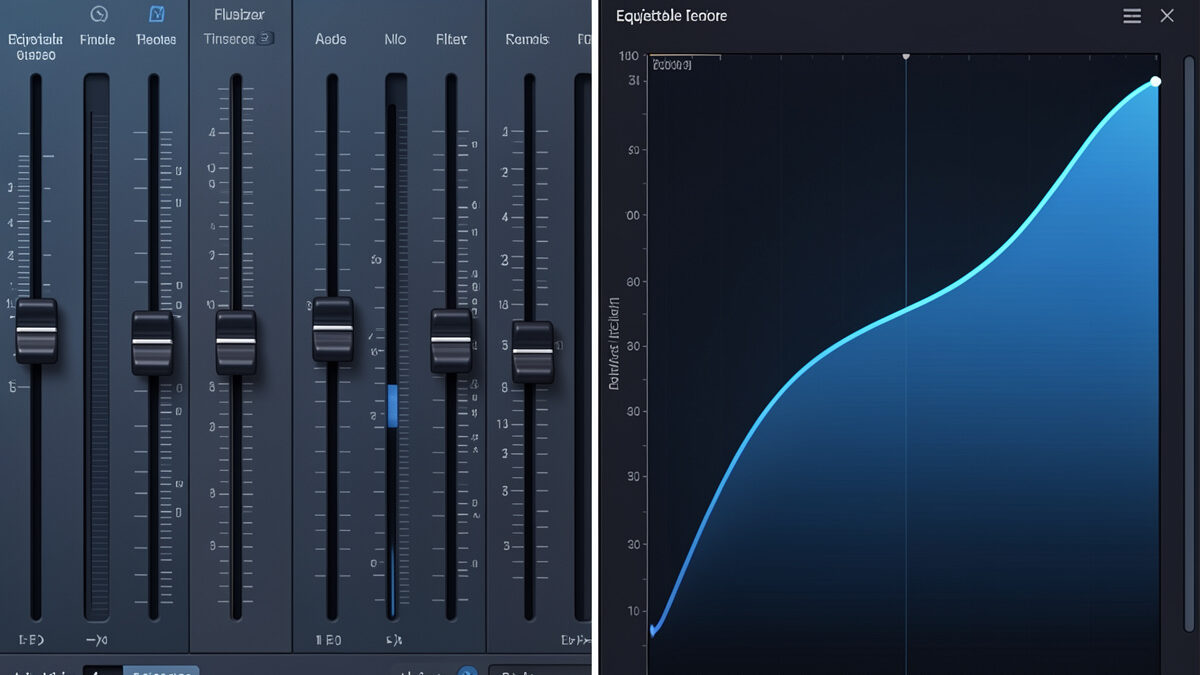
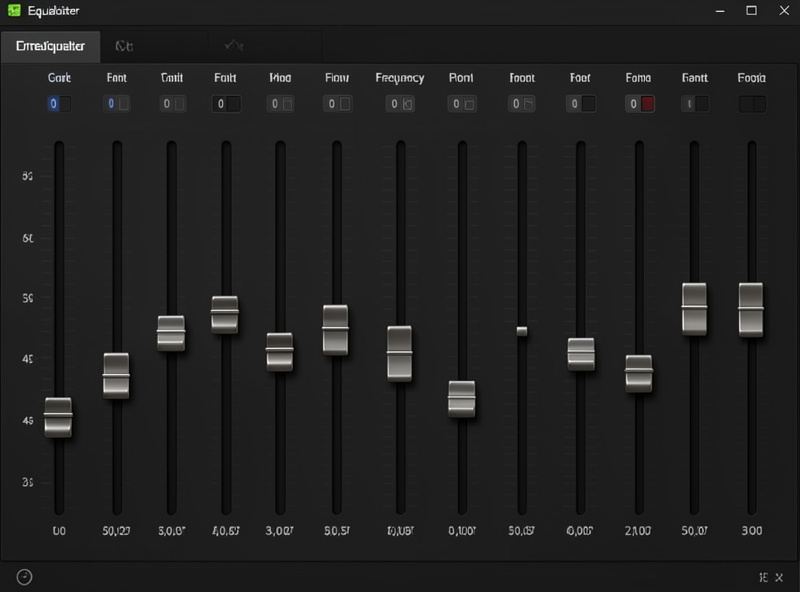
A graphic equalizer gives you a row of sliders, each fixed to a preset center frequency, and you push each one up or down to boost or cut that band. A common hardware graphic EQ has 10 or 31 bands spaced at octave or third-octave intervals. The name comes from the fact that the slider positions form a rough visual “graph” of your tone curve. It is intuitive, fast, and genuinely useful for broad tonal shaping — warming up a thin system, taking the edge off a bright one, tuning a PA to a room by ear.
The limitation is baked into the design: the center frequencies are fixed and so is the width of each band. You cannot move a slider to sit exactly on a problem frequency, and you cannot make a band narrower to target a tight peak without disturbing its neighbors. A 31-band unit has more resolution than a 10-band, but it is still a fixed grid, and room problems rarely line up neatly with a fixed grid.
What a Parametric Equalizer Is
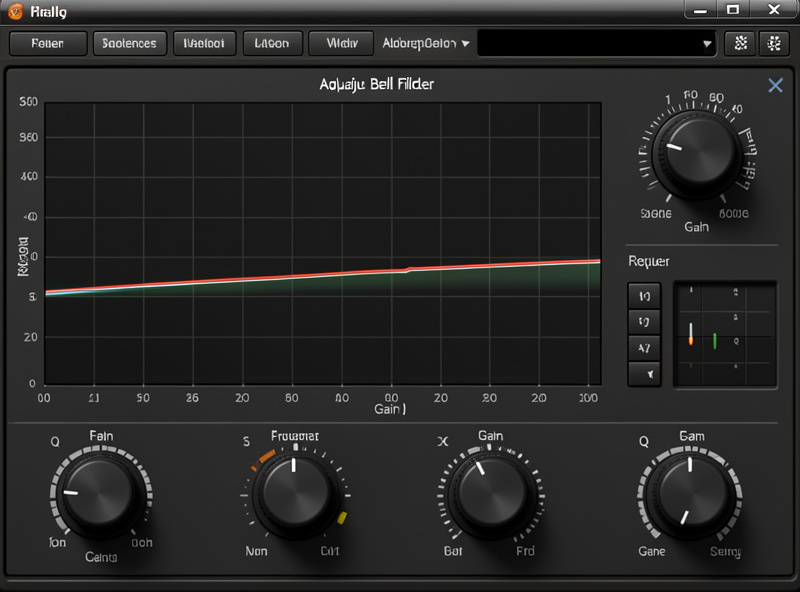
A parametric equalizer gives you full control over each filter band with three parameters — which is where the name comes from. You set the center frequency (anywhere you want, not on a fixed grid), the gain (how much you boost or cut), and the Q, which is the width of the filter. That third control is the entire game. A high Q makes a narrow, surgical filter; a low Q makes a broad, gentle one. With a parametric EQ you can place a deep, narrow cut exactly on a room mode at, say, 47 Hz, one-twelfth of an octave wide, without touching 40 Hz or 55 Hz on either side.
That precision is exactly what room correction demands, because room modes are narrow, specific, and never conveniently located on a fixed slider grid. Every correction filter I run is parametric, generated from a measurement, because nothing else can sit a cut precisely where the problem is and nowhere else. When people ask what kind of EQ to use for fixing a room, the honest answer is parametric or nothing.
The Real Difference: Control Over Q
Strip away the marketing and the difference between these two is control over filter width. A graphic EQ hands you fixed frequencies at fixed widths and lets you change only the level. A parametric EQ lets you change frequency, level, and width independently. Everything else follows from that. The graphic EQ is a set of pre-cut keys; the parametric is a locksmith’s blank you file to fit any lock.
This is why a graphic EQ struggles with a room mode. Say you have a 9 dB peak at 47 Hz. On a 31-band graphic EQ, the nearest sliders might be at 40 Hz and 50 Hz, and each band is wide enough that pulling down the 50 Hz slider also drags down everything from roughly 44 to 56 Hz. You can knock the peak down, but you gouge a hole in the frequencies around it that were fine. A parametric filter sits a narrow cut precisely at 47 Hz and leaves the neighbors untouched. For tone shaping that collateral width does not matter; for room correction it is the whole problem.
Side by side
| Feature | Graphic EQ | Parametric EQ |
|---|---|---|
| Center frequency | Fixed grid (e.g. 10 or 31 bands) | Freely chosen per band |
| Filter width (Q) | Fixed | Adjustable per band |
| Gain | Adjustable per band | Adjustable per band |
| Targeting a narrow room mode | Poor — affects neighbors | Excellent — surgical |
| Broad tone shaping | Very good, intuitive | Very good, more setup |
| Best use | Tone flavor, live PA by ear | Measured room correction |
| Ease of use | Immediate, visual | Steeper, needs measurement |
Which One You Actually Want
It depends on the job, and the two jobs are genuinely different. If you want to flavor the overall tone of a system by ear — a bit warmer, a bit brighter, a quick adjustment for a different recording — a graphic EQ is perfectly good and faster to use. There is no measurement required and the visual layout makes it obvious what you are doing. For that kind of broad, subjective tone-shaping, the precision of a parametric is overkill.
If you want to correct your room — to actually fix the measured peaks the four walls create at your seat — you want parametric, full stop. The narrow, located peaks that room modes produce cannot be addressed by a fixed-grid tool without collateral damage. This is why every serious room-correction platform, including the miniDSP units I set up in my miniDSP 2×4 setup guide, is parametric. For the underlying physics of what you are correcting and why precision matters, my room correction equalizer basics lays out the peaks-and-nulls story in full.
For a hardware platform that gives you genuine parametric control over your whole system rather than fixed sliders, a miniDSP parametric processor is what I run and recommend.
Disclosure: the link above is an Amazon affiliate link; I may earn a small commission at no cost to you, and I only link gear I would run myself. It is a search link so it never goes stale.
Using Both, and Common Misconceptions
The two are not mutually exclusive, and in practice I use both for their respective strengths. The parametric filters do the correction work below the Schroeder frequency, pulling the measured peaks down to a target. On top of that corrected baseline, a broad, gentle tilt — which a low-Q parametric band or even a simple tone control handles fine — sets the overall house curve to taste. So even in a fully measured setup, broad subjective shaping and surgical correction coexist; they are just doing different jobs at different scales.
A common misconception is that more graphic-EQ bands eventually equal a parametric. They do not. A 31-band graphic EQ has finer fixed resolution than a 10-band, but it is still a fixed grid with fixed widths — you still cannot place a band between two sliders or narrow one to dodge its neighbors. More bands narrow the gap, but they never close it, because the missing capability is adjustable width and free placement, not band count.
Another misconception is that parametric EQ is inherently “better sounding.” It is not better sounding in the abstract — a filter is a filter, and a graphic and a parametric filter set to the same frequency, gain, and width produce the same result. Parametric is better for room correction specifically because it can be set to the frequency and width the room demands, and a graphic EQ usually cannot. The advantage is precision and reach, not some intrinsic sonic superiority. Understanding that keeps you from buying parametric for tasks where a graphic EQ would have done the job just as well and faster.
The last thing worth saying: do not let the parametric EQ tempt you into over-correcting. The precision that makes it great at room work also makes it easy to pile on a dozen narrow filters chasing every wiggle in the graph. I keep my filter count low and target only the real modal peaks, because a forest of narrow filters introduces its own problems and rarely sounds better than a handful of well-placed ones. Precision is a scalpel, not a license to cut everywhere.
Frequently Asked Questions
What is the difference between parametric and graphic EQ?
A graphic EQ has fixed frequency bands at fixed widths, and you only adjust the level of each with a slider. A parametric EQ lets you set the center frequency, the gain, and the width (Q) of each band independently. The adjustable width is the key difference and the reason parametric EQ can target narrow problems a graphic EQ cannot.
Which is better for room correction?
Parametric, without question. Room modes create narrow peaks at specific frequencies that rarely line up with a graphic EQ’s fixed grid, and a graphic EQ’s wide bands disturb neighboring frequencies when you try to cut a peak. A parametric filter places a surgical cut exactly on the problem and leaves the rest untouched.
What is Q in a parametric equalizer?
Q is the width of the filter. A high Q makes a narrow, surgical filter affecting a small range of frequencies; a low Q makes a broad, gentle one affecting a wide range. Control over Q is the defining feature of parametric EQ and what lets it target a narrow room mode precisely.
Is a graphic EQ ever the better choice?
Yes, for broad subjective tone-shaping by ear. If you just want the system a touch warmer or brighter, a graphic EQ is fast, visual, and needs no measurement. Its precision limitations only matter when you are correcting narrow, measured room problems rather than flavoring overall tone.
Do I need measurements to use parametric EQ?
For room correction, yes, because the value of parametric EQ is placing precise filters on measured problems, and you cannot identify those problems by ear below about 200 Hz. For general tone-shaping you can use a parametric EQ by ear, but you give up most of its advantage over a graphic EQ if you do.
Further Reading
Once you have settled on parametric for correction, the next steps are measuring properly and applying the filters. My room correction basics covers what to correct, the miniDSP 2×4 setup guide covers applying it in hardware, and the room acoustics treatment guide handles the problems above the Schroeder frequency that no EQ, parametric or graphic, can fix.