Room Correction Equalizer Basics for Home Audio
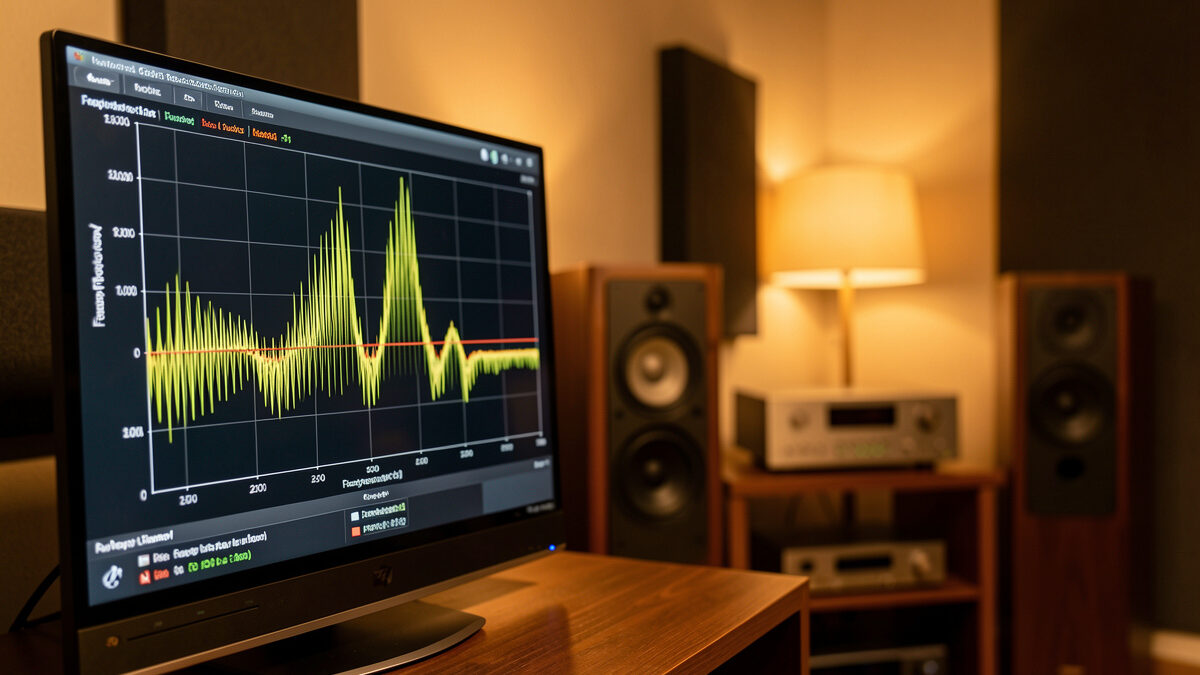
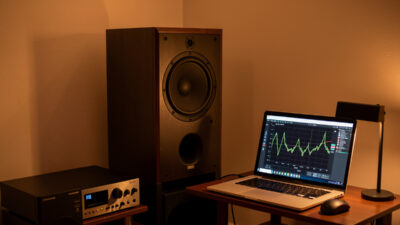
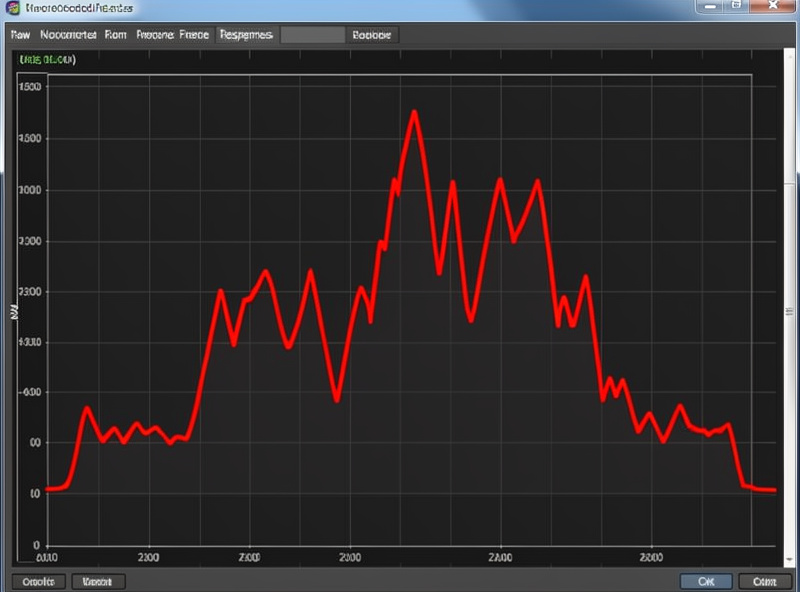
The first time I swept my listening room with a calibrated mic instead of trusting my ears, the graph embarrassed me. I had spent real money on speakers and a clean amplifier, and the bass at my chair was a mess of 10 dB peaks and a cavernous null I had been hearing for months without understanding why. Room correction equalizer work — using EQ to fix what the room does to the sound — is the single discipline that took my system from “decent gear in a bad room” to a room I actually trust. This is the first-principles version of how it works and, just as important, where it stops working.
Room correction is not a magic button or a flavor preset. It is measured EQ: you find out exactly what your room is doing to the frequency response at the listening seat, then build corrective filters that pull it back toward neutral. Done right, it is the cheapest dramatic upgrade in home audio. Done wrong — by ear, with boosts, chasing nulls — it makes things worse and convinces you it made them better. The difference is entirely in understanding the physics first.
Why the Room Is the Problem, Not Your Speakers
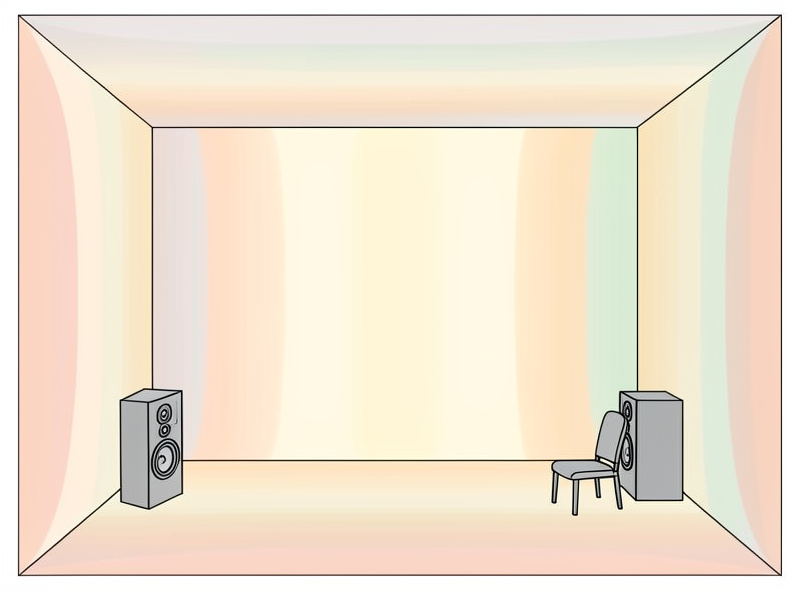
A speaker that measures flat in a lab does not measure flat in your living room, and it never will. The moment sound leaves the driver it starts bouncing off your walls, floor, and ceiling, and those reflections add to and subtract from the direct sound depending on frequency and your seat position. At low frequencies the room’s dimensions create standing waves — room modes — that pile energy up at some frequencies and cancel it at others. The result at your chair can swing 15 dB or more across the bass region. No speaker upgrade fixes that, because the problem is the room, not the box.
This is why I tell people the room is the component nobody buys. You can spend a fortune on electronics and still have lumpy, boomy, uneven bass, because the four walls are equalizing your sound far more aggressively than any tone control. Room correction is how you take that equalization back into your own hands and aim it deliberately instead of leaving it to the accident of your room’s dimensions.
The Single Most Important Rule: Peaks Cut, Nulls Move
If you learn nothing else about room correction, learn this. Room modes create two kinds of problems, and only one of them is an EQ problem.
A peak is a frequency the room boosts — constructive interference piling energy up. Peaks are EQ heaven: you place a cut exactly on the peak, the energy comes down, and it stays down. This is where room correction does its best, most reliable work, and it is most of what I actually do with my filters.
A null (or dip) is a frequency the room cancels — destructive interference, where a reflection arrives out of phase with the direct sound and they subtract. Nulls are the trap. The instinct is to boost the missing frequency back up, but you cannot, because you are not adding energy to a quiet frequency, you are fighting a cancellation. Pour 12 dB of boost into a deep null and all you do is clip your amplifier, overheat your woofer, and barely move the dip. The fix for a null is physical: move the speaker, move the seat, or add a second subwoofer to change the interference pattern. Never EQ a null with big boosts. I treat any correction filter asking for more than three or four dB of boost as a warning that I am fighting physics instead of working with it. Subwoofer integration brings its own EQ challenges — crossover alignment, phase, and the crawl-based position before measurement — and the subwoofer EQ integration guide walks through that sequence specifically.
The Schroeder Frequency: Where Correction Starts and Stops
Room correction is a low-frequency tool, and there is a real boundary that tells you where it works. Below the Schroeder frequency — typically somewhere between 200 and 300 Hz in a domestic room — the room behaves modally: discrete standing waves you can see and target. This is correction territory, and EQ down here is transformative.
Above the Schroeder frequency, the room shifts into a diffuse, statistical behavior where reflections are dense and the response changes drastically with tiny head movements. Up there, narrow EQ filters are pointless — a filter that fixes the response at one ear position wrecks it at the other. The honest fix above Schroeder is physical: absorption at the first reflection points and broadband treatment, not EQ. So the working rule is: correct aggressively below the Schroeder frequency, treat physically above it, and leave the midrange and treble largely alone except for a gentle, broad house-curve tilt. Trying to EQ your way to a flat treble in-room is a beginner mistake that audibly backfires.
How Room Correction Actually Works, Step by Step
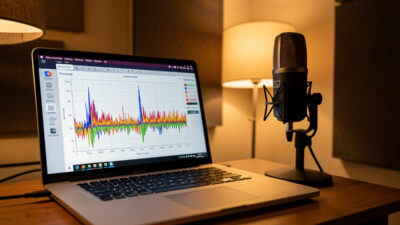
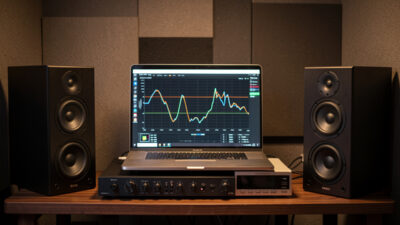
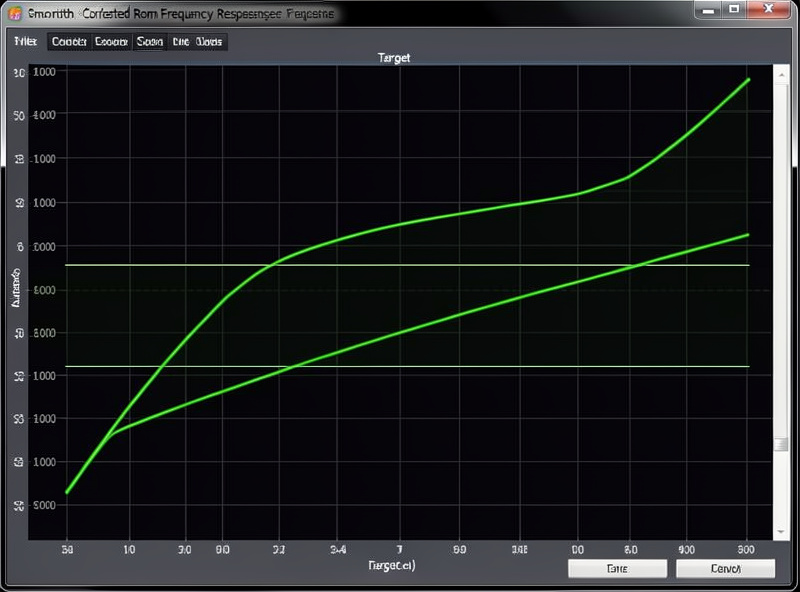
The process is the same whether you do it manually or let software generate filters. First, you measure the in-room response at the listening position with a calibrated microphone, so the measurement reflects what reaches your ears, not what the speaker does in isolation. Second, you identify the peaks and the modal problems below Schroeder — and you note the nulls so you know what NOT to touch. Third, you build parametric filters: a cut at each peak, with the frequency, depth, and width matched to the measured problem. Fourth, you apply a gentle target curve — a mild downward tilt from bass to treble that sounds natural rather than the thin, clinical sound of a dead-flat in-room response. Fifth, you re-measure to confirm the correction did what you intended and did not introduce new problems.
The order matters enormously, and it is not “EQ first.” Before any correction, I get placement right — speakers and seat positioned to minimize the worst modal damage — and I treat the room physically for decay and reflections. Only then do I sweep and correct, because EQ is a finishing pass. Correcting a badly placed, untreated room just polishes a mess. Placement, then treatment, then measurement, then EQ, every time.
Why You Cannot Do This By Ear
People ask whether they can skip the microphone and just dial it in by listening. At low frequencies, the honest answer is no. Human hearing is a poor spectrum analyzer below 200 Hz — we cannot reliably tell a 6 dB peak at 60 Hz from one at 80 Hz, and confirmation bias makes every change you make sound like an improvement whether it is one or not. The calibrated mic and the curve are the only honest referees in the bass. I have watched experienced listeners boost a null by ear, swear it sounded better, and then see the measurement prove they had made it measurably worse. The curve does not have an ego.
This does not mean you ignore your ears. The final house curve and the last fine adjustments are a listening decision — the measurement gets you neutral, and your taste decides how much bass tilt and treble relaxation you want on top. But you make those taste decisions from a corrected baseline, not from the chaos of an uncorrected room. Measure to neutral, then season to taste.
Frequently Asked Questions
What is a room correction equalizer?
A room correction equalizer uses measured EQ to fix what your room does to the sound at the listening seat. You measure the in-room frequency response with a calibrated microphone, find the peaks the room creates, and build parametric cuts that pull the response back toward neutral. It is measured EQ, not a tone preset.
Can room correction fix bad bass?
It fixes one kind of bad bass and not the other. Peaks, where the room boosts a frequency, correct beautifully with a cut. Nulls, where the room cancels a frequency, cannot be fixed with EQ because boosting a cancellation just clips the amp without filling the hole. Deep nulls are solved by moving the speaker or seat, not by EQ.
Do I need a microphone for room correction?
Yes. Human hearing is unreliable below about 200 Hz, so correcting bass by ear usually makes things worse while convincing you it is better. A calibrated USB measurement microphone and free software let you see the real in-room response and correct the actual problems instead of guessing.
What frequencies should I correct?
Correct aggressively below the Schroeder frequency, usually 200 to 300 Hz, where the room behaves as discrete standing waves you can target. Above that boundary the response changes with small head movements, so narrow EQ backfires and physical treatment is the right tool. Leave the treble to a gentle broad tilt at most.
Is room correction better than acoustic treatment?
They solve different problems and work together, not against each other. EQ corrects steady-state level errors below the Schroeder frequency. Physical absorption and bass traps shorten decay time and tame reflections that EQ cannot touch. Treat the room first, then correct what physics leaves behind.
Will room correction make my speakers sound flat and lifeless?
Only if you correct to a dead-straight in-room line, which actually sounds thin because our hearing expects a gentle downward tilt in a real room. Correct to a mild house curve with a little extra low end sloping to a relaxed top, and the result sounds natural and more, not less, alive.
Keep Building
Room correction is one piece of a coherent approach to a room. The overview that ties the whole equalization side together is my home audio equalizer guide, and because correction follows placement and treatment, start with my speaker placement guide and room acoustics treatment guide before you build a single filter. For the broader acoustics picture, my speaker and room acoustics guide is the companion piece, and small-room listeners should pair all of this with my near-field listening setup guide.