Balanced vs Unbalanced Audio Connections Explained
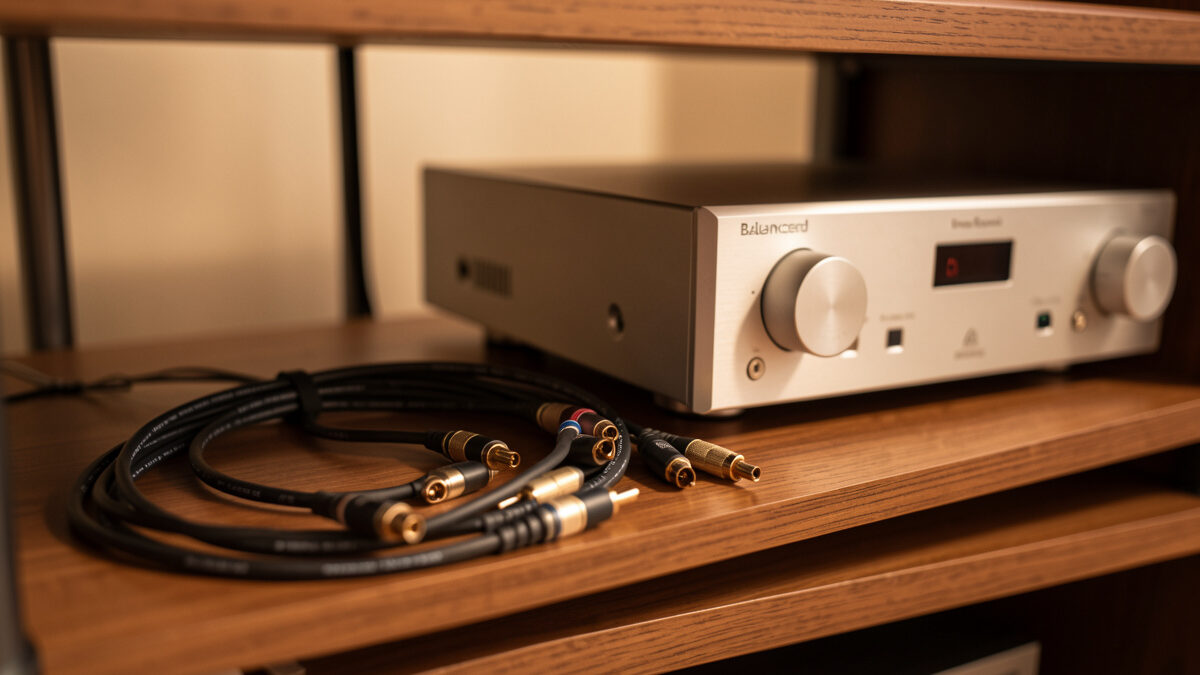
A balanced connection sends the audio as two mirror-image copies down a twisted pair, so the receiving end can subtract out any noise picked up along the way; an unbalanced connection sends one copy plus a ground and has no such defence. The practical upshot is simple: balanced wins on long runs and in electrically noisy rooms, and ties everywhere else — provided the gear is truly balanced inside, not just fitted with XLR sockets.
This is one of the few cable-and-connection topics where the difference is real and measurable rather than mythical, which is exactly why it deserves a clear-eyed treatment. In my listening space the runs are short and balanced versus single-ended is a wash; in a studio with 10-metre cable runs past lighting dimmers, it is night and day. This guide explains the mechanism, when it matters, and the trap of XLR sockets on single-ended gear. It is a spoke of the audiophile cables guide.
How Balanced Connections Actually Reject Noise
Balanced signaling sends the audio twice on two conductors — one normal, one inverted — inside a shield. Any interference the cable picks up lands equally on both conductors. At the receiving end, a differential input flips the inverted signal back and adds them, which doubles the music and cancels the noise that was common to both lines. This is called common-mode rejection, and it is genuine electrical engineering, not audiophile lore.
An unbalanced connection has no second conductor to compare against, so whatever noise it picks up rides straight into the signal. Over the short runs in a typical hi-fi rack, that noise is negligible and unbalanced is perfectly clean. The advantage of balanced grows with cable length and with the electrical hostility of the environment — which is why recording studios standardised on it long before audiophiles argued about it.
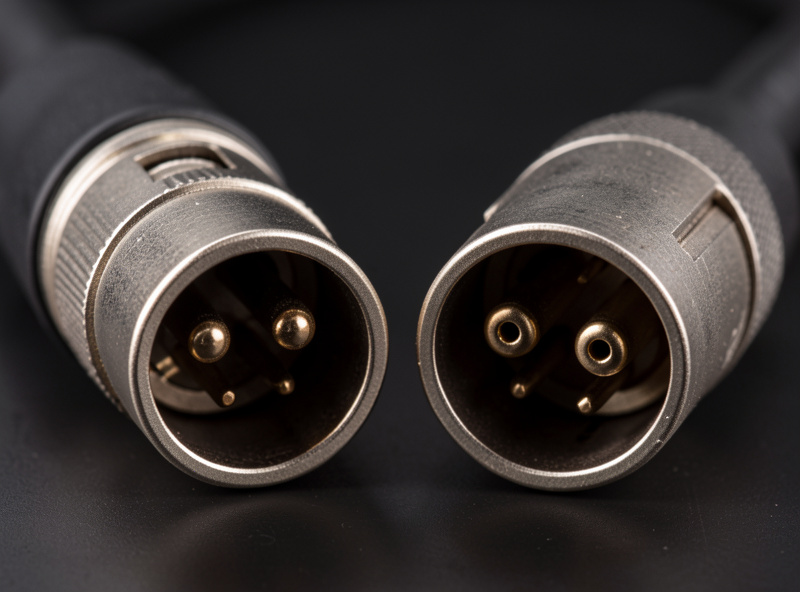
The Connectors: XLR, TRS, and RCA
Balanced connections use three-pin XLR or three-conductor TRS (tip-ring-sleeve) jacks, because both carry the two signal legs plus ground. Unbalanced connections use RCA or two-conductor TS jacks, which only have one signal conductor and a ground. The connector is a reliable tell: XLR and TRS can be balanced, RCA never is. But a socket alone guarantees nothing — what matters is the circuit behind it.
Here is the comparison in one view. Note that balanced gear typically also runs at a higher signal level, which is a real operational difference when you are matching components and gain staging.
| Aspect | Unbalanced (RCA / TS) | Balanced (XLR / TRS) |
|---|---|---|
| Signal conductors | One plus ground | Two mirror-image plus ground |
| Noise rejection | None inherent | Common-mode rejection |
| Typical level | Lower (consumer) | Higher (often +6 dB) |
| Best for | Short rack runs | Long runs, noisy rooms, studios |
| Connector | RCA, TS | XLR, TRS |
When Balanced Actually Helps — and When It Does Not
Balanced earns its keep in three situations: long cable runs (several metres or more), electrically noisy environments with dimmers, motors, or dense mains wiring, and any setup where you already have ground-loop hum on unbalanced connections. In those cases the noise rejection is audible and worth wiring for. In a normal living-room system with sub-two-metre runs, the benefit shrinks to nothing measurable.
So if your DAC, preamp, and amplifier all offer balanced outputs and inputs, and they are genuinely balanced inside, use XLR — it costs nothing in fidelity and gives you headroom against noise you may add later. If your runs are short and your gear is single-ended, RCA is not a compromise, it is simply correct. This is the same logic I apply to the interconnect cable decision and, at the source, to balanced vs single-ended DAC outputs.
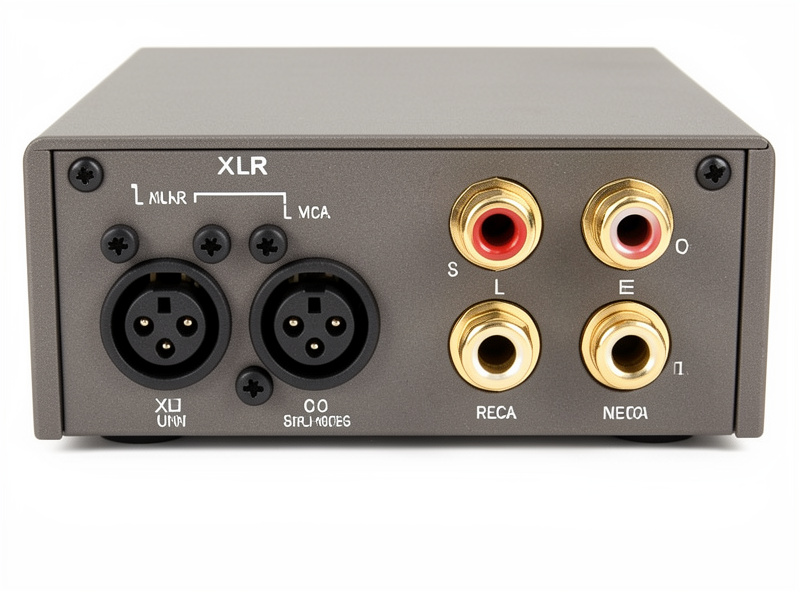
The XLR Trap: Sockets Are Not Circuits
The most common mistake is assuming an XLR socket means balanced benefits. Plenty of consumer gear fits XLR connectors for prestige while running single-ended internally, sometimes converting back and forth with extra op-amp stages that add nothing and occasionally cost a little. An XLR socket on such a unit gives you the connector without the common-mode rejection — the form without the function.
The way to know is the spec sheet and the measurements: a truly balanced output usually shows higher output voltage and equivalent or better noise on the XLR than the RCA. If the balanced output measures no better and offers no more level, the implementation is cosmetic, and you lose nothing by using the RCA. When a manufacturer is proud of a genuinely balanced design, they say so explicitly and the numbers back it.
I have measured exactly this on my own bench. The RME ADI-2 is genuinely balanced, and on its XLR outputs it puts out a clean 6 dB more level with no penalty in SINAD versus the RCA jacks — the textbook signature of a real differential stage. I have also metered a budget interface whose XLR and RCA outputs read bit-for-bit identical: same level, same noise, the balanced socket purely cosmetic. The mechanism behind the good case is the common-mode rejection the Audio Engineering Society literature has documented for decades, and a competently built differential input knocks 60 to 90 dB off interference common to both legs. Borrow a calibrated input or read an honest measurement and the spec sheet stops being a marketing claim and becomes a fact you can check.
Ground Loops: The Problem Balanced Quietly Solves
The most common reason people reach for balanced connections in a home system is not distance — it is a ground loop, the low hum that appears when two pieces of gear are grounded through more than one path. Because a balanced input rejects what is common to both signal legs, it also tends to reject the hum a ground loop injects, which is why swapping a problem unbalanced link for a genuine balanced one often kills the buzz outright.
That said, balanced is not the only fix, and reaching for it blindly is overkill if your gear is single-ended. A ground loop can also be solved by plugging components into the same outlet, lifting an offending ground safely at the source, or using an isolation transformer on the specific link that hums. Diagnose the loop first; if your system is balanced end to end, the connection handles it for free, and if it is not, an honest ground fix is cheaper than rebuilding the chain around XLR. Either way, the hum is an electrical problem with an electrical answer, never a reason to buy exotic cable.
I chased one of these in my own listening space for an embarrassingly long evening. A faint 50 Hz buzz showed up the day I added a second source, and I was halfway convinced I needed balanced everything before I found the actual culprit: the turntable and the streamer were grounded through two different outlets across the room. Moving both onto the same wall strip dropped the hum into inaudibility — no new cable required. That is the lesson I keep relearning: find the loop first, then reach for the cheapest honest fix, and save the XLR rebuild for systems that are balanced end to end anyway.
Headphones, Desktops, and “Balanced” Drive
The word “balanced” also appears on headphone amplifiers, where it usually means a fully differential drive with separate amplifier sections per phase. The audible benefit there is mostly about extra output power and channel separation, not noise rejection over a 1.5-metre headphone cable, and it matters most for hard-to-drive planar headphones. It is a real engineering choice, but do not confuse it with the noise-rejection argument that justifies balanced in long studio runs.
On a desktop, where the source sits inches from the amp, balanced connection offers little noise benefit but the higher drive level can still help with demanding headphones. I cover the practical desktop chain in the desktop audio setup guide and the converter side in the DAC buying guide. As always, match the connection to the actual problem rather than to the marketing.
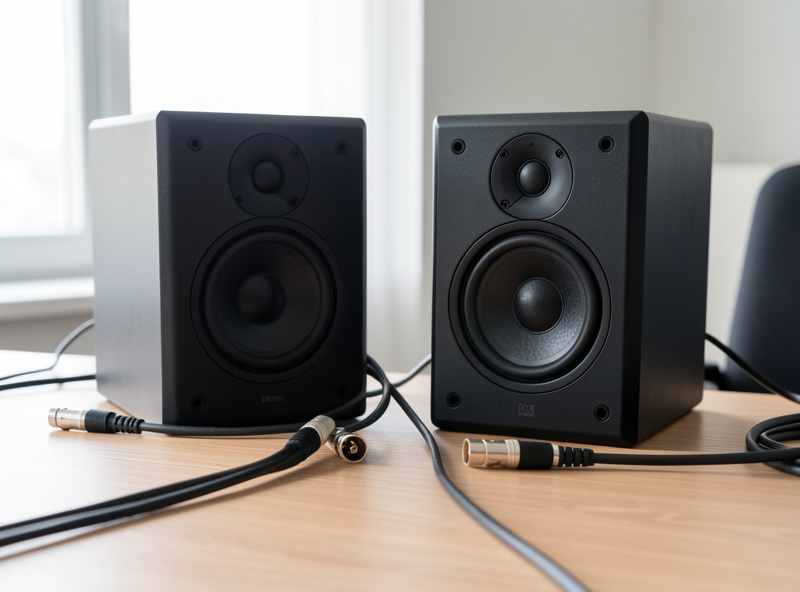
As an Amazon Associate I earn from qualifying purchases. If your gear is genuinely balanced, a set of XLR balanced cables is the right call; for single-ended gear, stick with quality shielded RCA cables.
Frequently Asked Questions
Is balanced audio better than unbalanced?
Balanced is better for long runs and noisy environments because it rejects common-mode noise. For the short runs in a typical hi-fi rack, balanced and unbalanced sound identical, provided the gear is truly balanced internally.
Does an XLR socket mean a component is balanced?
No. Many devices fit XLR connectors but run single-ended internally. A genuinely balanced output usually shows higher output voltage and equal or better noise on the XLR. Check the specs; a cosmetic XLR gives no noise-rejection benefit.
When should I use balanced XLR cables?
Use balanced for cable runs over a few metres, in rooms with electrical noise from dimmers or motors, or when you already have ground-loop hum. For short runs with single-ended gear, RCA is correct and not a compromise.
Why is balanced output often louder?
Balanced outputs typically run about 6 dB higher in level than unbalanced, because the signal swings across two conductors. This is an operational difference to account for in gain staging, not proof of better sound quality on its own.