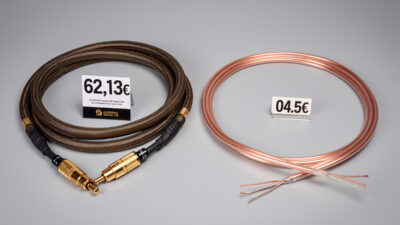
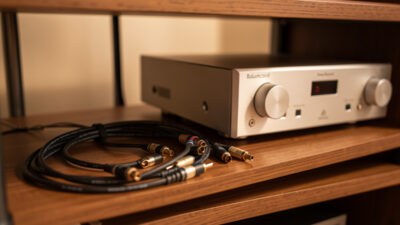
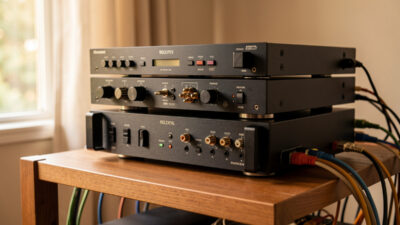
Speaker Cable Guide: Gauge, Length, and Terminations
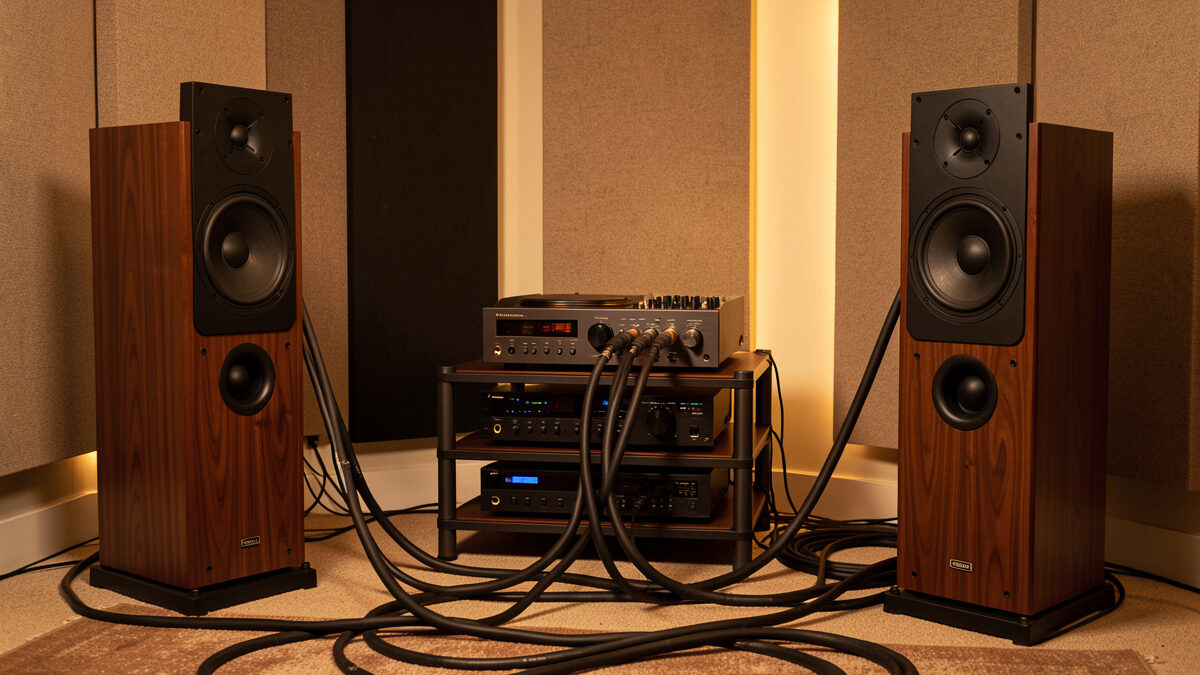
Speaker cable is the one cable in your system where buying badly can cost you measurable performance — and where fixing it costs a few dollars. The whole decision comes down to one property: resistance, set by wire gauge and run length. Keep total cable resistance under about 5% of your speaker’s impedance — roughly 0.4 ohms for an 8-ohm speaker — and the cable is electrically finished. Everything beyond that is cosmetics.
I have run thin bell-wire and heavy welded copper into the same speakers in my listening space, swept the result with a calibrated mic, and the only time the curve moved was on a long, undersized run where resistance ate into damping factor. That is the honest scope of speaker cable: gauge and length matter, terminations matter for reliability, and the exotic stuff does not. This guide gives you the gauge-by-length numbers, the connector trade-offs, and a short list of what to ignore. It is a spoke of the audiophile cables guide, where the whole cable hierarchy lives.
Why Gauge and Length Are the Only Numbers That Matter
A speaker cable carries high current at low impedance, so its series resistance sits directly in line with your speaker’s 4-to-8-ohm load. Too much cable resistance does two things: it drops a sliver of level, and it lowers the amplifier’s damping factor, loosening control over the woofer. Both are real, both are measurable, and both are avoided by choosing the right gauge for the distance.
The rule of thumb professionals use is to keep cable resistance below 5% of the speaker impedance. For an 8-ohm speaker that is a 0.4-ohm round-trip budget; for a 4-ohm speaker, halve it to 0.2 ohms. Because resistance scales with both length and gauge, the practical answer is a small table rather than a single “buy this” verdict.
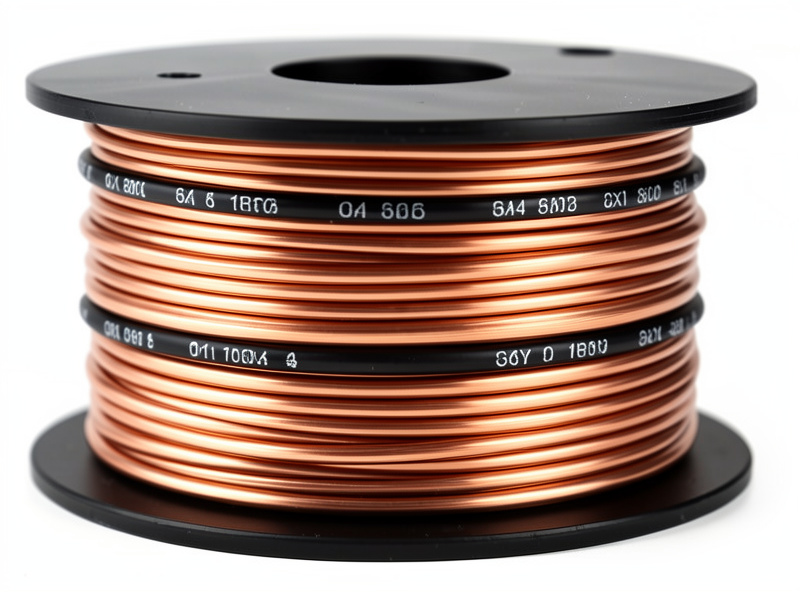
The Gauge-by-Length Table
Here is the part worth bookmarking. The numbers below assume copper conductors and an 8-ohm speaker, with the run length measured one way (the table already accounts for the round trip). For 4-ohm speakers, use the next-heavier gauge or halve the listed maximum run. These are conservative, engineering-grade limits, not marketing.
| Gauge (AWG) | Resistance per 1000 ft | Max run for 8Ω (keep under 0.4Ω) | Typical use |
|---|---|---|---|
| 18 AWG | ~6.4 ohms | ~30 ft | Short desktop or surround runs |
| 16 AWG | ~4.0 ohms | ~48 ft | Most bookshelf setups, normal rooms |
| 14 AWG | ~2.5 ohms | ~80 ft | Floorstanders, longer runs, 4-ohm loads |
| 12 AWG | ~1.6 ohms | ~125 ft | Long runs, in-wall, demanding loads |
The takeaway is liberating: for a normal room with a 10-to-15-foot run, 16 AWG is already overkill and 14 AWG buys you margin for nothing. You do not need 10 AWG garden-hose cable unless you are wiring a hall. Match the gauge to the distance, keep both channels the same length for tidy symmetry, and stop. This pairs directly with speaker sensitivity and amplifier matching, because impedance is the number driving both decisions.
If you would rather stop trusting tables and check your own run, put a meter on it: short the far end, measure across the near end, and you are reading the round-trip resistance the amplifier actually sees. On a 12-foot length of 16 AWG I read well under a tenth of an ohm — comfortably inside the 0.4-ohm budget, which is exactly why it disappears as a variable. The per-gauge resistance figures in the table above come straight from standard copper wire specs that cable makers like Belden publish on their datasheets; there is no proprietary metallurgy hiding in them, just AWG and length doing arithmetic.
Terminations: Banana Plugs, Spades, or Bare Wire
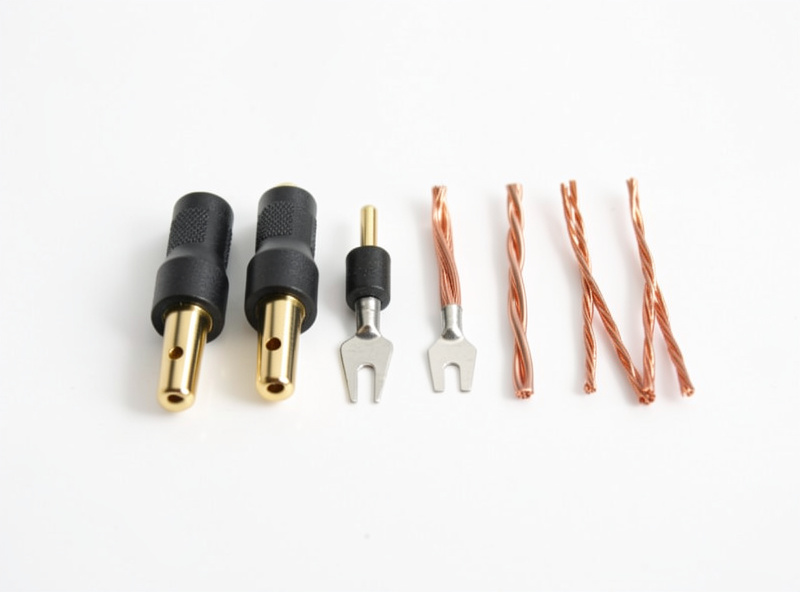
Terminations are the one speaker-cable choice with a genuine, physical payoff — not in tone, but in reliability and contact quality over years. A clean, gas-tight connection holds its low resistance; a frayed, oxidised bare-wire end slowly climbs in resistance and can buzz. The connector you pick is mostly about convenience and durability, and any of the three works when done properly.
Banana plugs are my default: they seal the conductor, insert and remove cleanly, and make gear-swapping painless — which, given how often I rotate components through one room, matters. Spades give a large clamped contact area for binding posts you can torque down hard. Bare wire is free and fine, provided you twist the strands tight, keep them from bridging the two posts, and re-strip them every couple of years as the copper darkens. Whatever you choose, the goal is a tight, clean, repeatable joint.
What to Ignore: OFC, Silver, and Exotic Geometry
Oxygen-free copper, silver conductors, cryogenic treatment, and elaborate braids are where speaker-cable budgets go to die. Standard copper of the correct gauge already meets every electrical requirement; oxygen-free copper is a marginal purity improvement that does not change audible performance, and silver’s slightly higher conductivity is swamped by the connector and voice-coil resistance long before it reaches your ears.
Skin effect — the usual justification for exotic weaves — only matters at radio frequencies, far above the 20 kHz audio ceiling, so the geometry sold to “defeat” it is solving a non-problem. Buy a quality jacket for durability and clear gauge markings for sanity, not a metallurgy story. If a cable’s pitch leans on what you will “hear,” reach for your wallet more slowly. The broader version of this argument lives in do expensive audio cables make a difference.
Bi-Wiring and Bi-Amping: Worth the Trouble?
Bi-wiring — running two separate cable pairs from one amplifier to a speaker’s split high and low binding posts — is one of the most argued-over speaker-cable topics, and the honest answer is that it does very little. With a single amplifier feeding both cable pairs, the electrical difference versus a good single run with the jumper straps in place is negligible and sits well below the threshold of audibility. If it makes you feel better and the speaker has the posts, it harms nothing but your cable budget.
Bi-amping is a different and more interesting case, because there you add a second amplifier channel and genuinely split the load. Passive bi-amping (two amp channels still sharing the speaker’s internal crossover) yields modest headroom benefits at best. Active bi-amping — bypassing the passive crossover entirely and using line-level DSP to split the signal before amplification — is the version with real, measurable upside, and it belongs to the active-speaker and room correction conversation rather than the cable one. If someone tells you bi-wiring transformed their sound, ask whether the level was matched; it rarely was.
Do Active Speakers Change the Math?
Yes, and they sidestep this entire page. Active and powered speakers put the amplifier inside the cabinet, so there is no speaker cable at all — just a line-level interconnect feeding each box. That converts the speaker-cable problem into an interconnect problem, which is a far less demanding one. If you are still choosing a topology, powered vs passive speakers walks through the trade-off.
For passive systems, the order of priority still holds: the room and speaker placement decide the sound, the speakers and amplifier shape it, and the cable just needs to clear the gauge bar above. I have never once heard a room problem fixed by a cable, and I have measured plenty of rooms. Spend accordingly; the room acoustics treatment guide is where the real gains are.
As an Amazon Associate I earn from qualifying purchases. For most rooms, a run of 14 AWG speaker wire with a set of banana plugs covers everything this guide recommends.
Frequently Asked Questions
What gauge speaker wire do I need?
For a normal room with runs under about 48 feet into 8-ohm speakers, 16 AWG is plenty and 14 AWG gives extra margin. Step to 12 AWG only for runs beyond 80 feet or demanding 4-ohm loads.
Does thicker speaker wire sound better?
Only if your current wire is too thin for the run. Once cable resistance is under about 5 percent of speaker impedance, going thicker changes nothing audible. Thickness fixes long-run losses; it does not add detail.
Are banana plugs better than bare wire?
Not for sound, but yes for reliability. Banana plugs seal the conductor against oxidation and make a clean, repeatable connection. Bare wire works fine if you keep it tightly twisted and re-strip it every couple of years.
Is oxygen-free or silver speaker cable worth it?
No audible benefit. Standard copper of the correct gauge meets every electrical requirement. Oxygen-free copper is a marginal purity gain, and silver’s slightly higher conductivity is swamped by connector and voice-coil resistance.
Should both speaker cables be the same length?
It is good practice for tidiness and symmetry, though small length differences are electrically harmless at sane gauges. Match them so both channels share the same resistance and your rack stays neat.