Audiophile Cables Guide: What Actually Matters
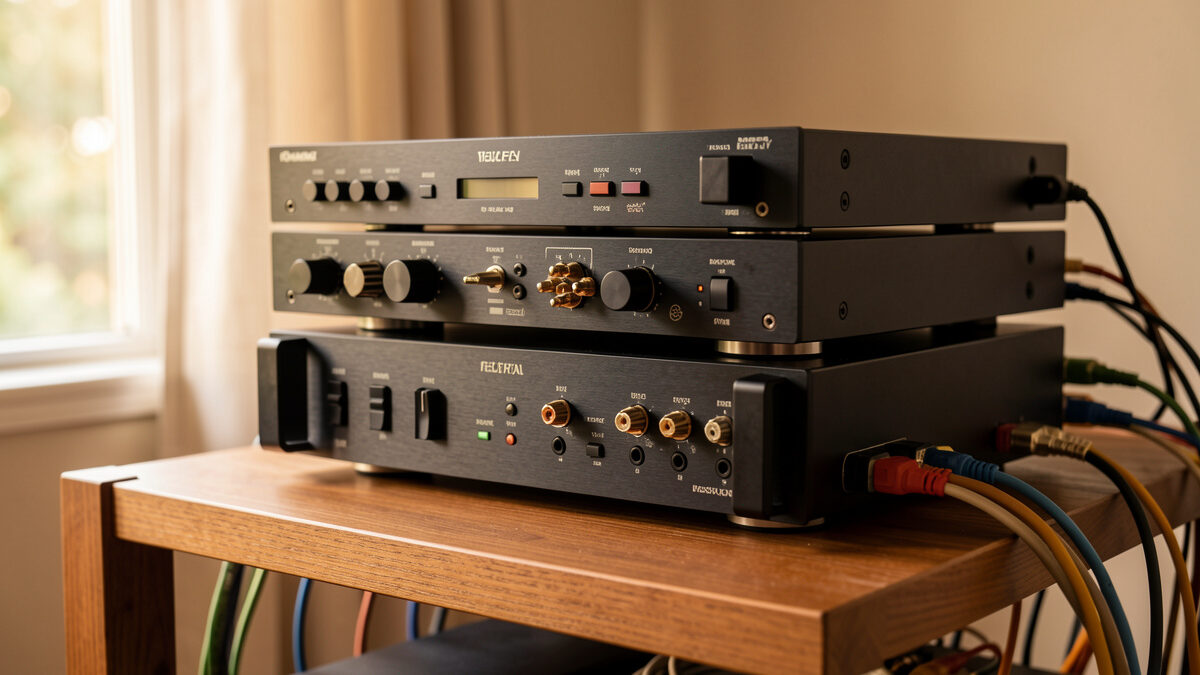
Cables are the cheapest meaningful upgrade in hi-fi and, simultaneously, the single biggest source of wasted money in the hobby. The honest version is short: at a competent baseline, a correctly gauged, well-terminated, adequately shielded cable is electrically complete, and spending more buys you confidence, not audible change. In my listening space I have swapped exotic and ordinary cables in the same chain, with the same calibrated mic in the same spot, and the measured response did not move.
That is the lens for this whole guide. I run a modest separates system in a small, lightly treated room in Sweden, sweep it with a UMIK-1 and REW, and trust the curve and the chair together. Cables sit at the bottom of the upgrade order on purpose: they matter exactly enough to get right once, and then to stop thinking about. This page is the map for the cluster — speaker cable, interconnects, balanced versus unbalanced, power, the cost question, and the burn-in claim — and the order in which they actually move the needle.
What a Cable Actually Does in a Hi-Fi Chain
A cable has one job: move a signal from one box to the next with the least change. For that, three electrical properties matter — resistance, capacitance, and shielding — and every one of them is measurable, not mystical. Get those three inside sane limits and the cable is, for audio purposes, finished. Nothing in a passive conductor adds detail, soundstage, or “air” that was not already in the signal.
The reason expensive cable marketing works is that it borrows the vocabulary of things that genuinely change sound — the room, the speakers, the DAC — and attaches it to a component that, past a low threshold, does not. When I talk about room acoustics treatment I am describing 6–10 dB swings you can see and hear. A cable swap at a competent baseline is a flat line. Hold those two experiences next to each other and the priority order writes itself.
The Three Cable Types and Where They Sit
Every stereo has three cable jobs, and they have different sensitivities. Speaker cable carries high current at low impedance, so resistance dominates. Interconnects carry tiny voltages, so capacitance and shielding dominate. Power cable feeds the supply, where the last metre is the least consequential link in a chain that already ran kilometres through the wall. Treat them differently because the physics is different.
Below is the quick map. Each row links to the dedicated guide in this cluster where I break the topic down with measurements and real placement, rather than the usual hand-waving.
| Cable Type | Dominant Property | What to Spend On | Audible Risk if Wrong |
|---|---|---|---|
| Speaker cable | Resistance (gauge vs length) | Correct AWG, solid terminations | Slight level and damping loss on long thin runs |
| Analog interconnect (RCA) | Capacitance, shielding | Decent shield, short runs | Hum, RFI, treble roll-off on very long runs |
| Balanced interconnect (XLR) | Common-mode rejection | True balanced gear at both ends | None when implemented; pointless if single-ended internally |
| Power cable | Adequate gauge, safety | A safe, correctly rated cable | Effectively none to the audio signal |
| Digital (USB/coax/optical) | Bit integrity (pass or fail) | A working spec-compliant cable | Dropouts or nothing — bits are bits |
Speaker Cable: The One Place Gauge Genuinely Matters
Speaker cable is the only cable in the chain where buying too cheap can actually cost you a sliver of performance, and the fix costs a few dollars. The variable is resistance, set by wire gauge and run length. The working rule is to keep total cable resistance under about 5% of your speaker’s impedance, which for an 8-ohm speaker means staying under roughly 0.4 ohms round-trip.
In real numbers, 16 AWG copper is about 4 ohms per 1000 feet, 14 AWG about 2.5, and 12 AWG about 1.6. A 10-foot run is 20 feet of conductor out and back, so even 16 AWG lands near 0.08 ohms — inaudible. Push to a 50-foot run and 16 AWG climbs toward 0.4 ohms, where damping factor starts to suffer; that is where you step up to 12 AWG. I go deeper on this, with a gauge-by-length table, in the speaker cable guide. It also ties directly into speaker sensitivity and amplifier matching, because impedance is the thread running through both.
Interconnects: Shielding and Length Beat Exotica
Analog interconnects carry line-level voltages measured in fractions of a volt, so resistance is irrelevant and the real enemies are noise pickup and excessive capacitance on long runs. A well-shielded RCA cable of reasonable length is electrically complete; a four-hundred-dollar boutique version of the same length does the same job. Keep analog runs short, keep them away from mains and wall-warts, and hum stops being a problem.
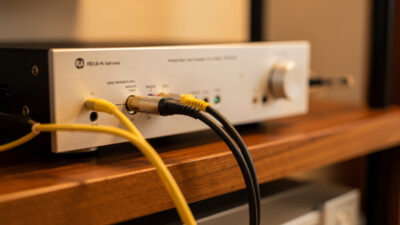
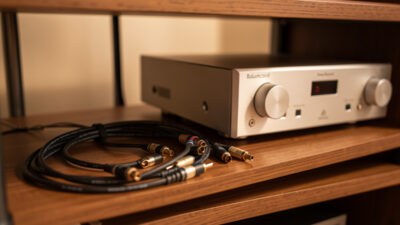
The genuinely useful interconnect decision is not brand — it is topology. That is the balanced-versus-single-ended question, and it only pays off when the gear is truly balanced end to end. I cover the cable side in the interconnect cable guide, the topology side in balanced vs unbalanced connections, and the DAC-specific version of the same trade-off in balanced vs single-ended DAC outputs. If you are wiring a turntable into the system, the phono interconnect has its own capacitance loading rules, covered in connecting a turntable to a stereo amplifier.
Power Cables: Where the Marketing Gets Boldest
Power cables are where cable mythology reaches full flight, and where the physics pushes back hardest. The last metre of cable cannot meaningfully clean up power that has already travelled from a substation through your home’s wiring, breaker panel, and wall socket. What a power cable must be is safe and correctly rated for the current draw; an integrated amp pulling a few hundred watts is well served by any competent IEC cable.
There is a legitimate conversation about clean power — ground loops, noisy switch-mode neighbours, and front-end isolation — but the lever there is a power conditioner or proper grounding, not a heavier IEC lead. I keep that distinction sharp in the hi-fi power cable guide, and the genuinely interesting frontier — battery and linear supplies for front-end gear — is in why your amp cares about battery vs mains power.
Digital Cables: Bits Are Bits, With One Caveat
USB, coax, and optical carry digital data, and a spec-compliant cable either passes the bits intact or it fails audibly with dropouts and glitches — there is no in-between “warmer” digital. The one real caveat is electrical noise on USB, where a cheap cable can let computer-side hash into a sensitive DAC. That is a noise-rejection issue, solved by a decent shielded cable or a USB isolator, not by spending into the hundreds.
If you are building a streaming front end, the cable is the least of it; the network and endpoint matter far more, which is why I treat that whole subject separately in the network audio streaming guide and the DAC buying guide. The cable just needs to be in spec and stay there.
Connectors and Terminations: Where Contact Actually Matters
If there is a second place after gauge where cable choices have a real, physical effect, it is the termination — the connector and the joint between connector and wire. A loose, oxidised, or cold-soldered connection raises resistance and can introduce intermittent noise; a clean, tight one does not. This is mechanical reality, not audiophile lore, and it is the part of the cable conversation worth caring about.
For speaker ends, the choice between bare wire, banana plugs, and spades is mostly convenience and reliability rather than sound. Bare wire works fine but frays and oxidises over time, slowly raising contact resistance; a soldered or crimped banana plug seals the conductor and gives a repeatable, gas-tight connection I trust far more after a few years of swapping gear. Spades suit binding posts torqued down hard. On the interconnect side, RCA and XLR connectors should click home with firm retention — a wobbly RCA is a hum waiting to happen.
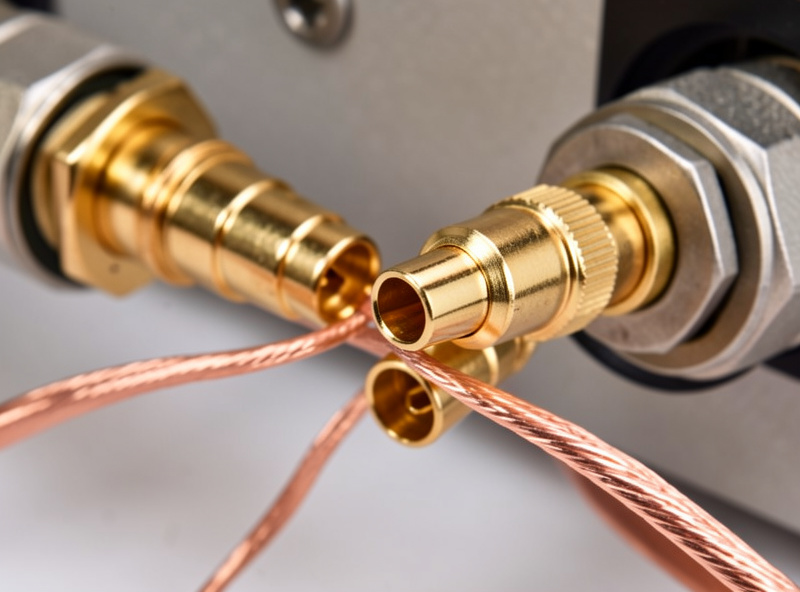
Gold plating gets oversold. Gold does not conduct better than copper; it simply does not corrode, which keeps the contact surface clean over years. That is a genuine, modest benefit on connectors exposed to humid air, and a complete irrelevance to the “warmth” it gets credited with. Buy plated connectors for corrosion resistance and mechanical quality, not for a sound that does not exist.
The Cable Myths, Decoded
A handful of claims recur in every cable forum, and each one collapses under either basic electrical engineering or a level-matched listening test. Naming them plainly is part of the honest-assessment job, because the marketing depends on you not knowing which physics applies. None of the following survives a controlled comparison in my room or on the bench.
Directionality. Arrows on interconnects imply the conductor sounds different one way round. For an AC audio signal swinging symmetrically about zero tens of thousands of times a second, “direction” is not a property the wire can have. The only directional element in any cable is the shield-grounding scheme on some designs, which is a noise choice, not a sonic one.
Skin effect and exotic geometry. Skin effect — current crowding toward a conductor’s surface at high frequency — is real, but it only becomes significant at radio frequencies, far above the 20 kHz ceiling of audio. The elaborate weaves and litz constructions sold to “defeat” it are solving a problem that does not exist in the audible band.
Cryogenic treatment and exotic metals. Freezing cables or reaching for silver and monocrystalline copper changes conductivity by amounts so small they are swamped by the connector resistance and the speaker’s own voice coil. Silver is marginally more conductive than copper and proportionally more expensive; the difference does not reach your ears.
How to Audition a Cable Honestly
If you want to test a cable claim for yourself — and you should, because firsthand evidence beats anyone’s say-so — the method matters more than the gear. The two failure modes that manufacture imaginary differences are level mismatch and sighted bias. Control for both and most cable “improvements” evaporate; the ones that survive are worth your money. The Audio Engineering Society has spent decades formalising exactly this level-matched, double-blind method, and its published cable comparisons land where I do: past a competence threshold, listeners cannot reliably tell two adequate cables apart.
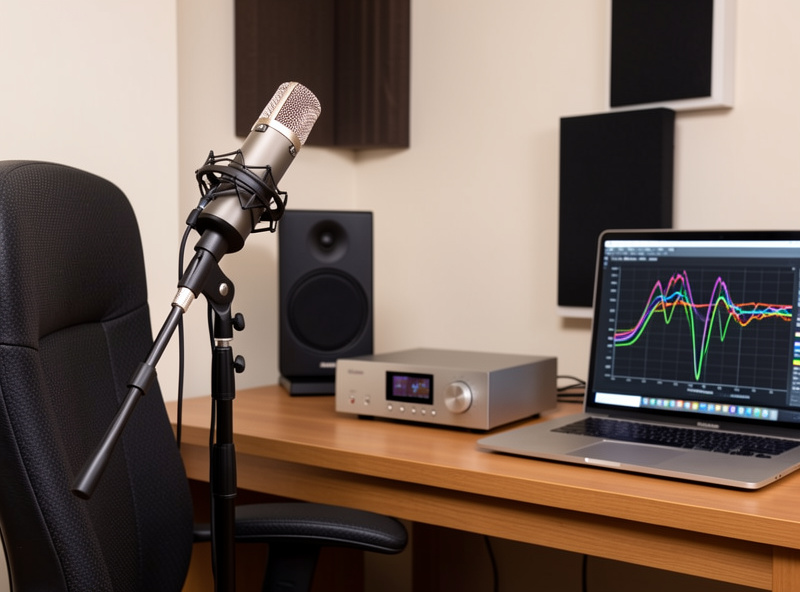
Level-match first. The ear hears even a 0.5 dB level difference as “better” — usually “fuller” or “more detailed” — and any two pieces of gear with slightly different gain will fool you instantly. Match output levels with a meter, then compare. Second, hide which cable is playing. A friend swapping behind the rack, or an ABX setup, removes the expectation that does the heavy lifting in every sighted demo. Third, swap fast; auditory memory is measured in seconds, so a week with cable A then a week with cable B compares nothing but your mood.
When I run this discipline in my listening space, level-matched and blind, the cables that cleared a competent baseline are indistinguishable. That is not a disappointing result — it is a liberating one, because it means the cable problem is solved cheaply and your attention is free for the room.
Cable Dressing and Noise: Free Performance
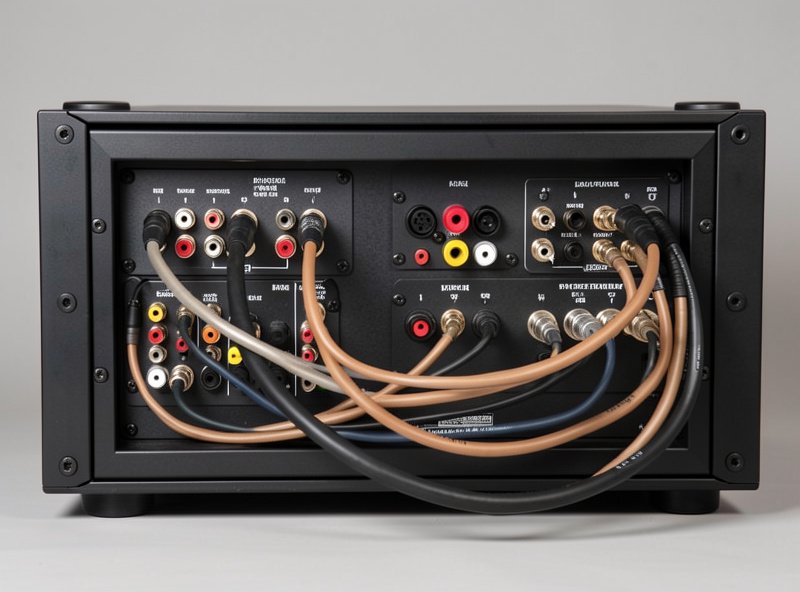
The one cable practice that reliably improves a real system costs nothing: how you route the cables. Mains and signal cables running in tight parallel can induce hum and buzz, especially into unbalanced interconnects and phono leads. Separating them, or crossing them at right angles where they must meet, breaks the coupling that actually degrades sound — a far more productive use of an evening than auditioning boutique wire.
Keep interconnect runs as short as the layout allows, give wall-warts and switch-mode supplies their own distance from analog cables, and make sure every ground connection is solid. If you still chase a hum after dressing the cables, it is almost always a ground loop rather than a cable quality issue — the same root cause behind turntable hum, which I walk through separately. None of this is glamorous, and all of it works.
The Cost Question, Answered Plainly
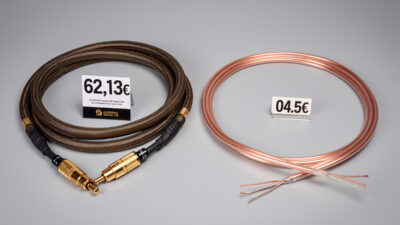
Is expensive cable worth it? At a competent baseline, no — the audible difference between a well-made affordable cable and a boutique one is, in controlled listening, absent. The money is far better spent earlier in the chain or, better still, on the room. I lay out the full argument, including where the rare exceptions genuinely live, in do expensive audio cables make a difference.
This is not anti-spending dogma. It is order of operations. A few hundred dollars put into acoustic treatment, better speaker placement, or a real DAC upgrade returns audible, measurable change. The same money in cables returns a flat sweep and a nicer-looking rack. Spend it where the curve moves.
The Burn-In Claim, Without the Faith
Cable burn-in — the idea that a cable needs hours of signal to “open up” — is the cleanest example of a claim that vanishes under measurement. A passive conductor’s electrical properties do not change with use over audio timescales, and a before-and-after sweep shows the same line. What changes is the listener: expectation and adaptation are powerful, which is exactly why blind tests exist. I treat this honestly, and explain why the experience can feel real while the signal does not change, in the cable burn-in honest assessment.
The Order of Operations That Actually Works
If you do one thing with this guide, internalise the priority list. Cables are step five or six, not step one. The audible returns, biggest to smallest, run: room treatment, speaker placement, the speakers themselves, then the source and amplification, and finally cables — which only need to clear a low competence bar. Spending out of order is the most common and most expensive mistake in the hobby.
For the absolute beginner building from scratch, the complete beginner guide to hi-fi systems sets the whole chain in context, and powered vs passive speakers decides how many cables you even need. Active monitors collapse the amp and speaker-cable problem into one box, which is a perfectly rational way to dodge half of this page. If you are weighing a stereo amp against a receiver, AV receiver vs stereo amplifier covers the connection side.
So when should you actually buy new cable? Three honest cases: when an existing cable is too thin for the run and you can measure or calculate the resistance penalty; when a connector is damaged, intermittent, or corroded; and when you are adding gear and simply need a cable that did not exist before. Outside those, “upgrading” cable in a working system is the audio equivalent of repainting a car to make it faster. Get each cable right once — correct gauge, solid termination, adequate shielding, sensible routing — and then redirect every further krona toward the room and the speakers, where the measurements actually move. That is the whole philosophy of this site in one cable-shaped lesson: measure first, believe second, and never let the cheapest link in the chain absorb the budget that belongs to the room.
As an Amazon Associate I earn from qualifying purchases. When you do buy cable, buy plainly: a quality 12 AWG oxygen-free speaker wire and a set of banana plugs will outperform anything you need to justify, for a fraction of the cost.
Frequently Asked Questions
Do audiophile cables really make a difference?
At a competent baseline, no audible difference. A correctly gauged, shielded, well-terminated cable is electrically complete, and in controlled listening a boutique replacement of the same length and gauge does not change the measured or heard sound.
What is the single most important cable to get right?
Speaker cable, because it carries high current and resistance scales with gauge and length. Keep total resistance under about 5 percent of speaker impedance, roughly 0.4 ohms for an 8-ohm speaker, and it is solved cheaply.
Should I spend more on cables or on my room?
The room, every time. Acoustic treatment and speaker placement produce 6 to 10 dB swings you can measure and hear. A cable upgrade at a competent baseline produces a flat sweep. Spend where the curve moves.
Are expensive power cables worth it?
No meaningful benefit to the audio signal. The last metre cannot improve power that already travelled through your home wiring. A safe, correctly rated cable is all the amplifier needs; for noise problems use a conditioner or fix grounding.
Do digital cables affect sound quality?
A spec-compliant USB, coax, or optical cable passes the bits intact or fails with dropouts; there is no warmer digital. The only real issue is USB electrical noise, solved with a shielded cable or isolator, not by spending hundreds.
Does cable burn-in change the sound?
No. A passive conductor’s electrical properties do not change with use over audio timescales, and before-and-after measurements match. The change people hear is expectation and listener adaptation, not the cable.