Interconnect Cable Guide for Hi-Fi: RCA, XLR, Phono
An interconnect carries a line-level signal — a fraction of a volt — between your source, DAC, preamp, and amplifier. Because the voltage is tiny and the current near zero, resistance is irrelevant and only two things matter: shielding against noise and, on long runs, capacitance. Get a decently shielded cable of sensible length and the interconnect is electrically complete. A boutique replacement of the same length does the same job for ten times the money.
That is the whole honest story, and I have confirmed it the boring way: swapping interconnects in my listening space with the level matched and the source hidden, the signal does not change. This guide covers what actually governs an interconnect — shielding, length, and the one genuine special case, the phono cable — and what to ignore. It is a spoke of the audiophile cables guide; for the speaker side, see the speaker cable guide.
What Governs an Interconnect: Shielding and Length
Line-level interconnects fail in exactly one audible way: they pick up noise. Hum from nearby mains, buzz from a switch-mode wall-wart, or RFI from a phone all couple into an unshielded or poorly shielded cable, and that is what you hear — not a lack of “detail.” A proper coaxial or twisted-pair shield rejects this interference, which is why a competent affordable cable is quiet and an exotic one is no quieter.
Length matters because cable capacitance accumulates with distance, and enough capacitance forms a low-pass filter that rolls off the very top end. In practice this only bites on very long single-ended runs — several metres — so the fix is free: keep analog interconnects as short as the layout allows. If you genuinely need long runs, that is the moment a balanced connection earns its keep, which I cover in balanced vs unbalanced connections.
RCA vs XLR: The Short Version
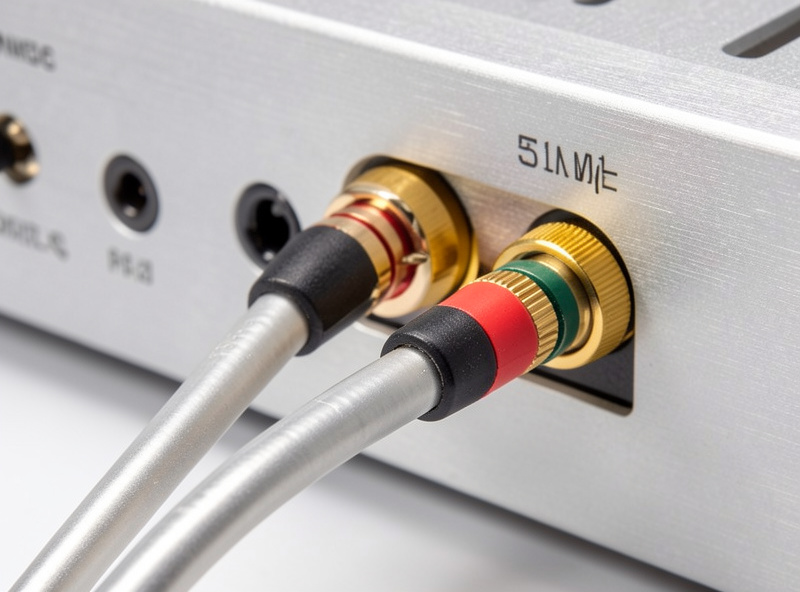
RCA (single-ended) and XLR (balanced) are the two analog interconnect standards, and the choice is dictated by your gear, not by sound quality in isolation. RCA is fine for the short runs in a typical rack and is what most consumer gear offers. XLR’s advantage is common-mode noise rejection, which is genuinely useful on long runs or in electrically noisy environments — but only when both components are truly balanced internally, not merely fitted with XLR sockets.
If your DAC and amplifier are both fully balanced, using XLR is the rational default and costs nothing in fidelity. If either is single-ended behind the socket, the XLR connection buys you no benefit and sometimes adds a conversion stage. The DAC-specific version of this decision — when the balanced output actually measures better — is in balanced vs single-ended DAC outputs.
The Phono Cable: The One Real Special Case
The phono interconnect from a turntable is the single analog cable where the value actually matters, and not for tone — for loading. A moving-magnet cartridge is sensitive to the total capacitance it sees, which includes the tonearm wiring plus the phono cable, and the cartridge maker specifies a target (often around 100–200 picofarads total). Too much cable capacitance shifts the high-frequency response audibly, which is a real, measurable effect rather than an audiophile feeling.
So for a turntable, a low-capacitance phono cable of the correct length is a genuine specification to respect, and many phono cables include a separate ground wire to kill hum. This is also why turntable hum is usually a grounding issue, not a cable-quality one. The full signal-chain context lives in connecting a turntable to a stereo amplifier and the phono preamp buying guide.
I measured this on my own deck rather than taking it on faith. With a meter across the phono leads I read roughly 130 pF in the cable alone; add the tonearm wiring and a typical input and you land right in the window a moving-magnet cartridge wants. Swap in a cheap high-capacitance interconnect and that figure climbs past 300 pF, and you can both measure and hear the treble lift and early roll-off it causes. Ortofon and the other cartridge makers publish a target loading for exactly this reason — it is the one place in the analog chain where the cable’s electrical spec is a number you must respect, not a marketing adjective.
Digital Interconnects: A Different Question Entirely
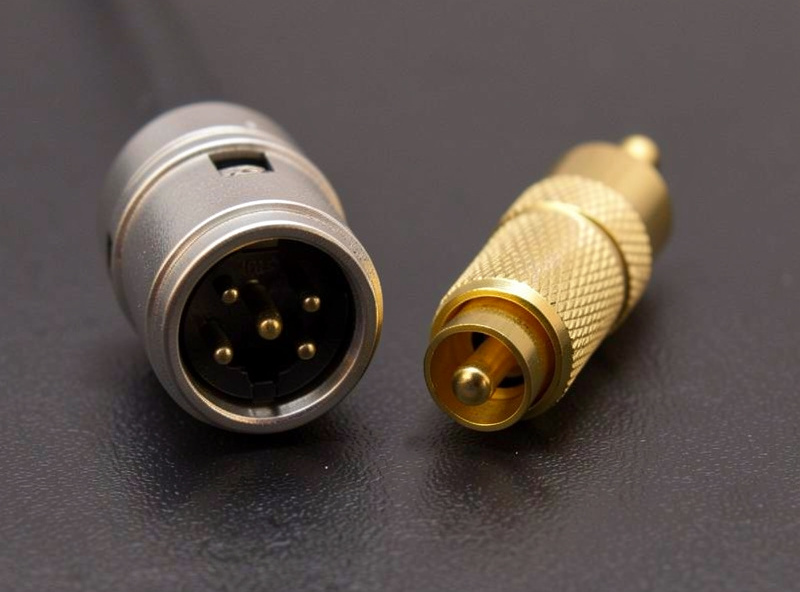
USB, coaxial S/PDIF, optical TOSLINK, and HDMI carry digital data, so the analog rules above do not apply. A spec-compliant digital cable either delivers the bits intact or fails with audible dropouts — there is no “warmer” digital interconnect. The only real-world caveat is electrical noise riding into a DAC over USB from a computer, which a decent shielded USB cable or a USB isolator solves; it is a noise problem, not a fidelity-of-bits problem.
This is the most marketed and least defensible cable category, because “digital cable upgrades” promise a change that the format physically cannot deliver as long as the bits arrive. If you are building a streaming source, your attention belongs on the network and endpoint, covered in the network audio streaming guide, and on the converter, covered in the DAC buying guide — not on the cable.
Routing and Connectors: Free Noise Reduction
The interconnect practice that reliably improves a real system costs nothing: route signal cables away from mains leads. When an unshielded or marginally shielded interconnect runs parallel to a power cord, the mains field induces hum directly into the signal; separating them, or crossing them at right angles where they must meet, breaks that coupling. This single habit fixes more “cable problems” than any purchase ever will.
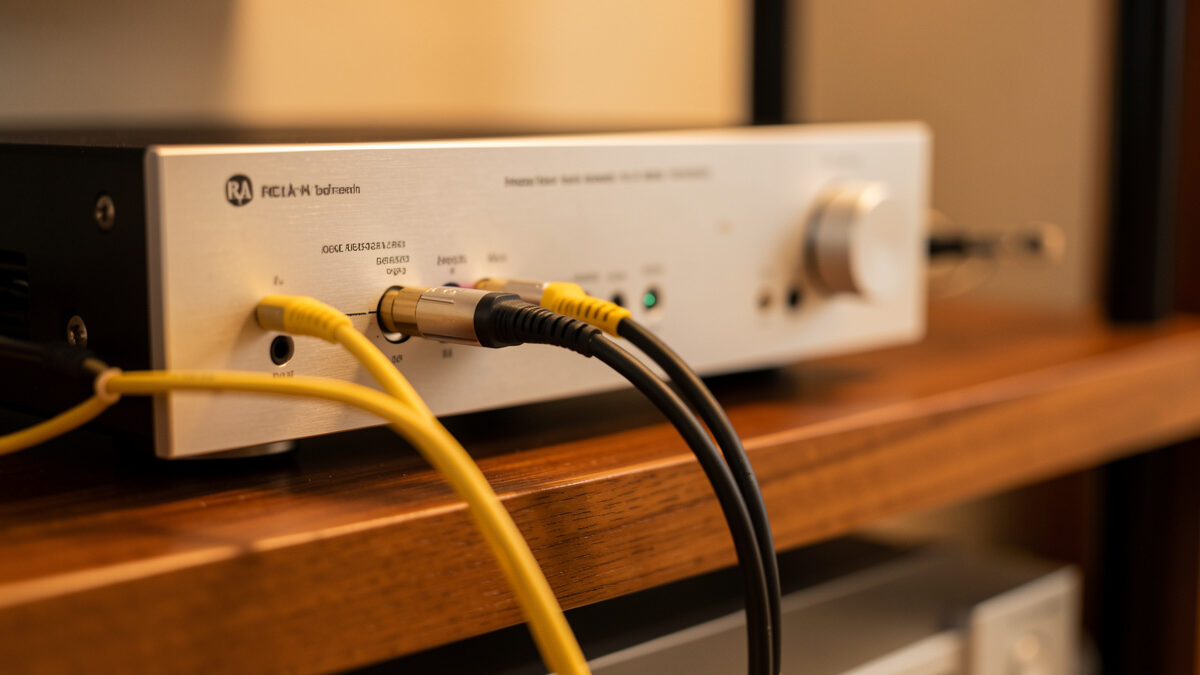
Connectors matter mechanically too. An RCA plug should grip its socket firmly — a loose, wobbly connector is an intermittent contact and a hum source waiting to appear. Gold plating here is about corrosion resistance over years, not sound, so it is worth a little for longevity and nothing for tone. Push each plug fully home, give it a gentle wiggle to confirm retention, and you have done the part of interconnect setup that genuinely affects what you hear.
The mains-coupling effect is easy to provoke if you want to convince yourself. I once left a thin unshielded RCA pair draped across a power strip in my listening space and watched the hum it injected show up plainly on a REW sweep as a 50 Hz spike with its harmonics; lifting the cable a hand’s width off the mains lead dropped the spike back into the noise floor. No cable purchase moved that needle — geometry did. That is the whole reason I route signal and power on separate sides of the rack and let them cross only at right angles.
What to Ignore, and Where to Spend Instead
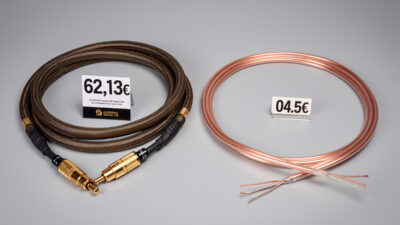
Exotic conductors, directional arrows, and four-figure interconnects buy you nothing audible at a competent baseline. Buy a well-shielded cable of the right length with connectors that grip firmly, route it away from mains leads, and move on. The single most common interconnect “improvement” people report after a pricey swap is, on inspection, a fixed ground loop or a level mismatch — not the cable.
Where should the money go? Earlier in the chain and, above all, into the room. I have never measured an interconnect changing a frequency response, and I routinely measure the room changing it by 6 to 10 dB. Read do expensive audio cables make a difference for the full cost argument, then put the saved budget into acoustic treatment.
As an Amazon Associate I earn from qualifying purchases. A pair of well-shielded RCA interconnect cables, or a set of XLR balanced cables for truly balanced gear, covers everything here.
Frequently Asked Questions
Do expensive interconnect cables improve sound?
No audible improvement at a competent baseline. Interconnects carry tiny line-level voltages, so only shielding and length matter. A well-shielded affordable cable of sensible length performs identically to a boutique one in level-matched listening.
Should I use RCA or XLR interconnects?
Use XLR only when both components are truly balanced internally, where it rejects noise on long or noisy runs. For short rack runs with single-ended gear, RCA is perfectly fine and adds no disadvantage.
How long can an analog interconnect be?
Single-ended RCA runs stay clean up to a few metres; beyond that, cable capacitance can roll off the treble. For long runs use a balanced XLR connection between truly balanced gear, which rejects noise over much greater distances.
Does a turntable need a special interconnect?
Yes, this is the real exception. A moving-magnet cartridge is sensitive to total capacitance, so use a low-capacitance phono cable of the correct length, ideally with a separate ground wire to eliminate hum.
Do digital cables like USB or optical affect sound?
A spec-compliant digital cable passes the bits intact or fails with dropouts; there is no warmer digital. The only real issue is USB electrical noise into a DAC, solved by a shielded cable or a USB isolator.
Why do I hear hum through my interconnects?
Hum is almost always a ground loop or interference pickup, not cable quality. Keep interconnects short and away from mains leads, ensure solid grounding, and the hum usually disappears without buying new cable.