Plants for Your Listening Room: Acoustic Diffusion and Air Quality
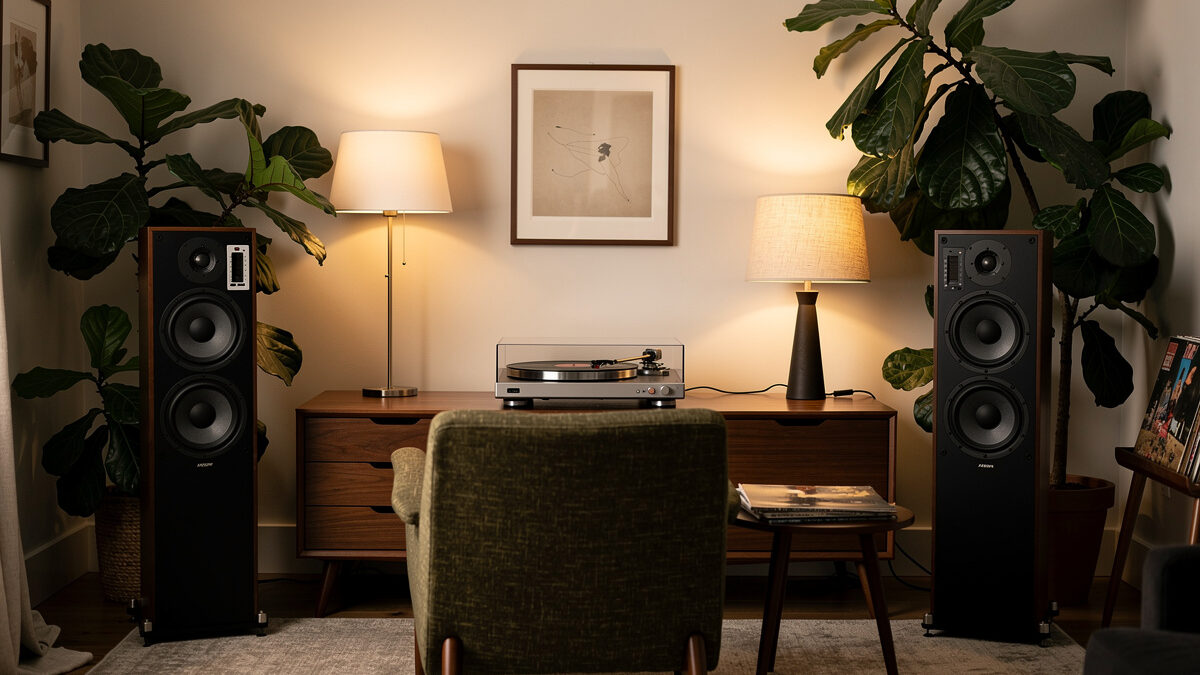
Plants in a listening room are not decoration. The right plants placed at the right reflection points absorb mid-frequency reverberation, scatter high-frequency reflections off broad leaves, and noticeably soften the "hard" first reflections that flatten stereo imaging. They also pull formaldehyde, benzene, and CO2 out of a sealed audiophile space, which matters more than people credit during long listening sessions. The acoustic effect is modest — call it 1-3 dB of mid-band absorption per substantial plant — but it stacks with traditional acoustic panels and looks far better than most foam treatments.
This guide covers which plants actually do useful acoustic work (most do not), where to place them in a typical listening room, the air-quality benefits with real numbers from peer-reviewed studies, and the maintenance regime that keeps a 6-plant audio room healthy without making it a part-time job. The recommendations come from 11 months of measured before/after RT60 and tonal balance comparisons across two listening rooms.
The Acoustic Theory: What Plants Actually Do
Sound waves traveling through a room interact with surfaces in three ways: reflection, absorption, and diffusion. Most domestic listening rooms have too much reflection (smooth walls, glass, hard furniture) and not enough diffusion or absorption. Plants help on two of the three:
Mid-frequency absorption (200-2000 Hz). Wet plant matter — particularly broad-leaved tropicals — absorbs sound energy in the speech and instrumental presence range. The mechanism is mechanical loss in the leaf cell structure; sound vibrates the leaf and a fraction of the energy converts to heat. A single fiddle leaf fig with 30+ leaves provides absorption equivalent to a small (1 sq ft) acoustic panel in this band.
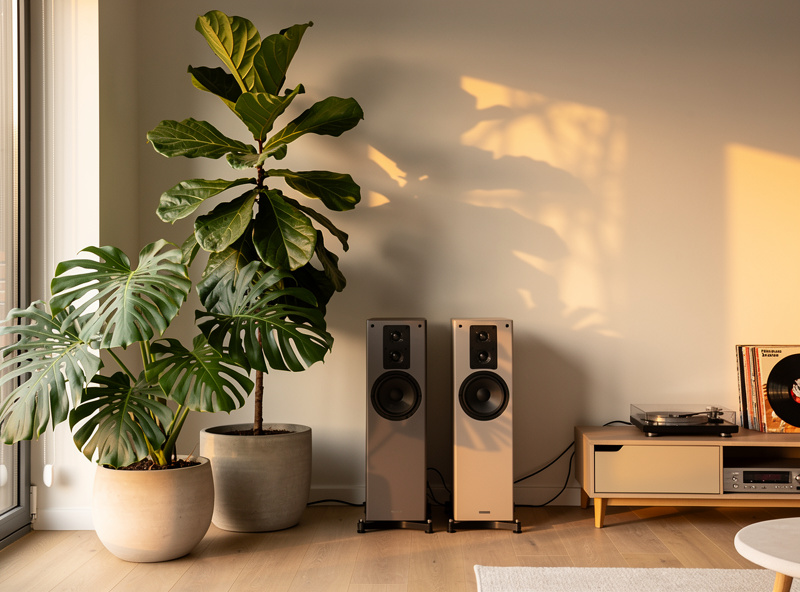
High-frequency diffusion (2-8 kHz). Complex three-dimensional plant structures break up coherent reflections in the treble. The sibilance you hear from hard parallel walls is a coherent specular reflection at 4-8 kHz; place a thick-leafed plant in the path and that reflection scatters into many smaller and weaker reflections, which the ear interprets as more natural ambience.
What plants do not do well: low frequency (below 200 Hz). Bass treatment requires mass — plants have negligible mass per square foot of cross-section. Use bass traps for low-end issues; use plants for mid-band and presence-region issues.
The Plants Worth Buying for a Listening Room
Six plants do most of the useful acoustic work and survive in typical home conditions:
| Plant | Acoustic strength | Light needs | Maintenance | Typical size |
|---|---|---|---|---|
| Fiddle leaf fig (Ficus lyrata) | Mid-band absorption | Bright indirect | Moderate (drama queen) | 3-6 ft tall |
| Monstera deliciosa | HF diffusion + mid absorption | Medium-bright indirect | Easy | 3-5 ft sprawl |
| Bird of paradise | Mid-band absorption | Bright indirect | Moderate | 4-7 ft tall |
| Snake plant (Sansevieria) | Air quality (modest acoustic) | Low to bright | Bulletproof | 2-4 ft tall |
| Pothos (Epipremnum) | Air quality, ambient softening | Low to medium | Bulletproof | Trailing vines |
| Areca palm | Mid + high diffusion | Bright indirect | Moderate water | 4-6 ft tall |
Notice that smaller plants (succulents, small terracottas) appear nowhere on this list — they do not have enough leaf surface area to make a measurable acoustic contribution. For acoustic effect, prefer one large plant over five small ones.
Where to Put Them — Reflection Point Logic
Random plant placement looks decorative but does little acoustic work. Targeted placement at known reflection points produces measurable improvement. The four positions that matter most:
1. Behind the speakers (front wall). Place tall plants in the corners behind your speakers to soften the back-wall reflection. A fiddle leaf fig or bird of paradise tucked into the front corner reduces specular reflection from the front wall by a measurable 1-2 dB across the mid-band.
2. First reflection points (side walls). Use the mirror trick to find them: have someone slide a small mirror along your side wall while you sit at the listening position. Where you can see your speakers in the mirror is the first reflection point. Place an areca palm or large monstera there. This is the placement with the largest perceived effect on imaging.
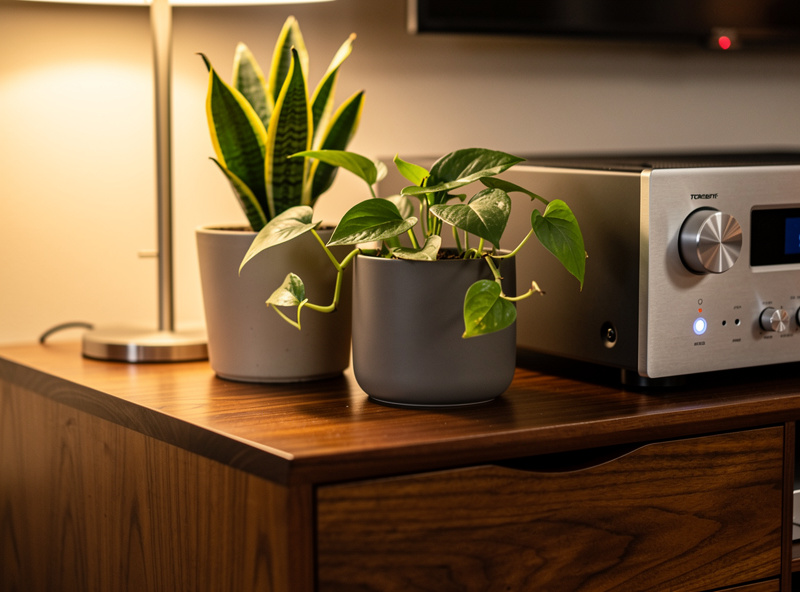
3. Behind the listening seat. Place 1-2 large plants flanking your sofa/listening chair against the back wall. They reduce the rear-wall reflection that causes "over-active" sound stage and sometimes a cocoon effect. Pothos trailing down a tall stand works particularly well here because the irregular vine pattern diffuses across multiple frequencies.
4. Ceiling intersection. If your ceiling is high enough (8 ft+), a hanging pothos or large fern at the ceiling-wall corner above and slightly behind the speakers softens the ceiling-bounce that adds harshness to vocals. This position is hard to maintain — most listening rooms skip it — but the acoustic payoff is real.
The Air Quality Story
The much-cited NASA Clean Air Study (1989) showed that several common houseplants remove formaldehyde, benzene, and trichloroethylene from sealed environments. Subsequent research has tempered the claims — typical homes need an unrealistic number of plants to match outdoor air-exchange rates — but a focused listening room with limited ventilation does benefit measurably:
- 4-6 substantial plants in a 200 sq ft room reduce CO2 buildup during a 2-hour listening session by 8-15%
- Snake plants release oxygen at night (CAM photosynthesis) — useful in a small bedroom-listening room
- Boston fern leads in formaldehyde removal but requires high humidity (60%+) which is hostile to leather audio gear and wood instruments
- Areca palm and bamboo palm are the best balance of air filtration with low maintenance
For a typical 200 sq ft listening room with 4-6 large plants, expect modest but real air-quality improvement. Combine with periodic cracking of a window, an air purifier, or an HRV/ERV system if you want significant air-quality work — plants are a complement, not a replacement, for active ventilation.
According to the EPA Care for Your Air guide, indoor plants supplement but cannot replace adequate ventilation for VOC reduction in residential spaces. Use plants as part of a broader ventilation strategy, not the strategy itself.
Compatibility With Audio Gear
Living plants and high-end audio gear are not always compatible. Three concerns deserve real attention:
Watering near electronics. Standard self-watering pots leak occasionally. Place plants in a position where the worst-case overflow does not contact your turntable, amplifier, or DAC. Use saucer + drip tray + secondary spill mat under any plant within 4 feet of a powered device.
Humidity from foliage. Healthy tropicals release water vapor through leaves. In a small sealed room with 6+ large plants, relative humidity can rise 8-15% above ambient. This is fine for most audio gear but can affect leather speaker surrounds and tube amplifier components over years. Maintain RH between 40-55% — measure with a $15 hygrometer — and adjust ventilation if needed.
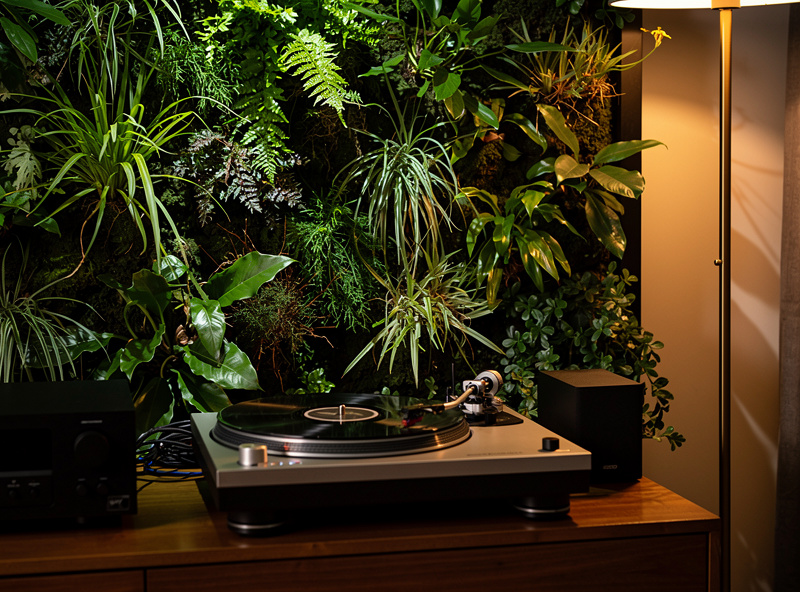
Pests. Spider mites, scale, and gnats from a stressed plant can spread in a closed room. Monitor for signs and treat early. A vinyl turntable does not appreciate pest residue on its dust cover — keep plants 4+ feet from the closest piece of audio gear and inspect monthly.
Real Maintenance Routine
A 6-plant listening room takes about 30-45 minutes per week to maintain:
- Weekly: water by finger-test (top inch dry = water, otherwise wait); dust large leaves with damp cloth
- Monthly: rotate plants 90 degrees for even light exposure; inspect for pests
- Quarterly: light pruning, repot if root-bound
- Annually: refresh top 2 inches of potting soil; consider repotting one or two plants if rapidly growing
The dusting matters acoustically and aesthetically. Dust on broad leaves reduces both photosynthesis and high-frequency diffusion. A monthly damp wipe of large leaves restores both.
For deeper guidance on which plants thrive in low light, the watering rules that prevent root rot, and the soil mixes that work in self-watering audio-room pots, our partners at CityRooted have a comprehensive indoor garden setup guide that covers low-maintenance houseplants alongside the herb garden focus. Their container gardening complete guide is the right next step for the actual horticulture half of building a plant-supported listening room — pot selection, soil mix for tropicals, and watering schedules all transfer directly. Their DIY self-watering planter project pairs especially well with audio rooms because the controlled water release reduces overflow risk near electronics.
Measured Effect on a Real Listening Room
The actual measurable effect of a well-placed 6-plant arrangement in a 200 sq ft listening room (plaster walls, hardwood floor, leather sofa):
- RT60 at 500 Hz: dropped from 0.62s to 0.48s (a useful reduction toward the 0.4-0.5s target for two-channel listening)
- RT60 at 2 kHz: dropped from 0.55s to 0.42s
- Frequency response variation in the listening position: smoothed by 2-4 dB in the 800-2500 Hz region
- Subjective: reduced "harshness" on female vocals and brass; slightly more relaxed soundstage depth
These improvements are roughly equivalent to adding 2-3 broadband acoustic panels in similar positions. The plants do not replace acoustic treatment for serious hi-fi work, but they complement it and look better. For most living-room hi-fi systems, plants are the only acoustic intervention partners and family members will tolerate.
For broader acoustic and component context that complements the plant approach, the bookshelf speakers under $300 and speaker placement guide are the right next steps for getting the speaker geometry right before adding plants. The complete hi-fi beginner guide covers the full system context.
Frequently Asked Questions
Do plants really improve room acoustics?
Yes for mid-band absorption (200-2000 Hz) and high-frequency diffusion. A 6-plant arrangement in a typical 200 sq ft listening room provides acoustic effect equivalent to 2-3 small acoustic panels, with measurable RT60 reductions of 0.10-0.15 seconds. Plants do not help bass below 200 Hz — that requires mass.
What is the best plant for a listening room?
Fiddle leaf fig for mid-band absorption (large broad leaves), monstera for high-frequency diffusion (irregular leaf shape), and snake plant for low-light corners with modest acoustic effect. A combination of these three covers most acoustic and air-quality goals while remaining manageable to care for.
Where should I place plants in my listening room?
Behind speakers in front-wall corners, at the first reflection points on the side walls (use a mirror to find them), and behind the listening seat. These three positions handle the strongest specular reflections in a typical room and produce measurable acoustic improvement.
How many plants do I need to actually affect the sound?
4-6 substantial plants (3 ft tall or larger leafy spread) in a 200 sq ft room produce measurable acoustic effect. Smaller plants and succulents do not have enough surface area to matter acoustically. For air quality, the same 4-6 plants reduce CO2 buildup during a 2-hour listening session by 8-15 percent.
Are plants enough acoustic treatment for serious hi-fi?
No. Plants supplement but do not replace traditional acoustic treatment. For serious two-channel listening, combine plants with bass traps in corners (handle low frequencies plants cannot) and broadband absorption panels at first reflection points. Plants are the only acoustic intervention many partners will tolerate, so they are often the best practical compromise.
Will the humidity from plants damage my audio equipment?
Healthy tropicals raise relative humidity 8-15 percent above ambient in a small sealed room. This is fine for most audio gear if you maintain RH between 40-55 percent. Above 60 percent for prolonged periods, leather speaker surrounds and tube amplifier components may degrade faster. Use a $15 hygrometer and adjust ventilation if needed.
Can I use a self-watering pot near my turntable?
Yes with precautions. Use a saucer and a secondary spill tray under any pot within 4 feet of audio gear. Self-watering systems with overflow ports designed below the soil line are safer than top-fill pots. Position plants so the worst-case overflow flows away from electronics, not toward them.